


December 2, 2025, 9:56 am | Read time: 3 minutes
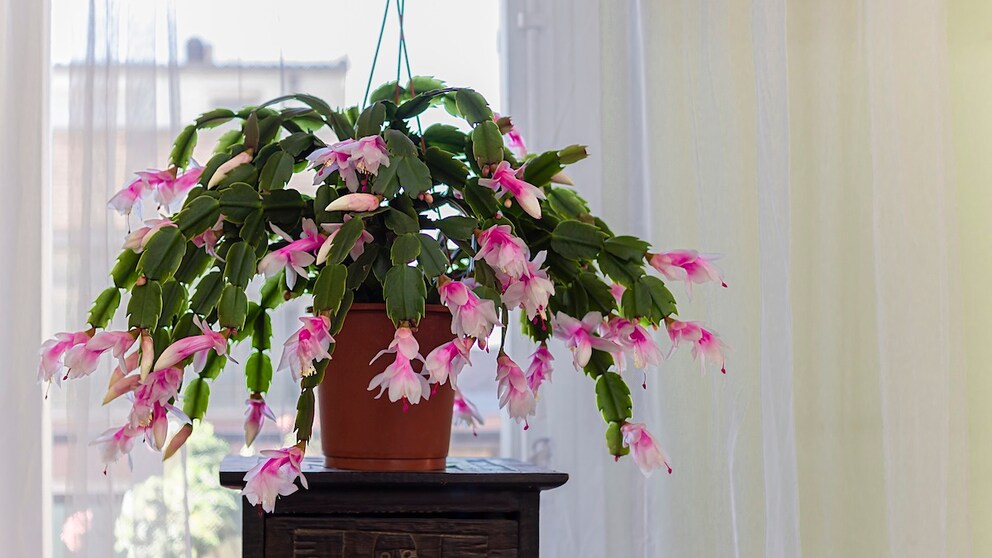
The Christmas cactus (Schlumbergera) adds splashes of color during the gray winter months with its striking blooms. If the plant loses its flowers, it is often due to specific care mistakes. myHOMEBOOK explains what to watch out for.
1. Mistake: Changing Location
When the Christmas cactus forms buds, it needs peace. Changing its location or even just moving the pot stresses the plant significantly. To protect itself, the cactus sheds the part that costs the most energy and is least essential: the buds and flowers.
If you acquire a new Christmas cactus that already has flowers, it often loses all its blooms. The plant must first acclimate to the new location before it can form new buds.
Also interesting: (Almost) Free Christmas Decorations for the Garden
2. Mistake: Overwatering or Underwatering
The Christmas cactus is native to the tropical rainforests of Brazil. Unlike desert cacti, it prefers a humid environment. If the plant is too dry, it protects itself by shedding its flowers. Unlike the fleshy leaf segments, the flowers are not necessary for survival—reproduction can wait, survival comes first.
At the same time, you should not water the Christmas cactus too frequently. If water accumulates in the pot, it leads to waterlogging. The plant’s roots do not like to stand in wet substrate. Prolonged moisture causes the roots to die. Nutrient and water uptake are disrupted, weakening the plant. Again, the rule is: Get rid of anything that costs a lot of energy—namely, the flowers.
Hobby gardeners should ensure moderate watering of the Christmas cactus. During the blooming period, watering about once a week is recommended to keep the soil moist.

Why the Christmas Cactus Turns Yellow

Why Your Christmas Cactus Isn’t Blooming
3. Mistake: Wrong Location
The Christmas cactus has specific requirements for its location. If these are not met, it leads to stress and the plant sheds its flowers. Therefore, it is important to ensure that the Christmas cactus is not in direct sunlight. Additionally, avoid drafts and overly dry air.
During its rest phase, the cactus prefers cooler temperatures. Fifteen to 20 degrees Celsius (59 to 68 degrees Fahrenheit) is ideal in the fall. It would feel uncomfortable directly above a heater. Stress can also be caused by sudden temperature fluctuations.
4. Mistake: Overfertilizing or Underfertilizing
During the growth phase, the Christmas cactus needs sufficient nutrients to thrive healthily. It is important to stop fertilizing during the rest phase. From September, the plant becomes sensitive to nutrients, which can lead to bud and flower drop. Even during blooming, the rule is: Do not fertilize! Fertilizer could cause stress and shorten the blooming period.