


November 19, 2025, 4:04 pm | Read time: 3 minutes
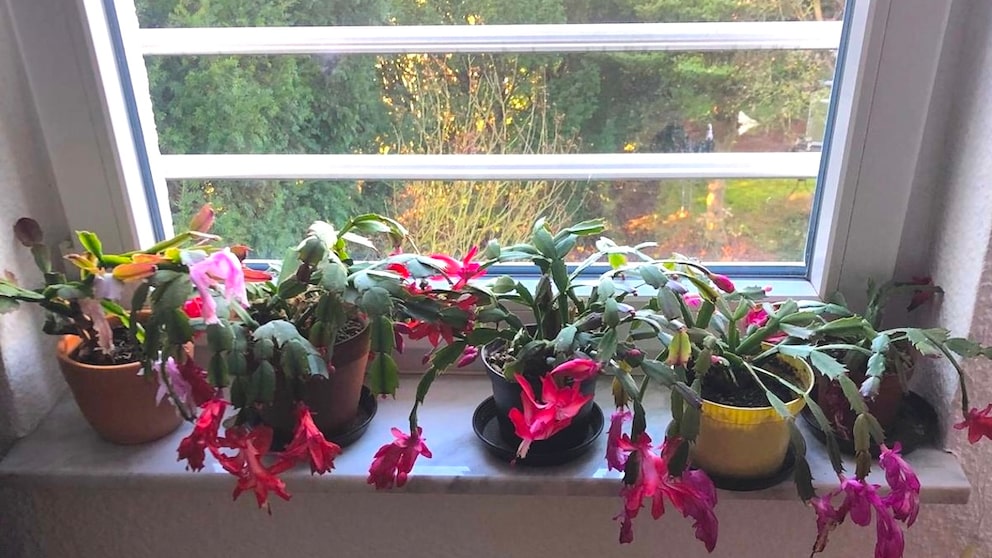
Few houseplants are as synonymous with the Advent season as the Christmas cactus. When everything outside is gray, it typically opens its delicate pink, red, or white flowers, bringing a touch of tropical splendor to the living room. But sometimes the big show just doesn’t happen—no buds, no color, just green segments. myHOMEBOOK plant expert Franka Kruse-Gering explains why the Christmas cactus might not bloom.
When the Christmas Cactus Should Actually Bloom
The Christmas cactus (Schlumbergera) originally comes from the humid mountain forests of Brazil. There, it doesn’t experience a dry desert but rather mist, shade, and cool nights. Its blooming period coincides with the South American rainy season, which is during Germany’s winter. Here, it usually forms buds in November or December. Some varieties even continue to bloom into January or February. For this to happen, the cactus needs a few specific conditions—and this is often where the problem lies.
Why the Christmas Cactus Isn’t Blooming
Even though the Christmas cactus is considered easy to care for, there are a few rules to follow if you want it to display beautiful flowers. The following are four reasons why the plant might not bloom.
1. Too Little Darkness
It may sound strange at first, but the Christmas cactus needs darkness. It is one of the so-called short-day plants. This means it only starts to form buds when the nights are dark for at least twelve to fourteen hours over about four to six weeks.
If it’s in the living room under lamp light or in the kitchen where lights are on in the evening, it doesn’t get a clear signal that it’s “winter.”
It’s advisable to place it in a bright but completely dark location at night from the end of September for a few weeks—no artificial light! This way, it knows its blooming period is approaching.
Also interesting: Care Tips for the Christmas Cactus
2. The Christmas Cactus Likes It Cool
After the summer break, the Christmas cactus prefers cooler temperatures. In its native habitat, it experiences a drop in temperature before blooming—this is exactly what it needs here to set buds. Ideal temperatures are 59 to 64 degrees Fahrenheit during the bud formation phase.
If it’s too warm or directly above a heater, the flower formation stops. Often, you can tell because new shoots form, but no buds.
3. Please Do Not Move
The Christmas cactus is sensitive to changes. When it’s forming buds, it doesn’t like to be moved or rotated. Even small changes in location or turning the pot can cause the buds to simply fall off.

Christmas Cactus Losing Blooms? These Care Mistakes Are to Blame

From Above or Below? How to Properly Water a Christmas Cactus
4. Incorrect Watering Can Prevent the Christmas Cactus from Blooming
A Christmas cactus is not a desert dweller! It loves evenly moist but not wet soil. Too much water causes the roots to rot, too little causes the plant stress—both can prevent it from forming buds or cause it to drop them prematurely.
5. Summer Sets the Stage for Winter Blooming
Many Christmas cacti spend the summer on the balcony or terrace—this is good, but only if they are in the shade or partial shade. Direct sunlight burns the shoots and stresses the plant. When brought indoors in the fall, it may be too weakened to bloom.