


September 21, 2026, 1:12 pm | Read time: 4 minutes
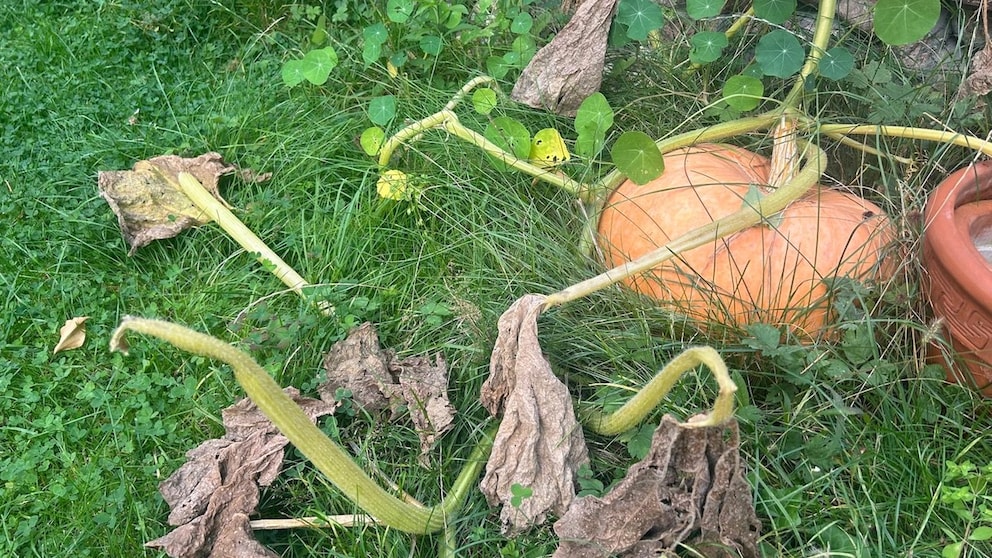
For months, the pumpkin grows splendidly, with large, lush green, and healthy leaves. But then it seems to happen overnight: The leaves wilt, turn brown, and dry up. Many hobby gardeners worry at this moment whether the pumpkins are also lost. The good news: That’s not necessarily the case. myHOMEBOOK gardening expert Franka Kruse-Gering explains what’s behind the sudden drying of pumpkin leaves.
Follow myHOMEBOOK on WhatsApp now
Why Pumpkin Plants Suddenly Decline
When pumpkin plants suddenly lose their leaves at the end of summer or early fall, it can have various causes. Particularly in late summer, it is often a completely natural aging process. The plant has already invested much of its energy into the fruits, and the foliage begins to die off gradually.
Dry stress, fungal diseases such as powdery mildew, or root damage can also cause the leaves to dry up quickly. If a white coating appears on the leaves at the same time, it’s often powdery mildew. If the leaves wilt after prolonged dry spells, water shortage may be the cause. However, this does not automatically mean the end for the already formed fruits.
Also interesting: Caution! Always taste-test garden pumpkins first
Will the Pumpkins Still Ripen?
In many cases, there’s no need to worry about the fruits; they will ripen. If the pumpkins have already reached a decent size, they can still mature even if the plant itself is slowly dying. Toward the end of the season, dying foliage often indicates that the plant is focusing its energy on fruit ripening.
However, one must not overlook the developmental stage of the pumpkin. If a pumpkin is very small, it may not mature further because essential nutrients for its development are missing.
Signs That the Chances Are Good
If you want to know whether your pumpkin still has a chance, you should pay attention to these ripening signs:
- The fruits have almost reached their typical size for the variety.
- The skin is becoming increasingly harder.
- The stem begins to become woody and turns brown.
- The fruits are already taking on their typical final color.
The further the ripening has progressed, the less important the remaining leaves are.
When It Becomes Difficult
It looks less favorable if the pumpkins are still very small or have only recently formed. Soft skins and completely green, juicy fruit stems also indicate that the fruits would have needed much more time on the plant.
If the plant dies completely at this stage, the pumpkins often cannot make up for the missing development.
Should You Remove Dried Leaves?
Dried or heavily mildew-infested pumpkin leaves can be removed. They no longer supply the plant with energy and can even promote the spread of fungal diseases. Removing them also improves air circulation around the fruits.
Healthy green leaves, on the other hand, should remain on the plant as much as possible. They continue to support fruit ripening and help especially with pumpkins that are not yet fully mature to store enough energy.
Related: The pumpkin grows over to the neighbor’s yard–can they keep it?
Your Pumpkin Is Still Blooming in September? When It Makes Sense to Remove New Blossoms
Should You Remove Leaves from Vegetable Plants?
Many Pumpkins Can Ripen After Harvest
Even if the plant dies completely, not all is lost. Especially winter pumpkins like Hokkaido, butternut, or muscat pumpkins often continue to ripen after harvest. However, they must have already reached a certain level of maturity. Experts recommend harvesting such fruits with as long a stem as possible and then storing them in a dry, warm place for some time.
Patience Often Pays Off More Than an Early Harvest
If you’re unsure, don’t dispose of the fruits too quickly. Even pumpkins whose foliage has completely dried out can often still ripen. Only when the fruits start to rot, become soft, or have been hit by frost are the chances poor.
For many gardeners, the rule is: As long as the pumpkins look healthy and continue to gain color, patience often pays off more than a hasty harvest.