


September 24, 2026, 3:13 pm | Read time: 3 minutes
The pumpkin often grows for months. It’s all the more frustrating if the fruits get damaged just before harvest or rot later in the cellar. Often, just a few steps determine whether a pumpkin lasts only a few weeks or many months. myHOMEBOOK gardening expert Franka Kruse-Gering explains what to consider when harvesting pumpkins.
Size Doesn’t Determine the Harvest Time
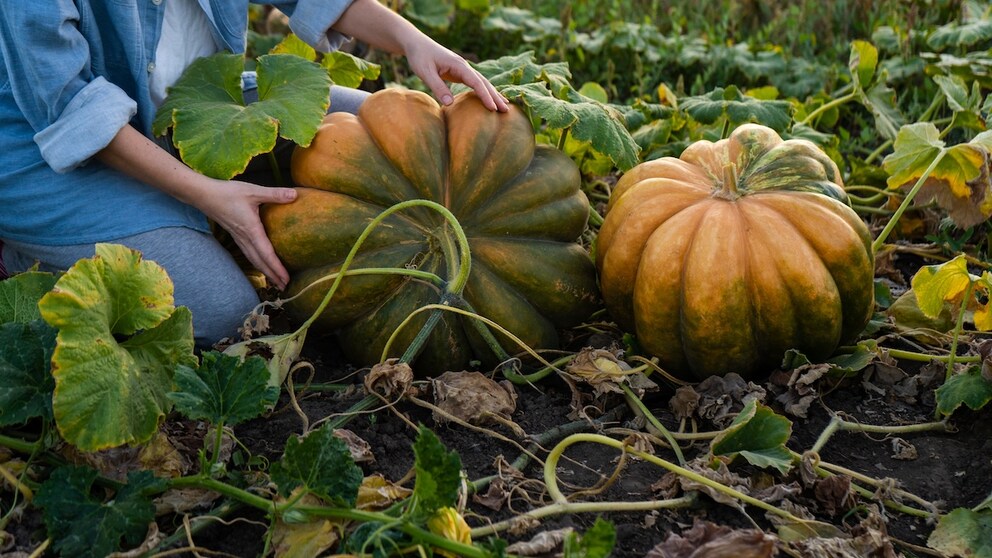
If you’re unsure whether a pumpkin can be harvested, you often first look at the size of the fruit. However, other characteristics are more telling. If the pumpkin has fully developed its typical color and the skin appears firm, the harvest time is approaching. The plant itself provides another signal: Toward the end of the season, many leaves wilt while the growth of the fruits is largely complete.
Gardeners should pay particular attention to the stem. As long as it is still green and soft, the fruit usually continues to ripen. If it becomes dry, brown, and cork-like, this indicates a mature pumpkin.
A Simple Test Provides Certainty
If you’re unsure about the ripeness, it’s worth looking at the skin. A ripe pumpkin has a firm outer skin that can hardly be scratched with a fingernail. For many larger varieties, the tap test can also help. If the fruit sounds dull and slightly hollow when tapped gently, this also indicates a ripe pumpkin.
Also interesting: How to recognize a ripe pumpkin in the garden
Before the Frost, It Gets Serious
Even if a pumpkin still looks good, you shouldn’t delay the harvest too long. As soon as the first night frosts threaten, urgency is required. Cold can damage the skin and significantly shorten the storage life. If you want to keep your pumpkins over the winter, you should bring them indoors in time.
Do pumpkins still ripen even if the leaves have dried up?

4 Expert Tips for Apple Harvesting
Why the Stem Should Be Harvested
A common mistake occurs during the harvest. Pulling or twisting the pumpkin off the plant can damage the fruit. It’s better to cut the pumpkin with a sharp knife or garden shears, leaving a piece of the stem. This way, it remains longer-lasting and less prone to rot.
After the harvest, the pumpkin should also be handled carefully. Bruises and damaged skins can later promote rot. Therefore, it’s best to process injured fruits promptly and store only undamaged ones for the winter.
Only Perfect Fruits Are Suitable for Storage
If you want to store your pumpkin after harvest, you should only store undamaged and fully mature fruits. An ideal place is a cool, dry, and well-ventilated room. Many pumpkin varieties can last several months there. Still, it’s worth regularly checking the fruits. If individual spots become soft or show the first signs of rot, the pumpkin should be used as soon as possible.