

August 11, 2023, 3:33 am | Read time: 5 minutes
Imagine having a kiwi or fig tree next to the apple tree in your garden. It would be nice to have a bit more variety and diversity. But do exotic fruits even grow here?
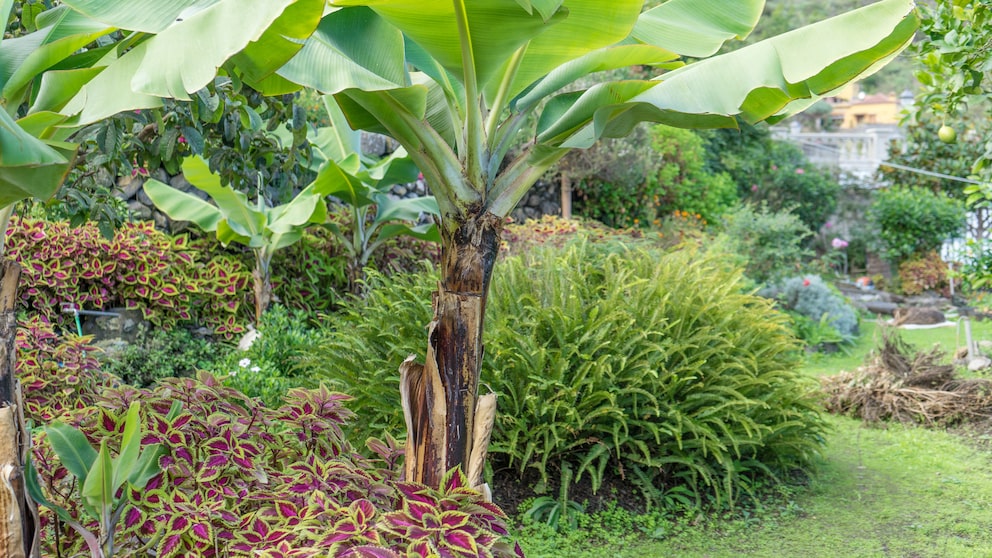
Our climate is changing. Dry, hot summers and mild winters are becoming more common. These are temperatures typical of Mediterranean countries. Is it a good idea to rethink garden planting and now bring Mediterranean and even exotic plants into the garden–figs instead of apples, kiwis instead of plums, bananas instead of currants?
Exotic Plants in the Garden Thanks to Climate Change?
“The idea isn’t new; the trend has been around for many years,” says Oliver Fink, chairman of the Association of Garden Nurseries. When tourists traveled more frequently to Italy and Spain in the 1960s and 1970s, cuttings of native plants were popular souvenirs. And many vacation memories have grown into impressive oleander bushes or small olive trees in gardens.
“With climate change, the desire for plants that can cope well with the changed conditions has now reached much larger dimensions,” says Oliver Fink. Another reason to plant these species here: “We need a wide variety of species and structures, both native and exotic plants,” says Sven Görlitz, garden consultant at the Home Ownership Association.
However, Oliver Fink advises against continuing to bring back vacation souvenirs to Germany: With self-cut olive branches and cuttings of oleander or figs, problematic diseases can also be introduced into our gardens.
Also interesting: 4 hardy palms that can withstand frost
Are They Thriving Here Yet?
But not all plants from southern and warmer regions thrive here. Garden consultant Sven Görlitz lives in southern Germany in the Rhine Valley, where fig trees have been growing well for decades. But in northern Germany or in the mountains, it can be different. Because whether and how Mediterranean and exotic plants are already thriving in German gardens largely depends on the location.
Even though the climate is changing: “Germany is not Italy. In many areas, the winter is much colder and wetter than in the Mediterranean,” says Sven Görlitz. Even though it has become less common in recent years, severe winter outbreaks with deep frost are always possible. Figs, kiwis, and oranges cannot tolerate that.
When temperatures remain below freezing, most Mediterranean plant species need winter protection. At temperatures below minus ten degrees, the plants can die. “Too long, too cold, and too dry winters are not good for these plants. But too much and persistent wetness also harms them, causing them to rot,” says Oliver Fink.

How to Create a Mediterranean Balcony and Bring the South Home
Overwintering Olive Trees: How They Survive the Cold Season
Some Exotic Plants Survive in the Garden, Others Do Not
Fink’s advice: Seek advice, as it often comes down to the fine differences. “There are hundreds of fig varieties, many of which, but not all, can handle severe cold.” In this case, it’s also good to know: If you want to harvest fruit, you need to buy a self-pollinating fig tree.
When choosing, you should also consider that exotic and Mediterranean plants have a water requirement adapted to their natural location. Bananas, which come from the tropics, need a lot of water and warmth. Oleander comes from swampy areas, so its water requirement is also high. Olive and fig, on the other hand, manage with less.
“Most plants from the Mediterranean region love permeable mineral soil,” adds garden consultant Sven Görlitz. Clay soil is less suitable because waterlogging can form in it during winter.
If you’re considering this, you should assess your garden accordingly:
- In which region is it located?
- What weather conditions prevail?
- What is the soil like?
- What has changed in recent years?
And what about pot culture and winter storage indoors? This is only a limited solution to the winter problem because, according to Sven Görlitz, the exotics need cool temperatures of six to ten degrees indoors during winter–which many well-insulated and heated rooms cannot provide.
Also interesting: In 7 steps to your own lychee tree
Exotics Should Not Replace Native Plant Life
As attractive as exotic plants and possibly their fruits may be in the garden, they should only be an addition. “Under no circumstances should they be exchanged for native plants just because they cope better with heat and drought,” says Sven Görlitz. “On the contrary: It’s exciting to observe how they all develop together in the garden.”
But the statement also has a serious background: Many insects, such as wild bees and butterflies and their larvae, are specialized in native wild plants, so their survival depends on these continuing to grow abundantly in gardens.
As an addition, however, the “newcomer” plants can be an enrichment. “The greater the diversity in the garden, the better it is for insects and butterflies,” says Oliver Fink. Kiwi blossoms, for example, are particularly popular with the animals.
With material from dpa