


December 16, 2022, 10:18 am | Read time: 4 minutes
The olive tree originates from the Mediterranean region. However, it is increasingly found in gardens here as well, giving them a Mediterranean flair. When overwintering olive trees, there are several things to consider.
Just the sight of an olive tree evokes a certain vacation feeling. This is one reason why it is increasingly found in local gardens. However, it is a Mediterranean plant, which means the olive tree prefers warmth. It is less tolerant of frost and cold, and the conditions here, especially in winter, are far from ideal. Therefore, appropriate measures must be taken in certain regions. What to consider when overwintering olive trees, the care they need, and why they sometimes lose their leaves.
How Much Cold the Olive Tree Can Tolerate
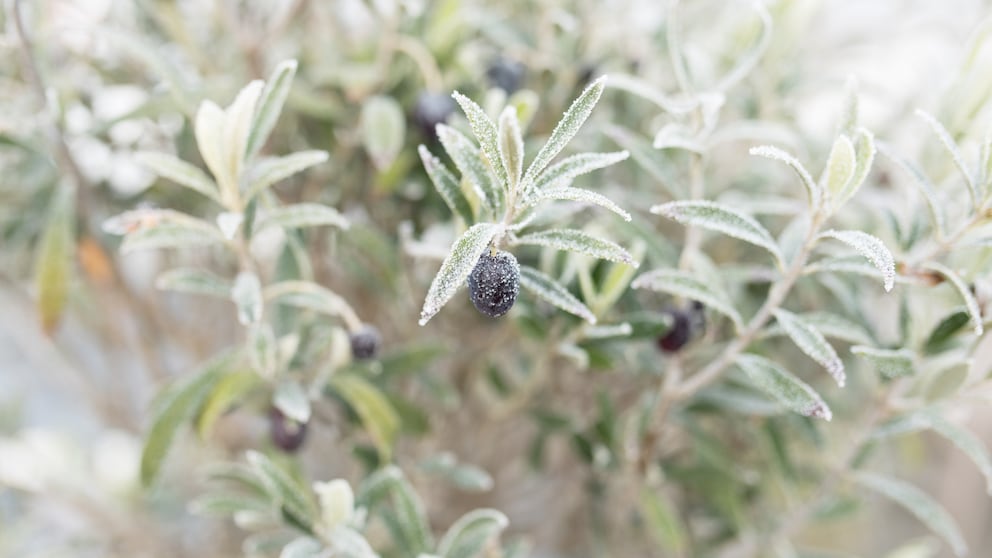
Olive trees are accustomed to mild winters, as they originate from the Mediterranean region. They can still tolerate light frosts. They can withstand temperatures down to minus five degrees Celsius, but prolonged frost harms the olive tree. At such temperatures, the olive tree should be properly overwintered.
It is generally advisable not to plant the olive tree in the ground but to keep it in a container. This way, it can be easily moved to winter quarters, avoiding damage or even the death of the plant. If you don’t want to do without an olive tree in the garden without a container, you can plant it in the ground with the container and then dig it up and move it to winter quarters for overwintering.
Related: 5 Mistakes That Lead to Yellow Leaves on Olive Trees
Properly Overwintering Olive Trees
Even though olive trees generally prefer warmth, they should be kept outside as long as possible. Light frost helps to kill off unwanted pests that might otherwise be brought into the winter quarters.
In a Container
If you have an olive tree in a container, it should be placed in a wind-protected and covered location for overwintering. The tree crown should be protected with a light fleece. The pot and soil also need frost protection, for which leaves, brushwood, or fleece are suitable.
If there is prolonged frost and a very cold winter, it is better to bring the olive tree indoors–to a place that is cool but frost-free. Unheated conservatories, greenhouses, or even a cool hallway are ideal. The garage or basement can only be used if there is enough light. Ideally, temperatures should be between five and ten degrees Celsius. If it is too warm, the olive tree’s winter dormancy is disturbed, and it cannot gather strength for new growth in the next spring.
In the Garden
An olive tree planted in the ground can also survive local winters–with the right frost protection. The entire crown and trunk must be wrapped and protected with several layers of winter fleece. Plastic sheeting is not suitable as it is not breathable and can cause damaging condensation. The soil or roots also need extra protection. This area can be covered with a jute mat, leaves, straw, brushwood, or mulch.
Tip: To avoid risk, you can transplant your olive tree into a container in October or November before it gets really frosty. Additionally, some garden centers or nurseries now offer winter quarters for large container plants.
Properly Caring for Olive Trees in Winter
Even when the olive tree is in winter dormancy, it needs good care. It is important that the roots never completely dry out. Therefore, the tree should be watered occasionally–but very sparingly. Waterlogging should be avoided as it can damage the roots. The cooler the winter quarters, the less watering is needed. Fertilizer and pruning are not done in winter for olive trees.

What’s Important for Overwintering Balcony Plants

How to Properly Overwinter Agapanthus
Why the Olive Tree Loses Its Leaves
In winter quarters, it is common for the olive tree to lose its leaves. This is usually due to an incorrectly chosen winter quarters. It is either too warm or too dark. Olive tree owners need not worry: the tree usually regenerates in spring and sprouts again.
When Can the Olive Tree Leave the Winter Quarters?
Since olive trees can tolerate light frosts, they can be moved outside again quite early in the spring. This can be possible as early as mid-March. However, it is important that the trees first get used to the light conditions again. They should not be placed directly in the sun.