


October 2, 2025, 3:09 pm | Read time: 3 minutes
As soon as the first hazelnuts fall to the ground, the harvest season begins. Those who know a few tricks about gathering, drying, and storing can enjoy hazelnuts well beyond winter.
When Hazelnuts Are Ripe
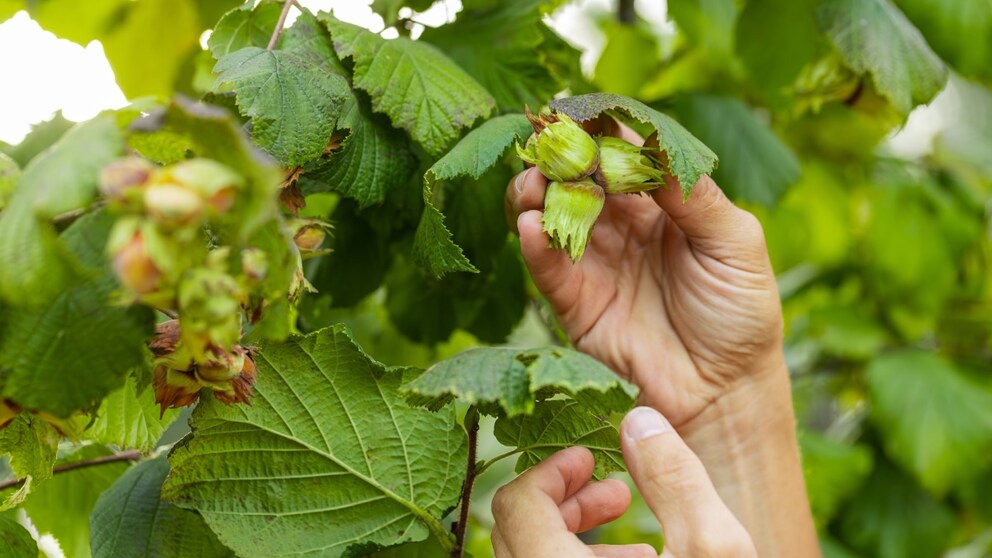
The main harvest time for hazelnuts is between mid-September and the end of October. Ripeness is indicated by the brown color of the shell and the fruits falling to the ground on their own. As long as the nuts are still green or firmly in their husks, they are not ripe. Hazelnuts do not continue to ripen after harvest. Nuts picked unripe will later shrivel and lose flavor.
Therefore, it’s not advisable to give in to the temptation to pick the nuts prematurely just to beat the squirrels. It’s better to check several times a week and quickly gather the fallen fruit.
The exact ripening time also depends on the hazelnut variety. Early varieties like ‘Nottingham’s Earliest’ start ripening as early as the end of August. For later varieties like ‘Miracle of Bollweiler,’ the fruits often ripen only in October.
Harvesting Hazelnuts Properly
Gathering ripe hazelnuts is usually done quickly. The nuts are picked up directly from the ground or shaken loose from the bush. To make the task easier, you can lay out a tarp.
Since moisture in the grass or on the tarp promotes mold growth, the nuts should be collected as quickly as possible. Nuts with cracks should be sorted out because they are hardly durable. Moldy nuts should also be consistently removed, as mold can quickly spread and endanger the entire harvest. If small holes are visible in the nuts, it’s usually the hazelnut borer, whose larvae gradually eat the nuts during their development.
Drying Hazelnuts
After harvesting, the nuts need some time to become storable. They should be dried for about four to six weeks. For this, they are spread out on trays, in fruit crates, or in baskets. A well-ventilated environment is crucial. Attics with good airflow or windowsills above a heater are particularly suitable for drying. The nuts should be turned several times a week to ensure even drying.
While theoretically possible, drying the nuts in the oven is not recommended. The heat can alter the nuts’ fat, resulting in a bitter or rancid taste. It’s always gentler to dry them in a well-ventilated place.

Walnuts Are Ripe! Tips for Harvesting, Drying, and Storage

Popular Nut Trees for the Garden and How to Care for Them Properly
Storing Hazelnuts Properly
Once the nuts are fully dried, they can be stored in breathable bags, such as onion or potato nets, or jute sacks. Dark, cool, and dry places are ideal. Under these conditions, hazelnuts in their shells can last up to a year. Already cracked nuts are much more sensitive and should be consumed soon. Instead of storing the nuts in bags, you can also crack them and then freeze them whole or ground.
Collecting Hazelnuts in Nature
Even if you don’t own a hazelnut bush, you can still harvest: The bushes are found in many places in parks, along paths, or at the edges of forests. Here, moderation is key, as squirrels, birds, and other animals rely on the protein- and fat-rich nuts for food.