


April 8, 2026, 4:04 am | Read time: 3 minutes
Anyone with a garden wishes for fresh herbs right outside their door—but not every location offers ideal conditions for all plants. While rosemary and thyme love dry, sunny spots, parsley or chives thrive better in moister soil. A clever solution to this problem is the so-called herb spiral. It creates different climate zones in a small space, allowing for the cultivation of various herbs in one place. myHOMEBOOK gardening expert Franka Kruse-Gering explains how a herb spiral works and what to watch out for.
What Is a Herb Spiral?
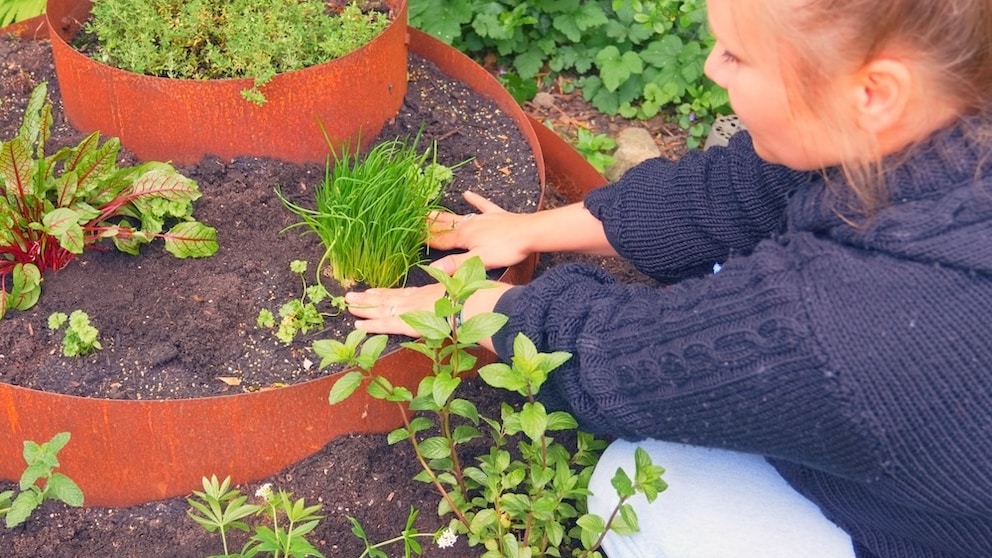
A herb spiral is a spiral-shaped raised bed, usually built with natural stones, bricks, or other sturdy materials. It is characterized by its upward spiral shape, creating different heights in a compact space. This is its major advantage: Each level changes the conditions for the plants. While the upper area is drier, warmer, and sunnier, the lower part remains more humid and nutrient-rich.
Essentially, a herb spiral combines several locations into a single bed. Plants with very different needs can grow close together without interfering with each other. This makes the herb spiral particularly practical for those who want to grow a variety of culinary and tea herbs but have limited garden space.

4 Common Mistakes When Growing Herbs
How to Keep Cut Herbs Fresh Longer
How the Herb Spiral Principle Works
The function of the herb spiral is based on a simple natural principle: Height, sunlight, and water distribution influence how dry or moist a location is. As the spiral ascends, watering and rainwater slowly drain downward. Therefore, the soil dries out faster at the top, while more moisture is retained further down. This creates different planting zones that mimic natural habitats.
Different Zones
At the very top is the so-called Mediterranean zone. Here, the soil is leaner, more permeable, and dry, making it ideal for herbs like rosemary, thyme, sage, or lavender. Slightly lower is the normal zone. The soil here is richer in nutrients, and the moisture is more balanced. Good candidates for this area include parsley, chives, or sorrel.
The lower part is the moist zone. More water collects here, the soil is richer in humus, and it stays fresh longer. This is favored by herbs like lemon balm, mint, or sweet woodruff. Some herb spirals also end in a small water zone or a mini pond, where plants that need constant moisture, such as watercress, can grow.
It is this interplay of different areas that makes the herb spiral so effective. Instead of creating a separate bed for each plant, the site conditions are deliberately created in a single structure.
What You Need for a Herb Spiral
For a herb spiral, you first need a sunny spot in the garden. Ideally, it should be a location that receives many hours of light per day, as most herbs come from warm regions and develop their aroma best in the sun. It is particularly advantageous if the opening of the spiral faces south to make optimal use of the warmth.
The actual construction typically uses natural stones, fieldstones, clinker, or bricks. They not only provide stabilization but also store heat, which they slowly release back to the plants later. This is especially beneficial for heat-loving Mediterranean herbs.