


July 21, 2026, 11:34 am | Read time: 4 minutes
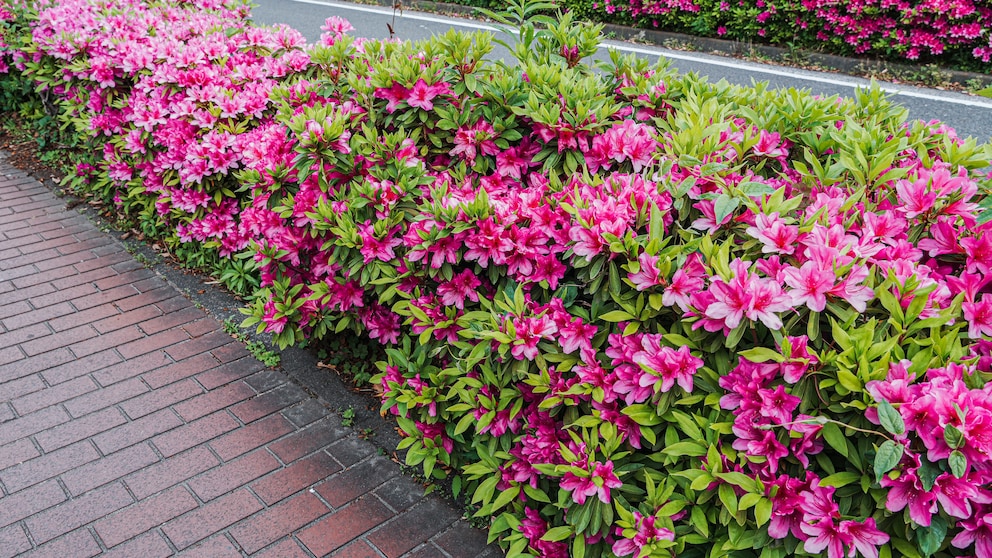
A flowering hedge is more than just a privacy screen: Cleverly combined, it blooms from early spring to late summer. But for this to succeed, the right pruning is crucial. A classic hedge is trimmed to maintain its shape. With a flowering hedge, this very cut can cost you the blooms. It all depends on when you pick up the shears. myHOMEBOOK explains what to consider with flowering hedges.
Flowering shrubs can be roughly divided into two groups. Some bloom on shoots that grew the previous year, while others bloom on new shoots of the same year. When and how you prune depends on this.
One Type or Many?
A flowering hedge doesn’t have to be mixed. Grown from a single type, it appears calm and uniform, blooming in a large sweep. Popular choices include forsythia, lilac, spirea, red currant, or hibiscus. The advantage of pruning is that the entire hedge follows one rule and schedule. A mixed hedge of early and late-blooming types blooms for months and offers insects more, but requires pruning each type at its time.
Prune Spring-Flowering Hedge Plants After Blooming
This group includes almost all flowering shrubs that unfold their blooms in the garden in spring and early summer, from forsythia to red currant. The best time for pruning is when the last blooms wilt. Then the shrub has the entire summer to form new flowering shoots for the next year. Pruning in fall or winter, however, removes many flower buds, resulting in fewer blooms the following year.
It’s best to perform a thinning cut every two to three years: Remove only the oldest shoots close to the ground. Additionally, you can redirect older shoots to younger branches on the same shoot. This keeps the hedge airy and blooming.
If desired, most of these shrubs can also be grown as trimmed formal hedges. Forsythia is occasionally seen this way, but spirea or red currant can also be shaped. The more you trim for shape, the less bloom remains, as the ongoing shaping cut also removes the wood where the buds sit.
If a fundamental rejuvenation is needed because a shrub has aged from the inside, pruning becomes a winter task. During the leafless period between October and February, it causes the least damage.
Popular Spring-Flowering Hedge Plants
Forsythia (2 to 3 m), lilac (3 to 5 m), red currant (1.5 to 2.5 m), weigela (1 to 2.5 m), beauty bush (3 to 4 m), flowering quince (1 to 2 m), mock orange (2 to 3 m), Japanese kerria (1 to 2 m), bridal wreath spirea (1.5 to 2 m). The height specifications are guidelines and vary depending on the variety.
Prune Summer-Flowering Hedge Plants Before Budding
Flowering shrubs that bloom in the summer, such as summer spirea or butterfly bush, work differently. They form their blooms on the current year’s shoots. Pruning in late winter or early spring, before budding, doesn’t harm them but brings out the best: especially many blooms. Unlike spring bloomers, summer-flowering hedge plants need pruning every year.

Which Plants to Prune in February

Five Shrubs to Prune in May
Popular Summer-Flowering Hedge Plants
Butterfly bush (2 to 3 m), summer spirea (0.5 to 1.5 m), cinquefoil (0.5 to 1 m), garden hibiscus (2 to 3 m), panicle hydrangea (1.5 to 2.5 m). The height specifications are guidelines and vary depending on the variety.
Legal Regulations for Hedge Pruning
To protect nesting birds, in Germany, hedges must not be radically pruned, cut back to the stump, or removed between March 1 and September 30, according to the Federal Nature Conservation Act. Only gentle shaping and maintenance cuts are allowed during this time.
For spring bloomers, this means pruning after blooming often falls in May or June, right in the middle of this protection period. A careful thinning is then acceptable, but a strong cutback is not. Before you start, it’s better to check if the shrub is currently occupied by blackbirds and other birds.