

June 27, 2026, 10:47 am | Read time: 4 minutes
When temperatures remain high for days and natural water sources dry up, many native wild animals come under pressure. While pets usually have access to fresh water at all times, providing for birds, insects, or hedgehogs becomes more challenging during hot summer periods. Simple measures in the garden or on the balcony can help many wild animals in the summer—but there are some important differences to consider.
Why Water Is So Important for Wildlife in Summer
Water is essential for all living beings. It plays a central role in circulation, respiration, energy production, substance transport, and the elimination of toxins. A prolonged lack of sufficient fluid can impair health and, in extreme cases, be fatal.
Especially during extended heat periods, puddles, small streams, and ponds dry up, or the water quality deteriorates. Some animal species partially meet their fluid needs through plants and other food, but many rely on accessible water sources.
These Animals Suffer Particularly from Drought
When bodies of water dry up, amphibians are the first to be affected. Tadpoles of frogs, toads, and newts can perish in drying waters. Artificially created ponds are especially at risk. If fish or salamanders live there, water levels should be regularly checked and replenished if necessary. In some cases, additional oxygen may also be needed.
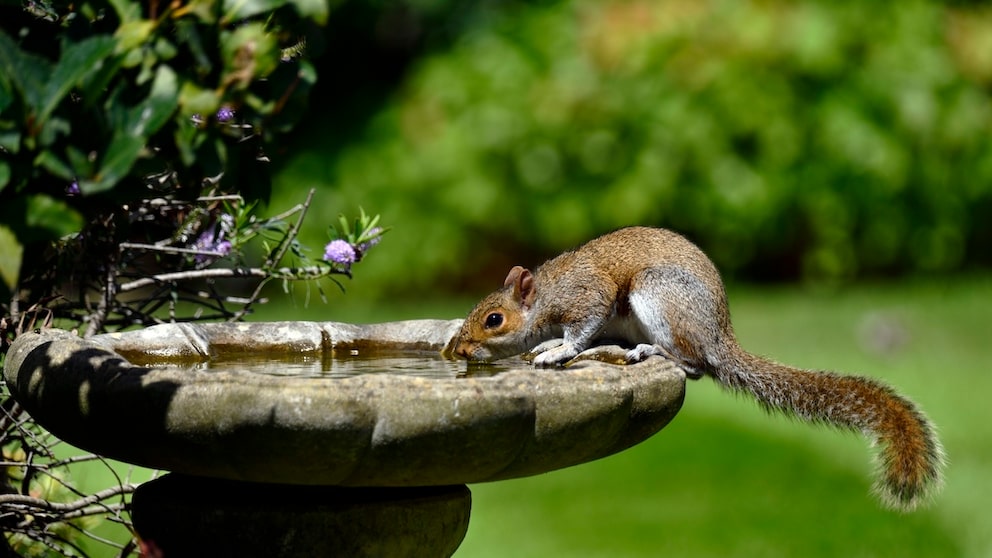
Squirrels, hedgehogs, mice, birds, and numerous insects also find fewer water sources during extreme heat and benefit from provided water troughs.
The situation is different for larger wild animals like deer, wild boars, or foxes. According to the German Wildlife Foundation, these animals generally have enough water sources. They also shift their activities to cooler times of the day or reduce them altogether. Therefore, additional water supply in the forest is not necessary.
Larger animals also have advantages in water management. Their body surface area is smaller in relation to body volume, which means they heat up less. At the same time, their metabolism runs more slowly.
Suitable Water Troughs for Birds
On hot days, blackbirds and crows often sit with their beaks open, breathing rapidly in and out. This so-called gular fluttering helps them cool down.
If you want to offer water to birds, the trough should be placed or hung at an elevated position in the garden. This way, the animals are better protected from predators while drinking. Important features include gently sloping edges and a shallow water depth of about two to six centimeters. Special bird baths are suitable, as are repurposed flower pot saucers.
The trough should be securely fastened so that the animals can safely land, drink, bathe, and take off again. Recommended materials are terracotta, natural stone, clay, or concrete. Glass, porcelain, and stainless steel are less suitable because the surfaces are too slippery.
A spot in partial shade offers favorable conditions. Not only birds but also squirrels often use such water sources.
Creating Water Sources for Insects
With a few materials, suitable troughs can be made for bees and butterflies. You will need:
- a shallow dish or a flower pot saucer
- stones, marbles, wood pieces, or branches
- moss
The stones should partially protrude from the water so that the insects can land safely. Moss is distributed between the stones and at the edge. It retains moisture and allows the animals safe access to the water.
How to Protect Animals from Water Sources in the Garden
These Plants Are Natural Insect Watering Stations
Change Water Daily and Clean Troughs
In high temperatures, the water should be renewed daily. This prevents the multiplication of germs and pathogens.
Before refilling, a thorough cleaning with hot water and a brush is recommended. Cleaning agents should be avoided.
Caution with Rain Barrels and Garden Ponds
Rain barrels and ponds can pose a danger to wildlife not only in summer. If birds, squirrels, or other animals fall in, they often cannot get out due to the smooth walls.
A simple exit aid in the form of a branch or board can prevent animals from drowning and allow them to find their way back to safety.