


August 17, 2023, 11:05 am | Read time: 3 minutes
Oaks are impressive trees that often live for several hundred years—unless they are cut down. According to popular belief, it is even forbidden to fell oaks. But is there really a special regulation for this?
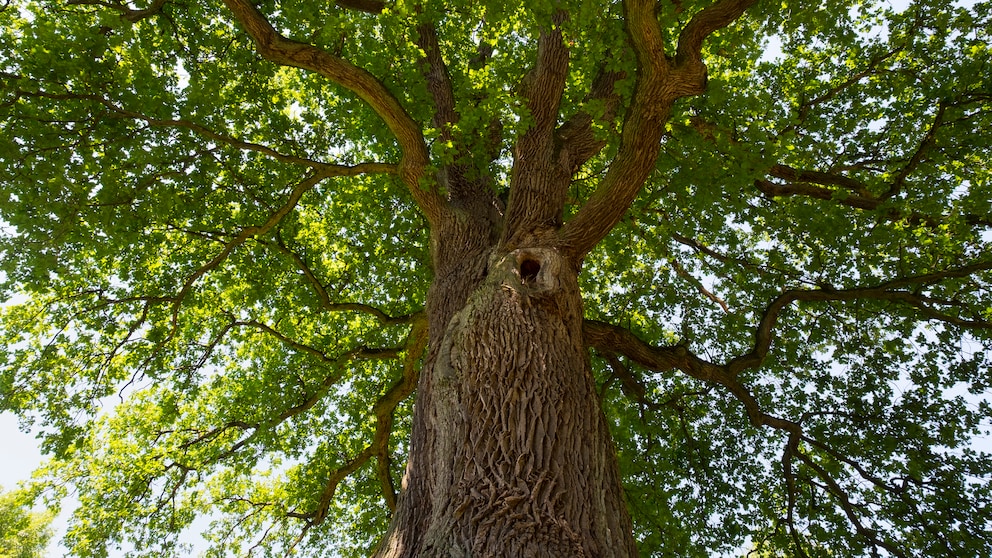
Oaks are considered exceptionally long-lived. It is not uncommon for oaks to have a history spanning several centuries, thus outlasting human lifetimes many times over. Additionally, these imposing trees provide habitat for many animal species. According to folklore, it is even forbidden to fell oaks. But is this statement really true? myHOMEBOOK asked an expert.
Felling Oaks–What Regulations Apply?
In many countries and regions, there are laws and regulations governing the protection of trees. Often, the felling of trees, especially older and protected species like oaks, is restricted or requires special permission. In private gardens, the closed season must first be observed. “From March 1 to September 30, no trees outside the forest may be felled according to Section 39, Paragraph 5 of the Federal Nature Conservation Act,” explains Birte Cordts from the NABU Federal Association.
“Additionally, it depends on the regional tree protection ordinance. Each city or municipality has its own regulations,” explains the forest conservation and sustainable forest use consultant. These ordinances specify which trees may be felled. “The ordinances mainly apply to deciduous trees; conifers are generally exempt,” Cordts adds.
Read more: Can you fell a tree in your own garden?
Can You Sell Wild Mushrooms You Gather Yourself?
What to Do if You Find the Oak Processionary Moth in Your Garden
Oaks as Natural Monuments
Many oaks are also considered natural monuments, which means they cannot be felled or can only be felled with special permission. “For example, if they are a solitary landscape element or are protected due to their appearance,” explains the tree expert. “If the tree is classified as a protected biotope, it has a stricter protection status, such as when bats live in it.” Birds like woodpeckers also often nest in these trees. According to Cordts, a birch is generally not considered a natural monument, as these trees “only” live around 100 years. “For nature conservation, it is great if an oak is left standing for a long time,” the expert summarizes.
Why Oaks Are So Special
The oak is a remarkable and special tree species. Here are some reasons for its preservation:
- Longevity: Oaks are known for their exceptional longevity. Some oak species can live for centuries.
- Resilience: The trees are resistant to various environmental conditions, including extreme temperatures, drought, and pests.
- Habitat and Food Source: Oaks are ecologically important as they provide habitat and food for many animal species, including insects, birds, and mammals.
- Historical and Cultural Significance: Oaks have a long history in many cultures and are often associated with symbolism and traditions. In some cultures, oaks were considered sacred trees or linked to certain deities.
- Economic Use: Oak wood is known for its hardness and durability. It is used for a variety of applications, including in the furniture and crafts industries.
- Environmental Protection: Oak forests contribute to soil conservation and can prevent erosion. They also play a role in carbon sequestration.