

June 11, 2026, 1:51 pm | Read time: 7 minutes
Starting in May, white, cotton-like webs can sometimes be seen on trees. They often come from the oak processionary moth. The caterpillars of this moth species are considered harmful to health because their fine stinging hairs contain an irritating toxin. These creatures can also appear in gardens. This poses an increased risk, especially for children and pets. If you discover a nest, you should keep your distance and consider professional removal. myHOMEBOOK explains how to identify the oak processionary moth, the dangers it poses, and how to keep these pests out of your garden.
Overview
- How to Identify the Oak Processionary Moth
- When Do the Caterpillars Appear?
- Which Trees Does the Oak Processionary Moth Infest?
- How Dangerous Is the Oak Processionary Moth?
- What Danger Do the Caterpillars Pose to Humans?
- The Natural Enemies of the Oak Processionary Moth
- Oak Processionary Moth Discovered in the Garden–Now What?
- Methods to Combat the Oak Processionary Moth
- Can the Pest Be Prevented?
- What to Do If You Come Into Contact with the Stinging Hairs
How to Identify the Oak Processionary Moth
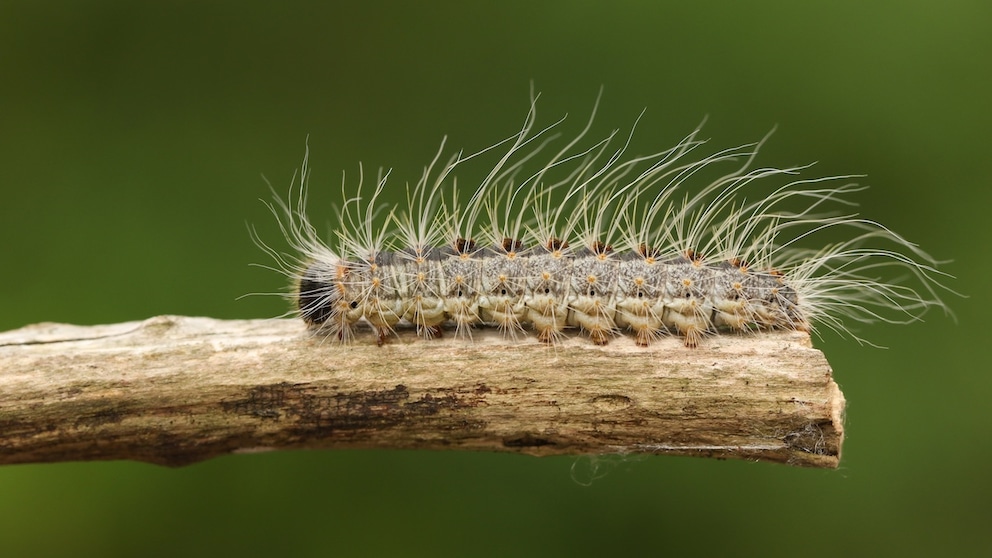
At the beginning of their life, the caterpillars are yellow-brown, and over time their color changes to gray-blue to black. Their bodies are covered with clearly visible hair. The caterpillars can grow up to five centimeters long. Their webs resemble nests hanging on the trunks of infested trees. According to Nabu, these can reach the size of a soccer field.

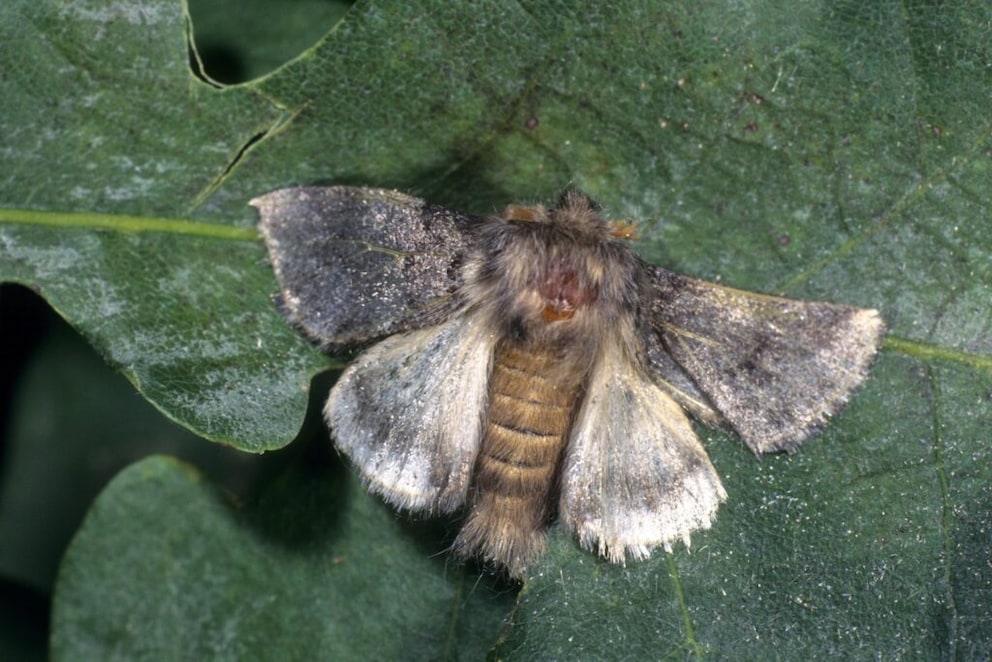
By the way: The hairy caterpillars develop into an inconspicuous, night-flying moth. Its forewings are gray with slightly darker crosslines, the hindwings are white-gray, and it has hairs on its back. It reaches a wingspan of about 25 mm, which can be observed from the end of July to early September.
When Do the Caterpillars Appear?
In the fall, the embryo develops, and the fully formed young caterpillar then overwinters in the egg. In early May, the caterpillars of the oak processionary moth, which are dangerous to humans, hatch—they are then in the third larval stage, in which they already have stinging hairs. They go through a total of five to six developmental stages before pupating.
Which Trees Does the Oak Processionary Moth Infest?
As the name suggests, the oak processionary moth primarily infests oak species. However, it can sometimes also switch to beeches. Nationwide, oak and mixed forests are affected. It nests in avenues, forest edges, or on isolated trees.
The oak processionary moth defoliates the trees. This results in what are known as feeding damages, which deprive the infested trees of the strength to regenerate. With severe feeding, especially if it occurs for several consecutive years, the tree’s vitality is so weakened that it becomes more susceptible to other pests, such as mildew. Often, the trees then die.

Ever Wondered Why the Oak Processionary Moth Has Such a Long Name?
“The name of the oak processionary moth sounds curious. Clearly, the ‘oak’ part is because it prefers to wreak havoc on oaks. The last part, ‘moth,’ is related to the white webs spun by the insects in the treetops. But what about the middle part, ‘procession’? Generally, a procession is understood to be a religious, ceremonial parade. The caterpillars of the moth have a very special way of moving. In search of food, they travel in large groups. They form long chains that can be up to ten meters long. Their march, with a bit of imagination, resembles a parade or procession.”
How Dangerous Is the Oak Processionary Moth?
The pest is dangerous in two ways: It can cause forestry damage and also pose health risks to humans. Especially from late May to early July, the oak processionary moth can be dangerous to humans, as during this period it loses many of its hairs, which are carried by the wind and spread.
What Danger Do the Caterpillars Pose to Humans?
These hairs are hollow inside and contain the protein toxin thaumetopoein. Inhaling the fine hairs can cause respiratory issues such as bronchitis and asthma. Skin contact can lead to the following allergic reactions:
- Skin irritations
- Eye irritations
- Fever
- Dizziness
- Allergic shocks (in rare cases)
As the Federal Ministry of Food and Agriculture (BMEL) informs, the fine stinging hairs of the creatures have small hooks. These allow the hairs to adhere particularly well to the skin and mucous membranes.
The Natural Enemies of the Oak Processionary Moth
The processionary moth protects itself with its fine leg hairs from predators. Nevertheless, it has some natural predators that are either unaffected by the hairs or simply wait until the caterpillars develop into moths, which they then eat. Its natural enemies include:
- Bats
- Birds (cuckoo, great tit, and blue tit)
- Tachinid flies
- Bugs
- Parasitic wasps
Oak Processionary Moth Discovered in the Garden–Now What?
If you find the caterpillars in your garden, you should avoid the infested trees. It’s best to cordon off the area so that visitors and children also keep their distance. However, the toxic hairs are also carried by the wind. For this reason, you should only harvest fruits and vegetables from the garden with gloves and wash them thoroughly. If allergic reactions occur during or after consumption, you should not use the remaining fruits.
If you discover a web in your garden, you should not start fighting it on your own. It’s better to hire professionals for this. There is no legal obligation to report the oak processionary moth. However, it is advisable to inform the responsible municipality about the infestation. This way, the occurrence and spread of the insect can be better tracked.
Methods to Combat the Oak Processionary Moth
In general, there are three different methods to combat the oak processionary moth, especially applied in public areas:
1. Organizational
Organizational control takes place only during the short, active period of the caterpillars in early summer. It aims to avoid contact with people. For this purpose, areas or paths are temporarily closed or warning signs are put up.
2. Mechanical
Mechanical control involves using equipment to remove caterpillars and nests. This is done either by vacuuming, burning, or collecting the caterpillars. This method is particularly effective because the stinging hairs can also be permanently removed.
3. Biological-Chemical
The use of biological-chemical agents is regulated by the Plant Protection Act to prevent forestry damage. It is different in residential areas, where the main concern is protecting human health. Here, the use of insecticides or biocides is regulated by the Chemicals Act.
Such agents are only effective if used during the first two larval stages. If the larvae are in the third stage, they already have stinging hairs that remain effective after a biological-chemical treatment.
Early Detection and Proper Response to Brown-Tail Moth Infestation
8 Poisonous Animals You Might Encounter in Your Garden
Can the Pest Be Prevented?
In small gardens, you can install nesting boxes for specific bird species that are the natural predators of the oak processionary moth. Otherwise, trees can only be protected from infestation with biocides and plant protection products. However, these can only be applied under certain conditions to be effective: The oak leaves need a certain size, and the weather must be suitable.
The Federal Ministry of Food and Agriculture also has tips on how to protect yourself from the caterpillars and their hairs:
- Avoid infested areas.
- Protect areas of skin such as the neck, throat, forearms, and legs to prevent contact with the hairs.
- If you discover caterpillars and webs: Do not touch them!
What to Do If You Come Into Contact with the Stinging Hairs
If you come into contact with the stinging hairs of the oak processionary moth despite the precautions mentioned, you should shower immediately and wash your hair thoroughly. The same applies to the clothes you were wearing. If you notice a rash or another allergic reaction, it’s best to see a doctor.