


February 25, 2026, 5:14 am | Read time: 3 minutes
As soon as the first seed potatoes appear in garden centers in late winter, an annual debate begins among hobby gardeners. Should potatoes be pre-sprouted before planting, or can they be placed directly in the ground? Some swear by short, sturdy sprouts and an earlier harvest. Others consider pre-sprouting unnecessary effort, as potatoes have been growing for centuries without special preparation. myHOMEBOOK gardening expert Franka Kruse-Gering explains when pre-sprouting can be useful and when it is an unnecessary effort.
What Does “Pre-Sprouting” Actually Mean?
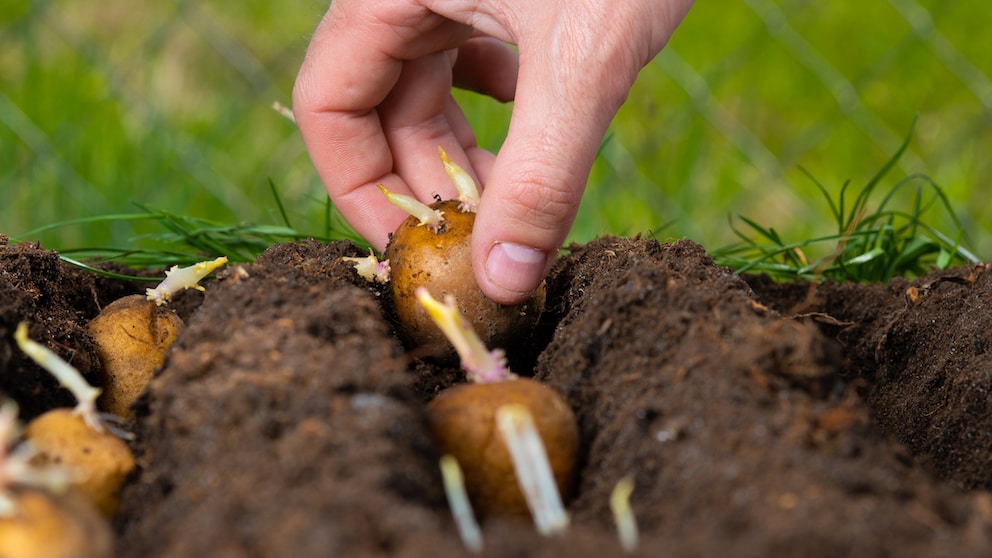
In pre-sprouting—also called “chitting”—seed potatoes are placed in a bright, cool location about three to four weeks before the planned planting date. There, they develop short, firm sprouts that have a developmental advantage when later planted.
It’s important to distinguish this from potatoes stored in a dark cellar, which develop long, white shoots. These so-called “leggy sprouts” are soft, brittle, and unstable. In contrast, targeted pre-sprouting produces strong, compact sprouts that give the plant a good start.

4 Mistakes to Avoid When Growing Potatoes

Planting Potatoes in Fall Using the “Irish Method”
These Points Favor Pre-Sprouting Potatoes
There are several practical advantages to pre-sprouting potatoes, especially noticeable in hobby gardens.
1. Faster Development in the Bed
Pre-sprouted potatoes sprout more quickly after planting. While unsprouted tubers only begin to form sprouts in the soil, the pre-sprouted plant starts growing immediately.
2. Earlier Harvest
Especially with early potatoes, pre-sprouting can advance the harvest by one to two weeks. Those who want to enjoy their own potatoes as early as possible gain a clear advantage.
3. Better Use of Short Growing Seasons
In regions with short summers, every growth day often counts. The developmental advantage helps to make optimal use of the available growing time—an advantage especially in cooler areas or with later planting.
4. Lower Risk of Rot
In cold, heavy soils, unsprouted tubers remain inactive in moist earth for longer, which can increase the risk of rot. Pre-sprouted potatoes begin growing more quickly and are therefore less at risk.
The Arguments Against Pre-Sprouting
Besides the advantages, there are also good reasons against pre-sprouting potatoes or at least not making it strictly necessary.
1. Additional Effort
Pre-sprouting potatoes requires sufficient space, suitable trays, and some attention. The tubers should be stored in a bright, cool, and airy place to develop strong, short sprouts. Regular checks are also important to avoid damage. For larger cultivation areas, pre-sprouting can be impractical, as the space requirement increases and the workload significantly rises.
2. Risk of Sprout Breakage
If care is not taken when planting, the delicate shoots may break. Although the potato usually sprouts again, the growth advantage already gained is lost, delaying development. This can also push back the harvest or make it less uniform.
3. Not Always Necessary
In mild regions with quickly warming soils—such as when planting from April—unsprouted potatoes often catch up quickly. Especially with late varieties, the difference is often minimal.