


October 9, 2025, 10:49 am | Read time: 3 minutes
Potatoes are usually planted in April. However, they can also be planted in the fall. To ensure the success of the “fall planting” experiment, a few details should be considered.
Why Plant Potatoes in the Fall?
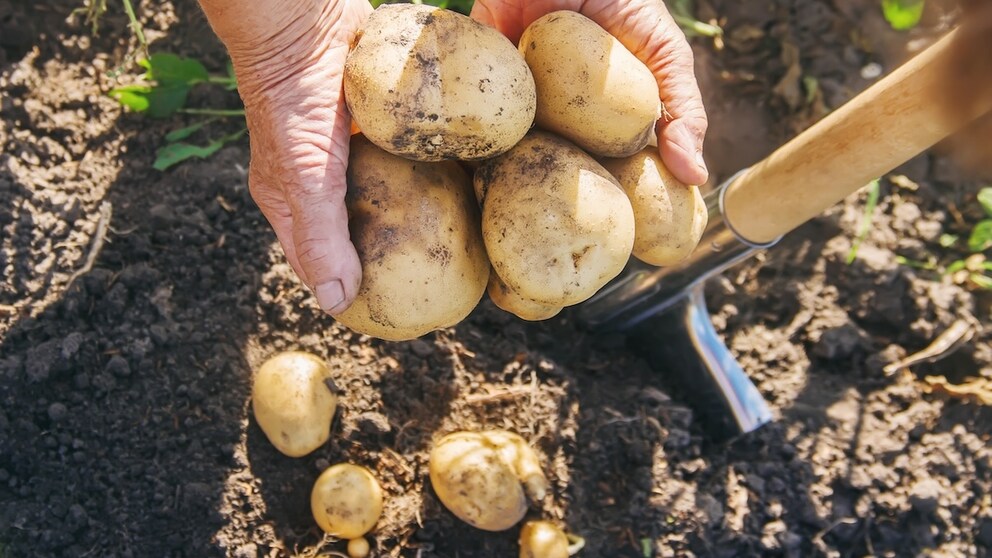
Many gardeners who grow potatoes are familiar with the phenomenon: After the harvest, some tubers are accidentally left in the ground, overwinter unnoticed, and sprout again in the spring. This means that potatoes can survive the cold months in the soil.
From this observation, a practice has developed that has long been a tradition in Ireland. Potatoes are deliberately planted in the ground in the fall there. The advantage is that the tubers can be harvested earlier than with spring planting. They are usually ready even before regular early potatoes. An additional benefit: pests such as wireworms cause fewer problems.
Suitable Varieties and Planting Material
Early potatoes are particularly recommended for fall planting. They mature quickly and ensure an early harvest.
Seed potatoes are hard to find in stores in the fall. If you have your own harvest from the summer, you can easily use it as planting material. Larger tubers are generally a better choice for fall planting because they have more energy reserves and can more easily push through the deeper soil layer after winter.
Also interesting: 3 Common Mistakes When Harvesting Potatoes
The Right Location
A sunny spot is the foundation for successful cultivation. To reduce the chances of diseases and pests, the bed should not have been planted with potatoes or other nightshade plants for four years.
Prepare the Bed
Potatoes prefer light to medium-heavy, well-drained, and humus-rich soil. This should be thoroughly loosened and cleared of weeds. Then, ideally four weeks before planting, the soil can be improved with mature compost. Dry leaves are also suitable for soil improvement.
Planting Potatoes in the Fall in Four Steps
1. Prepare Planting Furrows
In the fall, planting is done a bit deeper than in the spring. Furrows about 20 centimeters deep provide the tubers with more protection from frost.
2. Place the Potatoes
The seed potatoes are placed in the prepared furrows at intervals of about 30 centimeters.
3. Cover and Hill Up
The furrows are filled with soil and slightly hilled up to cover the tubers and provide additional protection.
4. Mulch
A layer of mulch covers the rows and reliably protects the soil from freezing temperatures.

How to Fertilize Potatoes Properly for Healthy Plants and Abundant Harvests

How to Grow Chinese Artichokes in Your Garden
Keep an Eye on Soil Temperature
Soil temperature is important for planting. Pre-sprouted tubers need at least 7 degrees Celsius to develop. Non-sprouted tubers should be planted as long as the soil is still at least 10 degrees. This way, the potatoes have enough time to form roots in the fall.
Care After Winter
As winter slowly fades, the mulch layer is removed to allow the soil underneath to warm up more quickly. The potatoes have already formed roots in the fall and can start growing above ground in the spring as it gradually gets warmer. If there are late frosts, the young shoots should be protected with a fleece or weighted newspaper.