


October 19, 2026, 4:13 am | Read time: 4 minutes
There’s movement in raised beds. And it’s downward. Why raised beds settle, why that’s actually good, and how you can refill them in time is explained by myHOMEBOOK.
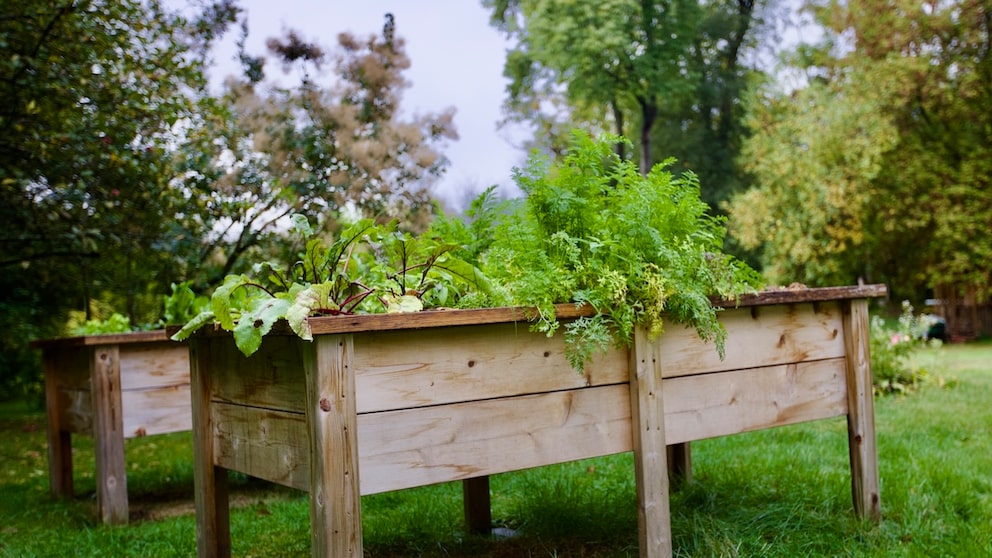
A raised bed that doesn’t settle is a bad raised bed. If your raised bed settles, it’s doing exactly what you built it for: The material inside decomposes, warms the roots, and feeds the plants. If your raised bed doesn’t settle, you might have nothing more than a pile of dirt with a border.
Why does a raised bed settle?
Inside a raised bed, a kind of compost heap is at work. At the bottom are coarse branches, above them leaves, inverted sod, grass clippings, and other plant debris. Then comes compost and, on top, planting soil. Initially, there are plenty of voids between all these materials. Microorganisms gradually break down the organic material. This generates heat and releases nutrients. Branches, twigs, and other coarse structures become brittle and lose volume. At the same time, the filling is compacted by its own weight as well as by rain and watering. The gaps become smaller, and the soil above settles. Thus, the raised bed loses height over time. In the first year, a raised bed can settle by 10 to 20 centimeters–sometimes even more. After that, the filling continues to settle, but usually more slowly.
As the organic materials break down, the amount of nutrients the bed releases also decreases. Especially in the first years, the filling still contains a lot of them. A traditionally layered raised bed releases a lot of nitrogen at first, providing good conditions for heavy feeders such as tomatoes, cabbage, zucchini, cucumbers, or peppers.
When you should refill your settled raised bed
The most convenient time to refill the bed is after the harvest in the fall. Over the winter, the material can settle, so in the spring, only the missing amount needs to be added. If you refill in the spring, you should water the bed thoroughly or wait for some rainfalls. This allows the filling material to settle a bit more before the plants are placed in the bed.
Also interesting: 7 common mistakes when building and filling a raised bed
If the bed settles significantly in the middle of the season, the plants can suddenly be standing in a hollow. For potatoes, this is almost practical, as they need to be hilled up sooner or later anyway. Tomatoes also aren’t harmed if you add more soil. For other plants, you should carefully and gradually add the missing soil. A thick layer all at once can cover plants or set the root collar too deep. Lettuce, for example, needs to flutter in the wind, so it shouldn’t sit too deep in the soil. Otherwise, the outer leaves can rot.

When to Start Planting in a Raised Bed

How to Make Old Soil Fertile Again
What is suitable for refilling raised beds?
Compost and good planting soil are suitable for refilling, preferably mixed. Coarse material like branches or wood chips, as well as immature compost, should not be on top.
When a new filling is sensible
After about five to seven years, the original filling is largely decomposed. This also reduces the typical layering effect: The organic material provides fewer nutrients and generates less decomposition heat. Then it makes sense to completely renew the filling and re-layer the raised bed. You don’t have to dispose of the old soil. It is still suitable for improving the soil in the garden.