


November 7, 2025, 4:08 pm | Read time: 3 minutes
Horse chestnuts, sweet chestnuts, marrons—so many names for fruits that look very similar. But don’t be fooled. These are not synonyms for the same fruit. myHOMEBOOK explains the differences between chestnuts and marrons.
Not All Chestnuts Are the Same
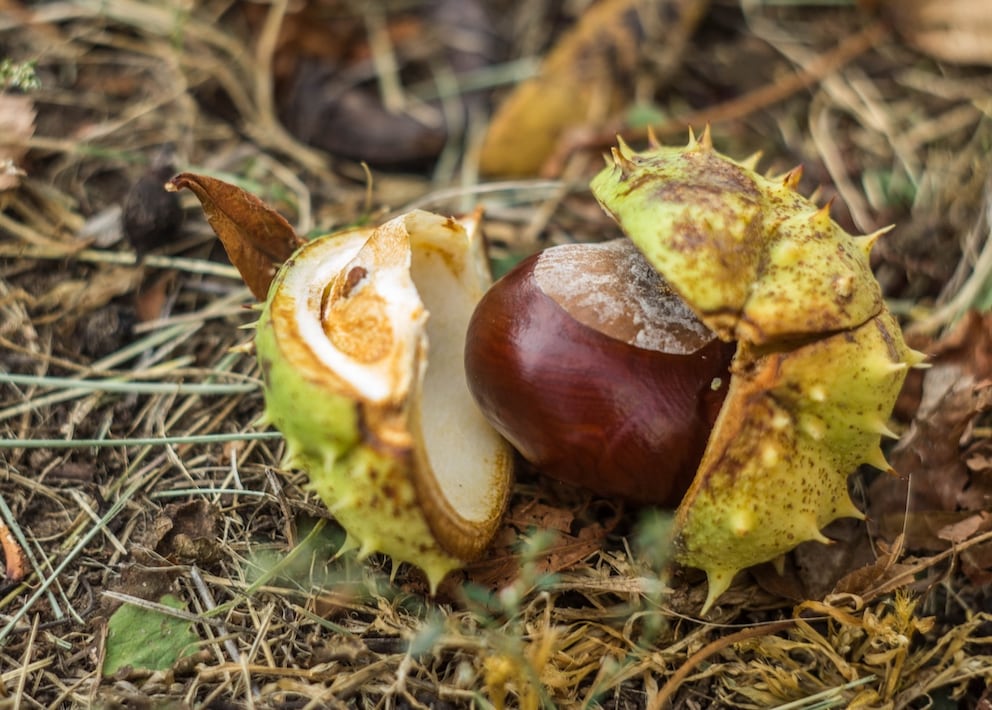
Both horse chestnuts and sweet chestnuts are tree fruits. Their similar names can easily lead to confusion with unpleasant consequences. Unlike sweet chestnuts, horse chestnuts (Aesculus hippocastanum), also called marrons, should not be eaten. They contain saponins, bitter-tasting plant compounds that can cause nausea, stomach pain, and vomiting in humans. They are therefore planted as ornamental trees. The fruits are used as craft materials or as animal feed for deer and wild boar.
Sweet chestnuts (Castanea sativa), also known as edible chestnuts, are an edible fruit. Although both horse and sweet chestnuts are referred to as “chestnuts,” they come from different families. The inedible horse chestnut belongs to the soapberry family, while the edible sweet chestnut belongs to the beech family.
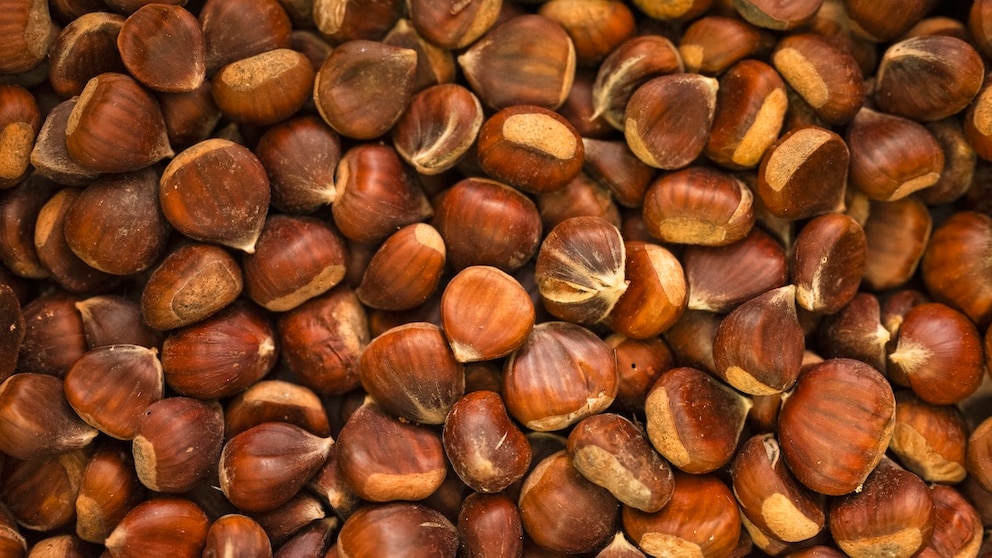
The trees can be distinguished by their leaves: The round leaves of the inedible horse chestnut are palmate, while sweet chestnuts have serrated, individual leaves. The fruits of the trees can also be visually distinguished. Horse chestnuts have spherical fruits with a large white spot, surrounded by a shell with few, fine spikes. Sweet chestnuts are usually smaller, with two flattened sides. They have a small tuft at the top and are surrounded by a spiky shell.

Popular Nut Trees for the Garden and How to Care for Them Properly
Is an oversized zucchini still edible?
First Came the Sweet Chestnut, Then the Marron
Marrons, like sweet chestnuts, are edible. In gourmet cuisine, they are considered a delicacy, and at Christmas markets, they are a popular snack that many don’t want to miss. Marrons are a specially cultivated, sweeter variety of the sweet chestnut. The sweet chestnut is the original form from which the marron variety emerged.
Marrons have been cultivated to be larger, rounder, and more aromatic than regular sweet chestnuts. The peeling of the fruit was also considered: Their fruit chambers are mostly single, not separated by an inner skin that would need to be laboriously removed.
In many places, “maroni” is used as a synonym for sweet chestnut. This is especially true in southern Germany, Austria, and Switzerland. Botanically, however, it is a refined subspecies.
Conclusion
Horse chestnuts are the round, hard fruits collected during a walk in the woods to make autumn decorations. They are not suitable for consumption as they contain bitter compounds. Sweet or edible chestnuts are not related to horse chestnuts—the name is misleading. Therefore, the fruits of the sweet chestnut can be eaten. Marrons are a cultivated, “improved” form of the sweet chestnut. Their fruits are larger and more aromatic.