


December 19, 2025, 11:53 am | Read time: 5 minutes
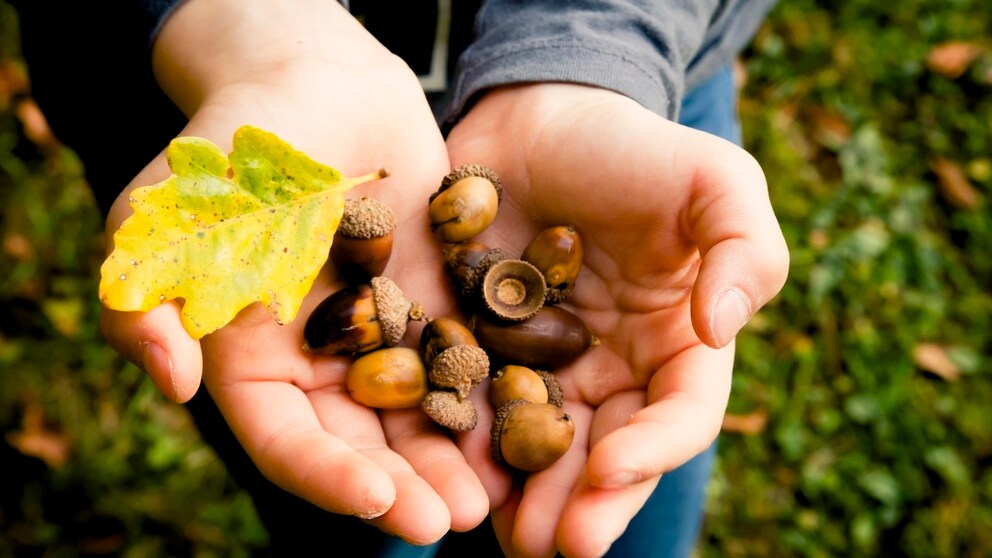
In the fall, they fall en masse from the trees, landing on garden paths, terraces, or flower beds, and are either swept away or left lying around. Yet, they are far from worthless. For nutrition scientist Guido Ritter, acorns are an underestimated resource with remarkable potential.
Acorns are rarely perceived as food. Their place is on the ground beneath the trees, not in the kitchen. This often stems from the assumption that acorns are poisonous. A look into history and research corrects this view. “I am not aware of any oak species where the acorns are poisonous. They should just never be eaten raw,” says Guido Ritter, a nutrition scientist with a Ph.D. and a professor at the Institute for Sustainable Nutrition at FH Münster. Pedunculate, sessile, or red oaks generally bear edible fruits.
Why Untreated Acorns Are Problematic
Anyone who has ever chewed on an untreated acorn knows why they have a bad reputation. They taste extremely bitter and leave an unpleasant feeling in the mouth. This is due to specific tannins. They belong to the polyphenols and react with proteins in saliva. “The astringency coats and dulls the mouth,” Ritter describes the sensation. It is not a classic taste but a sensory effect perceived through the trigeminal nerve. Similar to very unripe bananas, everything in the mouth contracts.
These substances can also cause problems in the digestive tract. They bind enzymes, making digestion difficult and can lead to discomfort. Therefore, it is clear: Acorns must be processed before they end up on the plate.
Extra: Polyphenols are a large group of secondary plant compounds with very different properties. Tannins, in the type and high concentration found in acorns, are considered problematic for humans and must be removed before consumption. Other polyphenols, such as flavonoids or anthocyanins from berries, are associated with positive health effects.
Surprisingly Nutritious and Long Used
From a nutritional perspective, the effort involved in the time-consuming preparation of acorns is definitely worth it. Acorns contain almost half carbohydrates, along with polyunsaturated fatty acids, B vitamins, and minerals such as magnesium and potassium. “Their nutritional value is about on par with walnuts or hazelnuts,” explains Ritter.
The fact that they have nevertheless disappeared from the menu has historical reasons. The use of acorns as food was always associated with great effort. Other nuts were easier to process. Therefore, acorns remained a last resort. Even during World War II, they were a staple in many families’ kitchens, but afterward, they largely fell into oblivion.
Coffee Substitute, Roasted Flavors, and New Ideas
Acorns as food have never completely disappeared. In Spain, pigs are specifically fed with them because the meat then acquires a particularly nutty, spicy aroma. On YouTube and in blogs, acorns also repeatedly appear as a potential emergency food.
And in research, they are currently gaining importance, especially in connection with food security issues. Regional resources, short supply chains, and greater independence from global markets are coming into focus. It is precisely in this context that Guido Ritter is also working with acorns. At the University of Applied Sciences Münster, his team is investigating specific applications, including a possible coffee substitute.
Roasting plays a central role in the flavor. “Raw coffee beans are boring, raw acorns too. But if you roast them, they become something,” says Ritter. When heated, sugars and amino acids react with each other, creating the typical brown roasted flavors known as the Maillard reaction. They also shape the aroma of coffee.
This is still a project for the future. As long as coffee is cheaply available, acorn coffee remains a niche. But rising coffee prices could soon change that.
Also interesting: The Difference Between Chestnuts and Horse Chestnuts
Old Resources for Future Nutrition
For Ritter, it’s about more than individual products. He thinks about food systems more fundamentally. “If we want to build resilient, regional food systems, then we have to return to old traditions,” he says. Acorns are clearly part of that for him. They grow without additional effort and are available in large quantities. Moreover, oaks promote biodiversity.

Roasting Chestnuts at Home Made Easy

Which Cooking Oils Should Be Refrigerated and Which Shouldn’t?
What Matters When Collecting
If you want to use acorns yourself, you should collect them selectively. Fully ripe fruits are best. Their tannin content is lower, and their nutritional value is higher. Clean, healthy acorns without cracks, feeding holes, or rot are important. Timing also plays a role. Acorns should be picked up from the ground as fresh as possible, as they spoil quickly. Currently, Ritter sees no problems with wild collecting. “As long as there is no wild garlic effect,” he says, meaning no sudden hype, the use is uncritical.
Removing Bitter Substances With Patience and Water
Untreated acorns contain many tannins and are therefore inedible. To make them palatable, these bitter substances must be leached out. For this, the acorns are peeled, crushed, and soaked in water at room temperature. The water gradually turns brown. It must be poured off and renewed several times until it remains clear. This process can take several days. Only then are the tannins removed. The acorns are then dried and further processed. They are often roasted and then ground into flour. This acorn flour can be used to bake bread, rolls, or cookies, among other things.