

April 20, 2026, 4:13 am | Read time: 3 minutes
Plants bring life to apartments, balconies, and gardens—they create atmosphere, improve indoor air quality, and add decorative touches. However, when choosing plants, one should not only consider appearance and care: Many popular ornamental plants contain substances that can be problematic for cats. myHOMEBOOK reveals which plants toxic to cats should not be kept at home or in the garden to protect the animals.
Toxic Balcony and Houseplants Found in Many Homes
Many classic house and balcony plants are visually appealing but pose risks. What is harmless to humans, and sometimes even included in cosmetics—like Aloe Vera—is highly toxic to cats.
Plants that should not be near animals but are popular on balconies or indoors include:
- Amaryllis
- Cyclamen
- Azaleas
- Monkshood
- Boxwood
- Weeping Fig
- Calla Lily
- Christmas Rose
- Chrysanthemums
- Clematis
- Ivy
- Angel’s Trumpet
- Foxglove
- Freesias
- Broom
- Laburnum
- Autumn Crocus
- Hydrangeas
- Lilies
- Oleander
- Orchids
- Rhododendron
- Poinsettias
Not Just the Flowers and Leaves Are Dangerous
The Dieffenbachia is widespread due to its decorative, patterned leaves. Less known is that even plant sap or light contact can cause irritation, both in cats and humans. Lilies, while elegant cut flowers, should be used with caution, especially in homes with pets.
An often underestimated aspect: Not only leaves and flowers can be problematic. Plant parts like bulbs, such as those of tulips and daffodils, or even the water in the saucer or vase, can contain substances that should not be ingested.
These Garden Plants Should Not Be Planted by Cat Lovers
In the garden, the selection expands—and so does the list of plants potentially problematic for cats. Especially with open beds or natural gardens, it’s worth taking a closer look at the planting. Plants toxic to cats, which require caution, include early bloomers like crocuses, tulips, or lily of the valley, as well as:
- Aconite
- Foxglove
- Laburnum
- Yew
- Cherry Laurel
- Thuja
- Deadly Nightshade
Many of these plants impress with their floral splendor or structural impact in the garden, but they also contain strong toxins. Therefore, if unsure, one should seek information before planting or opt for safe alternatives.

Which Early Bloomers Are Toxic to Pets

Watch out! These 5 Early Bloomers Are Poisonous
Animals Don’t Always Recognize the Danger
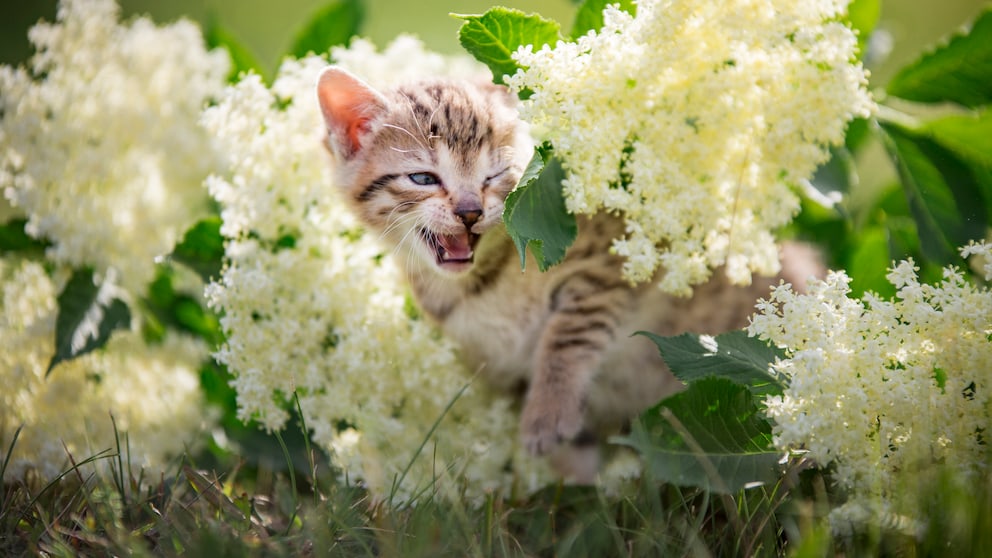
A common myth is that animals instinctively avoid toxic plants. In practice, this is not reliably true. Especially young or curious animals often try out various plants—regardless of their suitability.
These Plants Are Safe for Cats
The good news: There are numerous plants that can be safely integrated into a pet-friendly living or garden concept.
These include lavender, hibiscus, and many types of palms like banana or coconut palms. Culinary herbs such as basil or dill are also a good choice and add practical benefits to the kitchen.
For those looking to offer a “nibble alternative,” cat grass is an option. This includes various types of grass, like wheat or oat grass, which are easy to grow and make a useful addition to the green corner.