



April 12, 2026, 11:38 am | Read time: 3 minutes
The purple dead-nettle is faster than many other plants. It occupies open spots in the garden, provides food for insects, and is even edible. However, in the wrong place, it can become a nuisance.
Don’t worry, it doesn’t sting. Even though its name immediately brings to mind the stinging nettle, the purple dead-nettle (Lamium purpureum) is completely harmless. Since it doesn’t have stinging hairs, you can touch it without concern. Its abundant appearance in early spring makes it a bothersome weed for many. But those who weed it out prematurely miss out on its potential.
What Does the Purple Dead-Nettle Look Like?
The plant remains relatively small, at 10 to a maximum of 35 centimeters. The finely haired leaves are heart-shaped and unevenly notched at the edges. Initially, they have a reddish hue, later turning dark green. The flowers appear in whorls, tiered, and range in color from dark pink to purplish-red and violet.
Early Starter with Staying Power
The purple dead-nettle often germinates in the fall and overwinters as an inconspicuous young plant. In spring, it is ahead of other species, taking advantage of its growth lead, and usually blooms from March. The individual plants are relatively short-lived, but new ones keep coming. Thus, the flowering period extends into October, although its peak is clearly in spring, and later arrivals are usually less noticeable.
Insect Pasture and Edible Wild Herb
The early flowering period makes the purple dead-nettle particularly interesting—especially for insects. When the supply of flowers and thus food is still relatively low in early spring, the plant already provides pollen and nectar. More than 40 species of wild bees take advantage of this offering.
Not only is the purple dead-nettle beneficial for insects, but it can also be used in the kitchen and home pharmacy. The mild, slightly mushroom-flavored young leaves and shoot tips are great as a salad addition, in pesto, or finely chopped in a wild herb soup. The flowers can be wonderfully used as edible decoration. The plant is also said to help with respiratory diseases, urinary tract infections, and minor burns due to its ingredients like tannins, essential oils, vitamin C, zinc, and potassium.
Purple Dead-Nettle: Weed or Let It Grow?
Whether to remove the plants or not mainly depends on their location. In vegetable or flower beds, it can become a nuisance. Under trees or in wild corners, however, it can be an attractive addition. You can certainly tolerate it in the garden or even deliberately let it stand. It is well-suited to naturally maintained areas, under light shrubs, or in border zones that don’t need to look so manicured. There, it brings early color to the garden, serves as an insect pasture, and occupies spaces that wouldn’t remain open for long in nature. However, it is not necessarily suitable as a classic bedding plant, as it spreads too readily.
Turn your garden into a paradise for butterflies with these plants
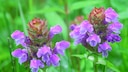
The Flower of the Year 2023
How to Get Rid of the Purple Dead-Nettle
Where the plant is bothersome, it can be relatively easily removed. It’s easiest to remove the plants early to prevent seed formation. In loose soil, plants can usually be pulled out easily. Additionally, anything that reduces open soil spots helps. Densely planted beds, ground covers, or mulch take up the space it normally uses.
Did You Know? The Purple Dead-Nettle Hitches a Ride
The seeds of the purple dead-nettle have small, nutrient-rich appendages that are highly prized by ants. The ants carry the seeds to their nests, eat the appendage, and leave the actual seeds behind. This helps the plant conquer new locations.