


August 28, 2026, 9:47 am | Read time: 3 minutes
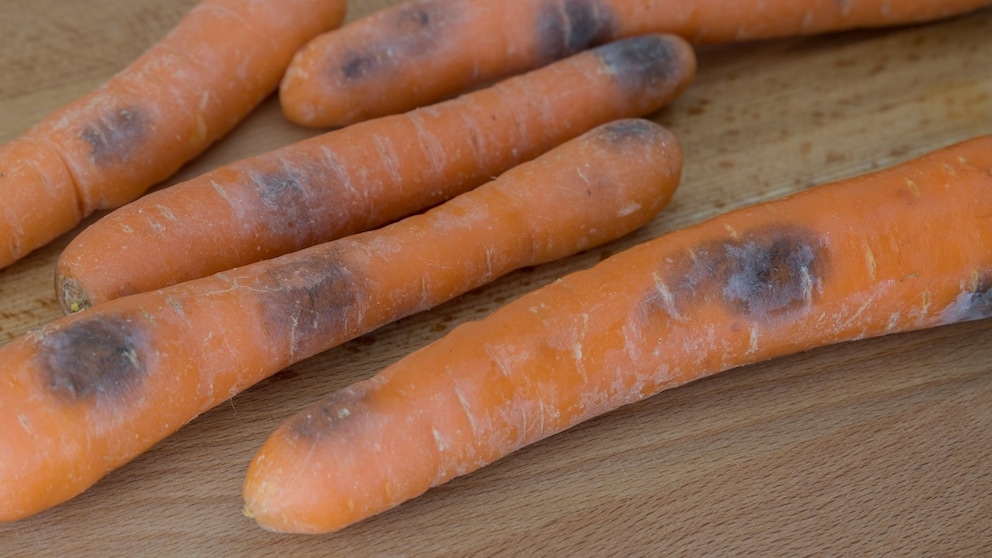
When shopping, it’s easy to misjudge, so sometimes more ends up in the basket than planned. Sensibly, when using up supplies, you should first reach for perishable foods. But reason doesn’t always prevail. If you discover forgotten carrots after some time, you can usually tell by looking at them: Unsightly dark spots have formed. The question arises whether carrots with black spots are still edible.
When food looks unusual, such as when its color changes over time, the first reaction is often to throw it away. This is a natural protective mechanism to prevent us from consuming potentially harmful food. Today, however, we can better assess such changes than in the past: Thanks to scientific knowledge, we can often distinguish when food is truly spoiled and when it can still be eaten without concern. myHOMEBOOK explains how it is with black spots on carrots: still edible or a case for the compost?
Are Carrots with Black Spots Still Edible?
Dark spots can make carrots look unappetizing quickly. However, you don’t have to automatically throw them away. Often, they can still be eaten. “Carrots with small, superficial black spots can usually still be eaten,” explains Harald Seitz from the Federal Center for Nutrition (BZfE) to myHOMEBOOK. If it’s just superficial discoloration, the expert recommends cutting away the spots generously.
“If the spots are larger or somewhat mushy, it’s better to throw them away.” If you can’t draw clear conclusions about whether the carrot is still edible based on appearance and texture, Seitz advises a cautious taste test. “Simply peel the carrot and try a small piece. If it tastes bitter: throw it away.”

How Long Boiled Eggs Stay Fresh

Can You Still Eat Sprouting Garlic?
How Do the Black Spots Form?
Dark spots on carrots can result from unfavorable storage conditions or minor damage. “The black spots are usually due to what’s known as black root rot,” says Seitz. The pathogen is called Thielaviopsis basicola.
Often, a fungal or bacterial infestation is behind it, which forms with too much moisture. But pressure marks or a damaged peel can also cause the tissue to darken through oxidation.
Properly Storing Carrots–Here’s What Matters
The black spots are generally a storage disease. To prevent dark spots, you should ensure carrots are stored correctly. Keep in mind:
- Proper preparation: Carrots with greens should be stripped of the tops before storing, as they draw moisture from them.
- Don’t leave in plastic: Remove packaging film; otherwise, moisture will form, causing the carrots to rot faster.
- Optimal in the fridge: Best stored in the vegetable compartment, ideally wrapped in a damp cloth (change regularly).
- Distance from fruit: Do not store next to apples, as the ripening gas ethylene causes carrots to spoil faster.
- Revive limp carrots: Soft carrots can often be refreshed with a bath in cold water.
- For large quantities: Store in a cool cellar, e.g., in a box with slightly damp sand—this way they last for months.