


October 10, 2025, 3:36 pm | Read time: 2 minutes
As cultivated mushrooms, white and brown button mushrooms can be grown and harvested year-round. Whether you buy them at the supermarket or try growing them at home, the key is proper storage. Here are some mistakes to avoid.
The shelf life of button mushrooms is already limited and can be further reduced by improper storage. However, these common mistakes can be easily avoided.
1. Mistake: Not Removing Plastic Packaging
Button mushrooms should be stored in the refrigerator, where they last about two days, according to the Consumer Advice Center. In supermarkets, the mushrooms are often sold in plastic packaging. It would be a mistake to store the mushrooms wrapped up.
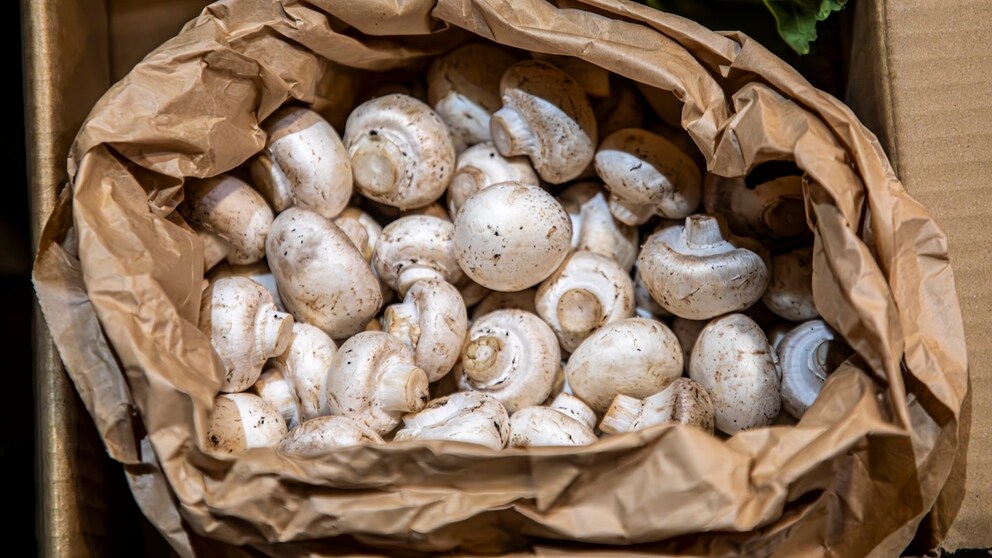
Mushrooms prefer a well-ventilated environment. Packaging prevents air circulation, leading to condensation. Moisture, as with many foods, causes mold growth and spoilage in mushrooms. It’s better to store button mushrooms in a breathable paper bag or container in the fridge.
Also interesting: 8 Foods That Don’t Belong in the Fridge

Can You Really Not Reheat Mushrooms? Expert Explains

How to Store Strawberries Properly to Keep Them Fresh Longer
2. Mistake: Contact with Strong-Smelling Foods
Besides the type of storage container, the location in the fridge is crucial for storing button mushrooms. It would be a mistake to place them next to strong-smelling—even stinky—neighbors. Cheese, green onions, or kimchi should not be placed next to the mushrooms, as they quickly absorb odors.
Caution is also advised with many types of fruit. Various fruits produce ethylene, a ripening gas. This includes apples, bananas, pears, peaches, and tomatoes. Although production is inhibited in the fridge, even small amounts can cause the sensitive mushrooms to start shriveling.
3. Mistake: Cleaning Mushrooms Incorrectly
Mushrooms should be consumed soon after purchase or collection. If not needed immediately, they should not be cleaned right away. Button mushrooms can be peeled or eaten with skin if from a controlled cultivation. A clear advantage is the many nutrients that would otherwise be removed. If you choose to process mushrooms with skin, they must be thoroughly cleaned.
Many people wash the mushrooms to remove dirt and then set them aside for storage—a big mistake. Washing can make button mushrooms soggy. Additionally, moist storage promotes spoilage. It’s better not to wash the mushrooms but to remove dirt with a soft brush or kitchen towel. This is sufficient just before processing the mushrooms.