


August 9, 2021, 12:14 pm | Read time: 3 minutes
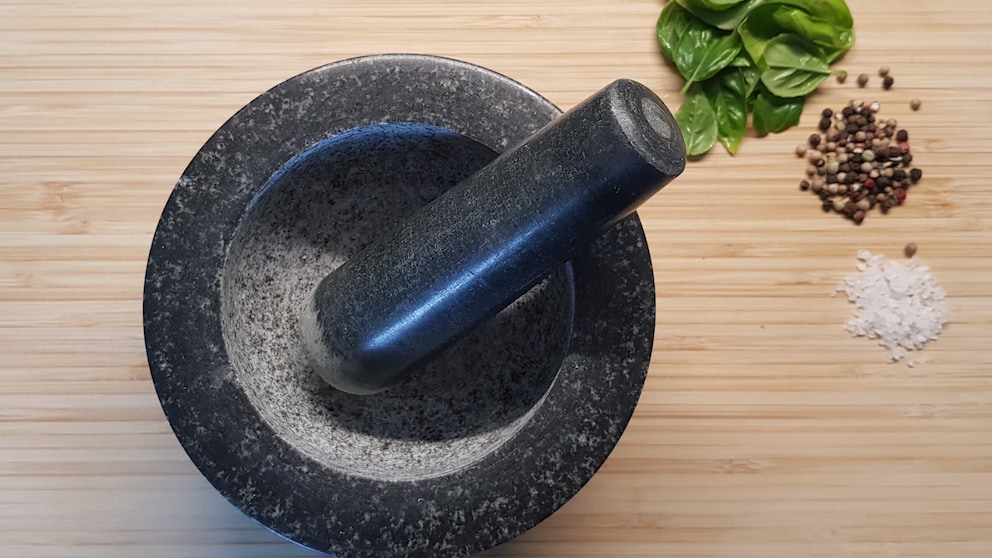
The mortar is one of the most primitive kitchen tools in the world–yet it’s surprisingly versatile. It likely originated from two stones between which people in ancient times crushed food. The functionality remains the same. You can learn how to use a mortar properly in the video.
Technically, the mortar consists of a set, including the mortar itself and a pestle. Both parts are made of solid stone, such as granite. This results in considerable weight, which is necessary for grinding. Physical effort is required when you want to crush peppercorns, for example. With the right technique, you save energy, and the individual grains become a homogeneous powder. Or you can use it to crush fresh herbs, such as for dressings, marinades, or pestos. By the way, grinding brings out the full flavor and aroma of the material, which you can clearly smell during the process.
Using a Mortar–Technique Matters
It may not sound complicated, but there are some tricks that are important when using a mortar. It starts with filling it, as you should be careful not to put too much material in the bowl. Otherwise, the spices might jump out of the vessel when crushed. It’s best to add only as much as you need. Incidentally, it’s easier to crush two small amounts than one large portion. Tip: Adding some coarse salt increases the friction effect.
There are two main techniques for using a mortar:
- Pounding: If there are hard grains, nuts, or seeds in the mortar, it’s useful to break them first with the pestle. The method is as simple as it is effective: Hold the pestle in one hand, the mortar in the other, and pound vigorously. If too much material flies out and lands on the kitchen counter, you can shield it with one hand or cover it with a dish towel.
- Grinding: To grind the broken grains or herbs, rub in circular motions with the pestle in the mortar–alternating directions. The longer you grind, the finer the powder will be. Many mortars have a rough surface inside, which increases the grinding effect. When crushing herbs, you can add some olive oil, making it easier and quickly creating your own spice oil.
Also interesting: 5 Kitchen Gadgets We Can’t Do Without

Should You Really Throw Away Expired Spices?

Drying Herbs–Preserve Their Aroma and Shelf Life
What Can You Grind?
Almost all unground spices or kitchen herbs can be crushed with a mortar. The following spices are suitable for the mortar–but many others as well:
- Peppercorns
- Fennel seeds
- Coriander seeds
- Cumin
- Sesame
- Anise
- Turmeric
- Cinnamon
Tip: A mortar is also great for creating your own favorite spice blends. Simply put your favorite spices together in the bowl, grind them, and store them in a suitable container, such as a screw-top jar. Just label it–and you’re done!
Don’t Use Parchment Paper
It’s often recommended to line the mortar with a layer of parchment paper to save on washing and prevent the stone from absorbing the flavor of the spices. However, this trick is not advisable, as the plastic coating of the parchment paper ends up in the spice mix. It’s better to wash the mortar with water and dish soap after use, so you can use it next time without any residual taste.
If you want to see how to crush peppercorns and basil in a mortar, watch the video at the top of the article. Enjoy cooking!