

October 17, 2025, 6:05 am | Read time: 7 minutes
Does your day only start after a cup of coffee in the morning? About 80 percent of Germans drink it daily. Many rely on aluminum capsules, which have come under fire for sustainability reasons. Compostable alternatives are now available, but how do they compare? Our editor puts them to the test.
My love for coffee developed relatively late. Eventually, it grew to the point where I bought a Nespresso machine for home. The decision wasn’t easy, as taste battled against reason, which focused on sustainability. I researched the company’s sustainability strategy and how to dispose of used capsules for recycling. Although it’s possible, I feel guilty every time I empty the capsule container. So, I went back to researching and found a provider that makes compostable capsules compatible with my coffee machine—but do they taste as good as aluminum coffee capsules?
Overview
Compostable Coffee Capsules from Vitaboni
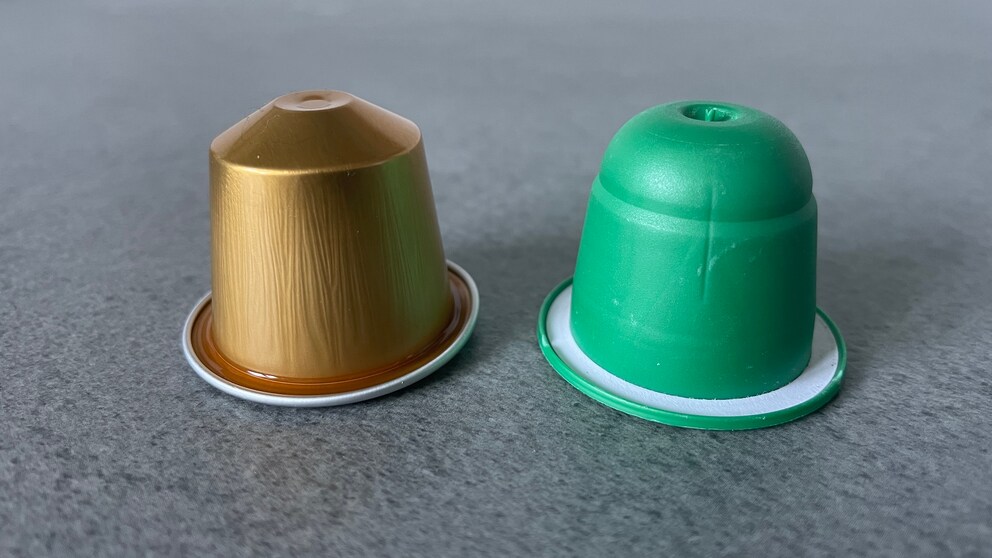
Vitaboni offers certified organic coffee from Uganda, Peru, Guatemala, Honduras, and Colombia, processed in Italy. The capsules are made from renewable raw materials and can be disposed of in organic waste and then industrially composted. They are also CO2 and climate-neutral, making Vitaboni a certified “ClimatePartner.”
The compostable capsules can be used in all standard Nespresso machines, except for the Pro system and the Vertuo machine.
The Varieties
There are six so-called blends, or mixtures:
- Lungos: Arancione, Verde, and Rosso (110 ml)
- Espressi: Emerald and Blu (40 ml)
- Ristretto: Nero (25 ml)
The capsules are available in packs of 10, 30, 70, or even 140 aroma cans and packages made from 100 percent natural and recycled materials. Price: starting at 11.97 euros. It’s also possible to subscribe, which offers a price advantage and benefits the environment through regulated deliveries.
Aluminum Capsules from Nespresso
The coffee in Nespresso’s aluminum capsules comes from Brazil, Guatemala, Mexico, India, Colombia, Ethiopia, Kenya, China, Uganda, Costa Rica, Peru, Indonesia, and Nicaragua. “Through our AAA Sustainable Quality™ Program, which we founded in 2003 with the Rainforest Alliance, we work directly with over 120,000 coffee farmers in 15 countries to promote sustainable coffee cultivation and improve the living standards of coffee farmers. We now source 93 percent of our coffee through this comprehensive cultivation program (as of 2020),” a Nespresso spokesperson added upon inquiry from myHOMEBOOK.
Many of the capsules are made from 80 percent recycled aluminum, and by the end of 2021, the entire range of Original and Vertuo capsules is expected to meet this standard. The outer packaging is made of solid cardboard, and the paper is FSC-certified.
The Varieties
At Nespresso, both the capsule types and the varieties differ. The Original capsules, which are also the focus of this comparison, are available in 28 different varieties, which can be prepared as Ristretto, Espresso, or Lungo.
The aluminum capsules are available in sleeves of ten capsules, with the cheapest sleeves costing 3.90 euros. Nespresso also offers a subscription where you can choose varieties and delivery times.
Coffee from Aluminum and Compostable Capsules—The Comparison
In this comparison, coffee capsules from Nespresso and compostable capsules from Vitaboni were prepared. Two types of coffee were evaluated based on appearance, consistency, aroma, and taste: Espresso and Lungo.
Espresso from Nespresso
The Inspirazione Napoli, with an intensity of 13, is Nespresso’s most intense espresso and is described on the site as very bitter and full-bodied.
During preparation, it emitted a very intense aroma. In the cup, a clearly recognizable crema formed, and the espresso beneath looked dark and creamy. The taste matched the description exactly: full-bodied, strong, and bitter.
Espresso from Vitaboni
Vitaboni’s strongest organic espresso, Blu, with 9 out of 10 points for intensity, is a good comparison. It is described as slightly buttery and only mildly acidic.
Freshly brewed, it also emitted a strong aroma, though less intense. The crema was firm, and after the first sip, the espresso tasted strong and full, less bitter and acidic. After the crema, however, the taste became less intense and watery.
The Conclusion
Both espressos had an intense aroma and a firm crema. In terms of taste, both the aluminum capsule and the compostable one were full-bodied and strong, but after the first sip, the Vitaboni espresso tasted weaker and more watery.
What Exactly Is “Crema”?
If an espresso is well-prepared, a golden-brown foam layer forms on its surface, known as crema. Its consistency and appearance provide insight into the quality of the espresso.
Also interesting: 6 Ways to Brew Coffee
Lungo from Nespresso
For the comparison, the “Buenos Aires Lungo” variety was used. The taste is described as sweet and grainy on the website, with an intensity of 4 out of 13, which is relatively low.
As soon as the liquid flowed from the machine, a pleasant aroma of fresh coffee was released. Under the crema layer, a dark lungo could be seen. It tasted full-bodied, light, and the grain notes were clearly discernible.
Lungo from Vitaboni
From Vitaboni, the choice fell on the organic Lungo Arancione, as it is as light as the Nespresso counterpart, with an intensity of 4 out of 10. It is described as velvety and harmonious, with sweet to floral notes.
Before the coffee came out of the machine, a splash of water first landed in the cup. Then, a pleasant aroma of fresh coffee spread. This capsule also formed a light crema layer, under which a dark lungo was found. It tasted very light and sweet, but compared to the Nespresso lungo, it was more watery and less intense.
The Conclusion
Both lungos smelled wonderful during preparation, had a crema, and looked delicious. In terms of taste, the Nespresso one was more convincing, as it was more full-bodied.
Also interesting: 6 Common Mistakes When Brewing Coffee
Why Is the Vitaboni Coffee More Watery?
During the preparation of both types of coffee, some water is released first, making the result more watery. The reason is the sealing of the compostable capsules compared to the aluminum coffee capsules. The aluminum ones are sealed with silicone, while the compostable ones are sealed with a paper ring. A Vitaboni spokesperson explained to myHOMEBOOK: “This raw material is subject to natural fluctuations but does not always seal as tightly as the mentioned silicone. However, the ring is biologically degraded within a short time.”
“Avoury One” Review: How Does the Capsule Tea Machine Perform?

Are the New Paper Coffee Pods Worth It?
The Big Conclusion
The espressos and lungos from both compostable and aluminum coffee capsules taste very good, but the Nespresso ones are slightly more intense in flavor. Both the espresso and the lungo from Vitaboni appear somewhat more watery compared to the aluminum competition. Does this make the coffee experience worse? Considering that the search for an alternative to an already well-regarded provider was driven by environmental concerns, the answer is clear.
If you’re truly aiming to make your daily life more sustainable and want to change your consumption of disposable items, compostable capsules instead of aluminum ones are definitely a good choice.
Both Coffee Capsules in the Sustainability Check
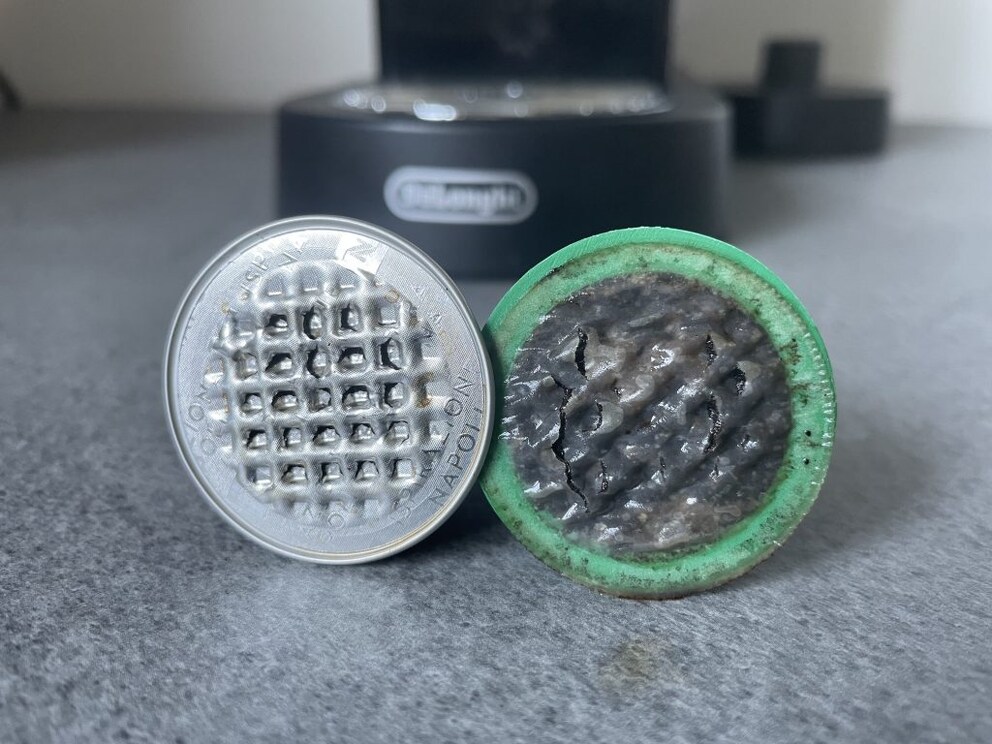
There are several differences between aluminum coffee capsules and compostable coffee capsules in terms of sustainability. One of them is the decomposition speed: While aluminum capsules take between 150 and 200 years to decompose, compostable capsules like those from Vitaboni do so in about 90 days.
While compostable capsules can be disposed of in organic or residual waste and then decompose, aluminum capsules need to be recycled. In this case, used Nespresso aluminum capsules can be disposed of in the yellow bin or recycling bin. Alternatively, they can be dropped off at a recycling center or one of the stores. By the way, the capsules now consist of 80 percent recycled aluminum.