


March 5, 2026, 8:55 am | Read time: 3 minutes
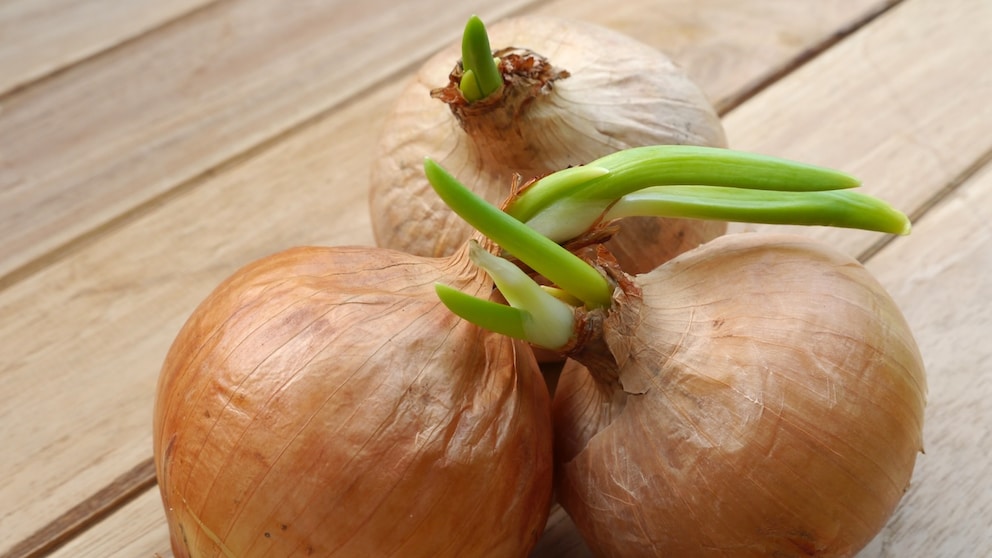
Who doesn’t know it: The onion has been lying around for a while and starts to sprout. Most people just throw it away. However, sprouting onions, unlike sprouting potatoes, are not toxic and don’t need to go straight into the compost bin. myHOMEBOOK explains what else you can use them for.
Sprouting Onions Are No Cause for Concern
Unlike potatoes, which produce the toxic solanine when sprouting, sprouting onions pose no health risk. This is pointed out by the initiative “Too Good for the Bin.” However, the onions must still be firm and dry. If onions become soft, smell rotten, or show dark spots—typical signs of mold—caution is advised. In such cases, they should be discarded.
The sprouting shoot of the onion can also be used. Fresh and crisp, it can enhance salads or buttered bread.
Do Not Store Onions Next to Potatoes
A common storage mistake: onions and potatoes share the same storage space. Experts advise against this. Onions absorb moisture from potatoes and start to rot faster. Conversely, potatoes sprout more quickly when stored near onions.
Ideally, both should be stored separately in a cool, dark, and well-ventilated room—such as a basement. If no basement is available, a light-protected container with air holes in a cool place is recommended.

3 Ways to Use Leftover Vegetables

How to Use Potato Water in Your Household
Use Onion Leftovers for Plant Protection
Onion broth is a time-tested home remedy in the garden that helps repel aphids, fungi, and other plant pests without chemicals. Older onions can also be used for this. The sulfur compounds they contain have a mildly disinfecting and repellent effect—and are completely environmentally friendly.
What you need:
- 2–3 large onions (or a good handful of onion skins)
- 1 liter of water
- A pot, a sieve, and a spray bottle
Here’s how:
- Roughly chop the onions or use just the skins.
- Place everything in 1 liter of water and simmer for about 30 minutes.
- Let the broth cool and strain through a fine sieve or cloth.
- Pour into a spray bottle and spray on affected plants—preferably in the morning or evening.
Also interesting: This Trick Makes Peeling Onions Easier
Tip: Caramelized Onion Rings from Leftovers
Even already cut or halved onions don’t have to go in the trash. They can be used to make aromatic, caramelized onion rings, for example.
First, peel the leftover onions and cut them into thin rings. Heat oil in a pan, and add the onion rings separately. After sautéing, sprinkle some sugar over the onions and let them caramelize while stirring. Finally, deglaze with a bit of wine or vegetable broth until the liquid has completely evaporated.
With material from dpa