

July 7, 2026, 5:11 am | Read time: 4 minutes
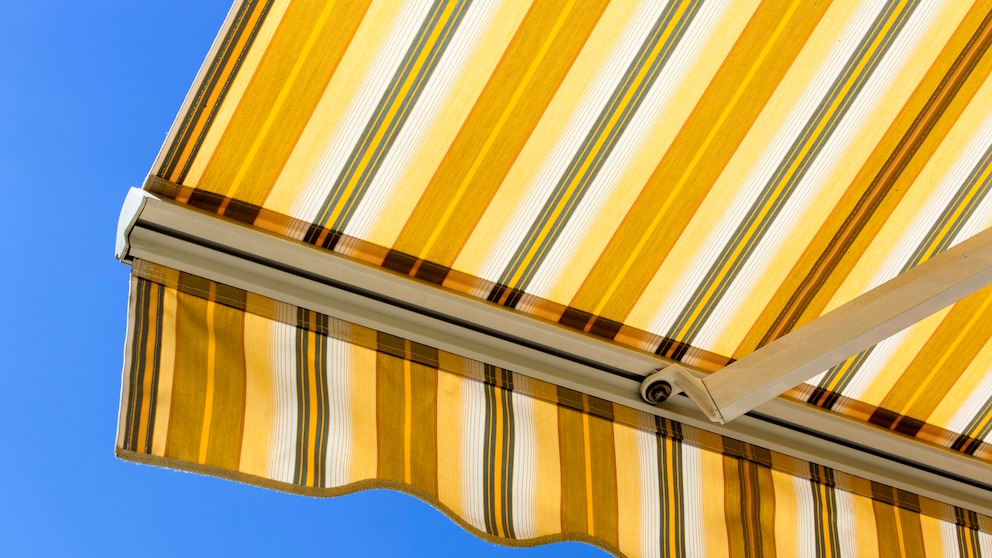
An awning provides pleasant shade on hot summer days on a terrace or balcony. However, during use, it is exposed to wind, rain, sunlight, and dirt such as bird droppings or pollen. To keep it looking well-maintained and functional, it should be cleaned regularly. With the right techniques, dirt and deposits can be gently removed without damaging the fabric. myHOMEBOOK explains how to best tackle all types of dirt and what to watch out for to avoid damaging the awning during cleaning.
Follow myHOMEBOOK on WhatsApp now
What to Consider Before Cleaning
Before starting the cleaning process, the awning should be fully extended and checked for damage. Helpling also recommends choosing a dry but not too hot day for cleaning. In strong sunlight, cleaning agents can dry too quickly and leave residues. For safety reasons, electric awnings should be disconnected from the power supply before cleaning. Additionally, Helpling advises testing new cleaning products on an inconspicuous area first and protecting garden furniture or plants under the awning from splashing water.
How to Safely Reach the Awning
For low-mounted models, a soft brush or sponge is usually sufficient. If the awning is installed higher, a telescopic pole with a suitable brush or sponge attachment makes the job easier. For hard-to-reach areas, a stable step or extension ladder can be used. However, never work alone on ladders—a second person provides additional safety.
Depending on the installation location, different approaches are recommended: From the balcony, the awning can often be partially retracted to better reach the upper areas. From the terrace, the combination of a ladder and telescopic pole is usually the safest solution. It’s important not to lean too far over a railing or support oneself on the awning, as the fabric and arms are not designed to bear a person’s weight.
Remove Loose Dirt Particles from the Awning
Before removing stubborn stains, the awning should be fully extended and first cleared of loose dirt such as leaves, blossoms, or pollen. A soft brush or a vacuum cleaner with an upholstery attachment is suitable for this. It’s important to proceed gently: Applying too much pressure can rub dried dirt like bird droppings into the fabric.
Important: Those who do not regularly remove pollen, blossoms, and leaves from their awning risk mildew stains. These occur when the particles become damp and penetrate the fabric.
Also interesting: The right privacy screen for the balcony
Soak Dried Dirt
Now you can tackle the dry, more encrusted dirt. Generously rinse the dirty areas with water, which can be done best with a garden hose or a watering can. Alternatively, you can place a piece of kitchen paper soaked in water or a wet cloth on the spot. After letting it soak for about 15 minutes, the dirt can be easily wiped away.
Tip: It may be tempting to use a pressure washer to clean an awning, but this should definitely be avoided. The high water pressure can damage seams.

How to Properly Clean, Care for, and Waterproof Leather Shoes
3 Simple Tricks to Clean Suede Sneakers
Basic Cleaning
To effectively clean the awning, you should now use some mild detergent. This can be well lathered with a sponge and lukewarm water. Then, simply apply the foam to the dirty areas. A half-hour soaking time is optimal. The dirt should now rinse off easily with clear water. If not, you can repeat the process as desired.
Also interesting: 3 methods to effectively clean the terrace
Let the Awning Dry and Impregnate
To prevent new stains and avoid having to clean the awning again soon, let it dry in the extended position. If desired, you can additionally impregnate your awning afterward. This makes the fabric more resistant and helps it last longer. Be sure to use an impregnation agent suitable for the awning’s fabric material. If unsure, test it first on an inconspicuous area.