

August 20, 2023, 3:40 am | Read time: 4 minutes
Few people reach for artichokes in the vegetable aisle, often because they’re unsure what to do with them. Experts offer tips on buying, storing, and preparing the vegetable.
They look a bit mysterious. And for many, it’s a puzzle what to do with artichokes. We’re not talking about the small hearts from a can, but the whole fresh, giant buds. “If you keep a few things in mind, preparing artichokes is really super easy. That’s why I like to say: Have courage with artichokes. It’s really worth it!” says Stefanie Fritzsche. The food blogger and chef Andreas Schoibl explain what to consider when shopping, preparing, and eating.
When Should You Buy Artichokes?
“Artichokes are ripe in our regions from June to October. They’re available in supermarkets year-round, but they taste best in the warm months,” says chef Andreas Schoibl, a member of the German national chef team of the Association of German Chefs.
What Should You Look for When Buying Artichokes?
“The buds should be plump and firm,” says Schoibl. They shouldn’t feel soft and should have no pressure marks or brown spots. According to Schoibl, you can rub the artichoke heads together like asparagus for a freshness test. If they squeak, it means the vegetable still contains a lot of moisture and was harvested relatively recently.
“You can also examine the cut surface on the stem. It should be light, and the stem should look freshly cut,” says the head pastry chef and sous-chef at Landgasthof Karner in Frasdorf.
Stefanie Fritzsche, who runs the Italian food and travel blog “fraufritzsche” and owns the pasta school of the same name, mentions another crucial detail: “The stem of the artichoke should be as long as possible. Because the stem conserves water, which keeps the bud fresh longer.”
By the way: Artichokes can also be grown in the garden or in a pot under the right conditions. Here’s how to do it right.
Tricks to Make Peeling Chestnuts Easier
How to Keep Cut Herbs Fresh Longer
How Do You Store Artichokes?
“If the vegetable isn’t processed the same day, it’s advisable to wrap each artichoke in a damp cloth and store it in the vegetable compartment of the refrigerator,” advises Schoibl. This way, they stay fresh for two to three days. It’s important not to wash the artichokes beforehand.
If there’s no space in the fridge, the flower vegetable can also be stored in a glass of water. For this, cut the stems with a sharp knife.
Also interesting: Is there really a difference between fruits and vegetables?
How Do You Prepare Artichokes?
You can cook, braise, grill, or steam artichokes. According to Schoibl, all of these methods can be very tasty. The most flavor is extracted from the artichoke when it’s braised in the oven and then briefly seared, says the national team chef.
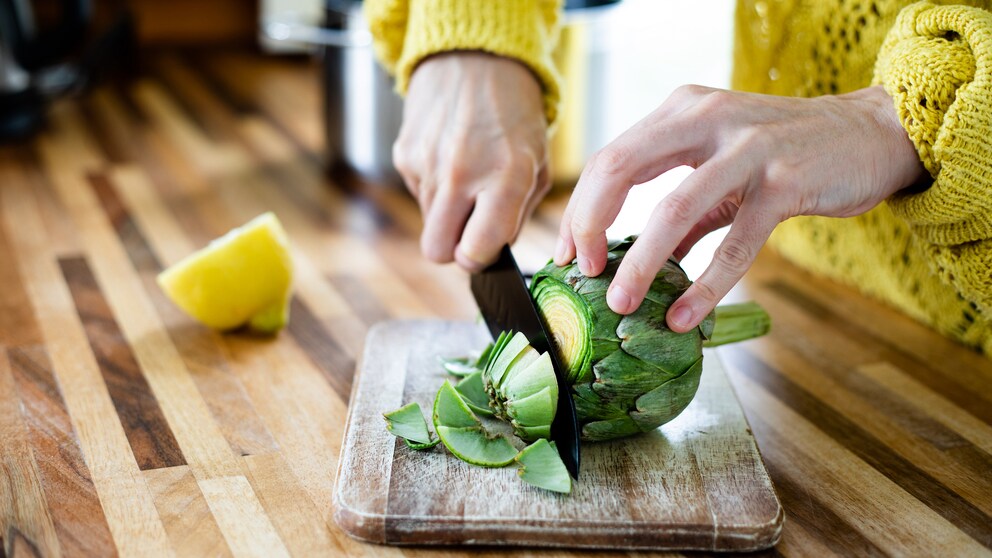
For this, Schoibl first removes the stem and the top third of the bud and its outer leaves, leaving only the heart. It’s important to rub the cut surfaces immediately with some lemon juice. “So they don’t turn brown,” explains the chef. Additionally, Stefanie Fritzsche advises wearing gloves while working, as the cynarin in artichokes can stain and the thistle-like plant may still have small spines.
The prepared artichoke hearts are placed by Andreas Schoibl in a suitable dish in a broth. The homemade broth or one from a jar can be flavored with fresh herbs, honey, and garlic and then placed in the oven–covered for 15 to 30 minutes at 180 degrees, depending on the size of the hearts.
Also interesting: How tuberous chervil thrives in the garden
“Before putting the artichokes in the oven, they can also be excellently stuffed,” suggests Fritzsche. To do this, after drizzling with lemon, turn them upside down while still raw and tap them lightly a few times on the work surface. “This opens the flowers a bit, similar to opening a water lily. Turn them back over and scrape out the so-called hay with a teaspoon,” explains the blogger.
For stuffing, breadcrumbs, garlic, and herbs are suitable in the Roman style. If desired, add some bacon or ham. Tomatoes also pair well.