


March 16, 2024, 4:21 am | Read time: 4 minutes
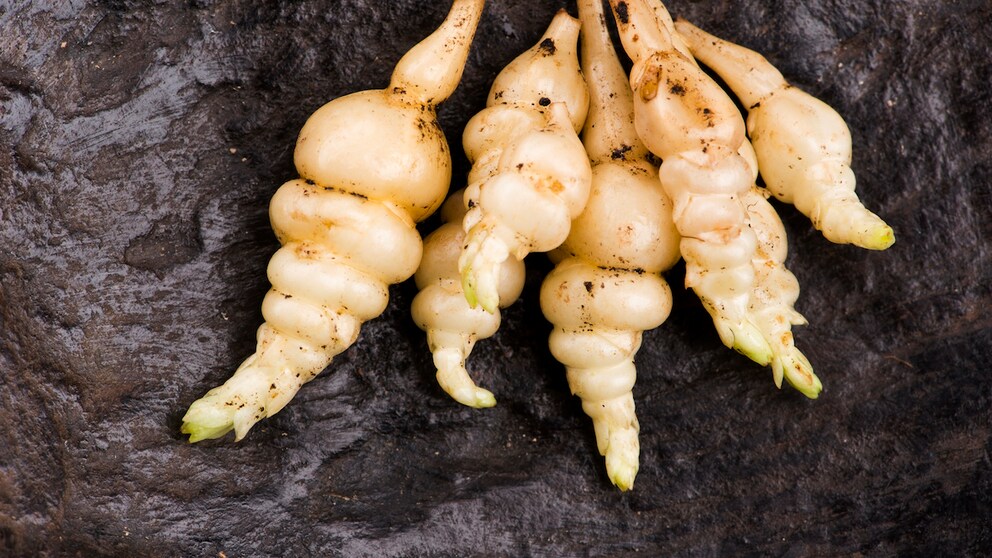
The tubers of the crosne don’t look particularly attractive. But they taste good. This unusual winter vegetable is easy to grow and falls into the category: Plant once and harvest for years.
The crosne (Stachys affinis), also known as Chinese artichoke or Japanese potato, shares a fate with salsify and chervil root: It is one of the nearly forgotten vegetable varieties. This perennial vegetable plant, native to China and Japan, was brought to France at the end of the 19th century and shortly thereafter to Germany. In recent years, as many people have become interested in old varieties and more diversity, the crosne is experiencing a comeback.

Overview
Planting Crosne
The tubers are planted in the fall or spring about eight to ten centimeters deep in weed-free, well-loosened soil enriched with compost. If a distance of 30 to 40 centimeters is maintained when planting, the plants can develop optimally. After planting, thorough watering is recommended. After three to four years, changing the location is advisable to keep the soil and plants healthy.
Crosne can also be easily grown on a terrace or balcony. The planting container should hold at least 10 liters. Growing in a pot has two advantages: It sets clear boundaries for the expansive vegetable, and harvesting is easier because the pot can simply be tipped over. When growing in a pot, it’s important to ensure that excess water can drain freely.
Also interesting: How to Grow Hibiscus in the Garden and on the Windowsill
Appearance and Growth
Crosne is a perennial, bushy vegetable plant that looks a bit like deadnettle. The parts of the plant above ground die off in winter and sprout anew in spring. The plant, which grows up to 40 centimeters high, displays its mostly pink-violet flowers in July and August. At the roots, it forms four to six centimeter long white, constricted tubers that resemble caterpillars or small Michelin men.
Location and Soil
Crosne does well in a sunny or partially shaded location. The soil should be rich in humus and nutrients, loose, and sufficiently moist.
Caring for Crosne
This perennial vegetable is easy to care for. There is little to consider.
Watering
Crosne is a relatively thirsty vegetable. Therefore, it should be watered sufficiently. Insufficient watering negatively affects both the quantity and size of the tubers. A layer of mulch helps retain moisture in the soil.
Fertilization
Fertilization is done in the spring with an organic slow-release fertilizer. This should be worked into the soil superficially.
Also interesting: How to Prevent Potatoes from Sprouting
Pruning
If the shoots are shortened by a third in late summer, it positively affects the growth of the tubers. In the fall, the above-ground part of the plant dies off. If desired, the dead plant parts can be cut off in the spring. However, this is not necessary.
Propagation
Crosne is propagated through the tubers. This can be done either at harvest time in the fall or in the spring and works just like planting.
Overwintering
In the open field, the plant is hardy and needs no protection. A layer of mulch is still welcome. However, if crosne is grown in pots, it should be given cold protection with burlap or fleece.
Also interesting: Planting and Care Tips for Spotted Lungwort
Toxicity
The plant is not toxic.
Alternatives
Other relatively unknown tuber vegetables in this country are tuberous nasturtium and tuberous wood sorrel.
Bee Friendliness
Bees and other insects are attracted to the plant’s nectar-rich flowers.
Diseases and Pests
If aphids attack the crosne, they can transmit various viral diseases. Therefore, it is important to repel the aphids. This can be done with rapeseed or neem oil. Voles can also become a problem. Those dealing with voles and not wanting to get a cat should harvest faster than the voles can eat.

How to grow sugar loaf lettuce properly in autumn and winter

Planting and Caring for Mint in the Garden or on the Balcony
Harvest
The harvest season begins at the end of October and can extend into January. It’s best to harvest as needed because the tubers do not store well. They last only a few days in the refrigerator.
Use in the Kitchen
The tubers have a slight nutty flavor and are compared in taste to artichokes, chestnuts, salsify, and cauliflower. The thin skin can be eaten. It is sufficient to wash the tubers thoroughly. Crosne can be added raw to salads, cooked, steamed, or fried. It is particularly popular to sauté crosne in butter or vegetable oil.