


April 13, 2021, 2:54 pm | Read time: 4 minutes
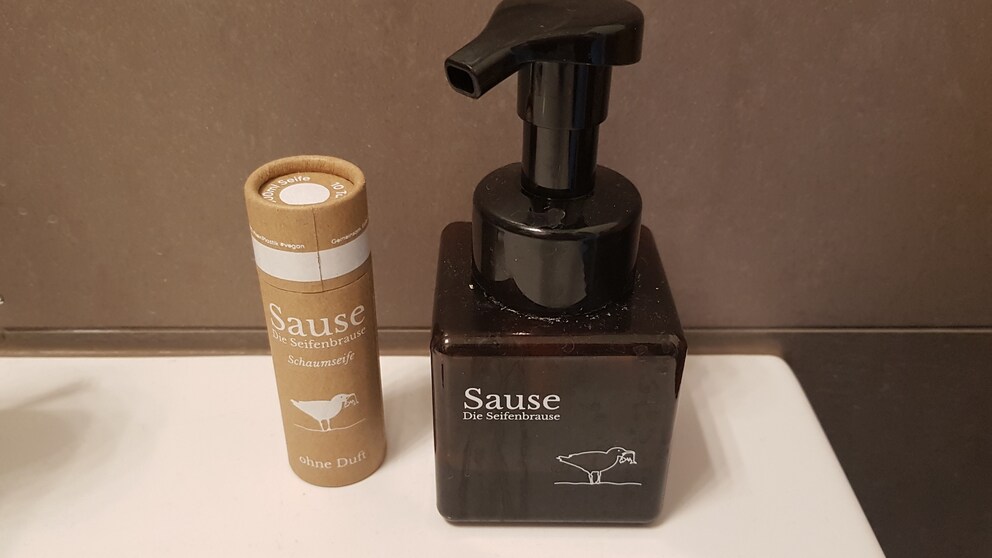
Every day, we wash our hands multiple times–even more frequently due to current circumstances. However, liquid soap from refill pouches is often not very sustainable, as it generates a lot of plastic waste. The inventors of “Sause – die Seifenbrause” recognized this issue and developed a sustainable foam soap from dissolved tablets. myHOMEBOOK took a closer look at the product, which was also featured on “Die Höhle der Löwen.”
Plastic soap dispensers and refill packs are not only bad for the environment but also take up space in the bathroom cabinet. The two inventors of “Sause – die Seifenbrause,” Moritz Simsch and Sebastian Jung, aim to address this and save resources with their product. Background: The soap comes in tablet form, which you dissolve in water. The lower weight is intended to save CO2 costs during transport. This idea appealed to several investors on DHDL. The video shows how the foam soap performs in practical tests.
Overview
What is behind the foam soap “Sause – die Seifenbrause” from DHDL?
On the show “Die Höhle der Löwen” (DHDL) on Vox, the two founders proudly presented their foam soap, which is said to be vegan, plastic-free, and cruelty-free. Weight is also saved: A space-saving roll with ten soap tablets weighs less than 50 grams. This allows resources to be saved during transport. The inventors estimate a 90 percent CO2 savings compared to conventional liquid soap.
The soap dispensers available are made of glass or recycled plastic, and the packaging is made of paper or cardboard. Additionally, “Sause – die Seifenbrause” comes in four scents:
- green tea
- lavender and lemongrass
- peony
- orange and mandarin
Note: For our foam soap test, we chose a product without additional scents. It was a “starter set” with a plastic soap dispenser–only glass dispensers are now available on the website.
How does “Sause – die Seifenbrause” work?
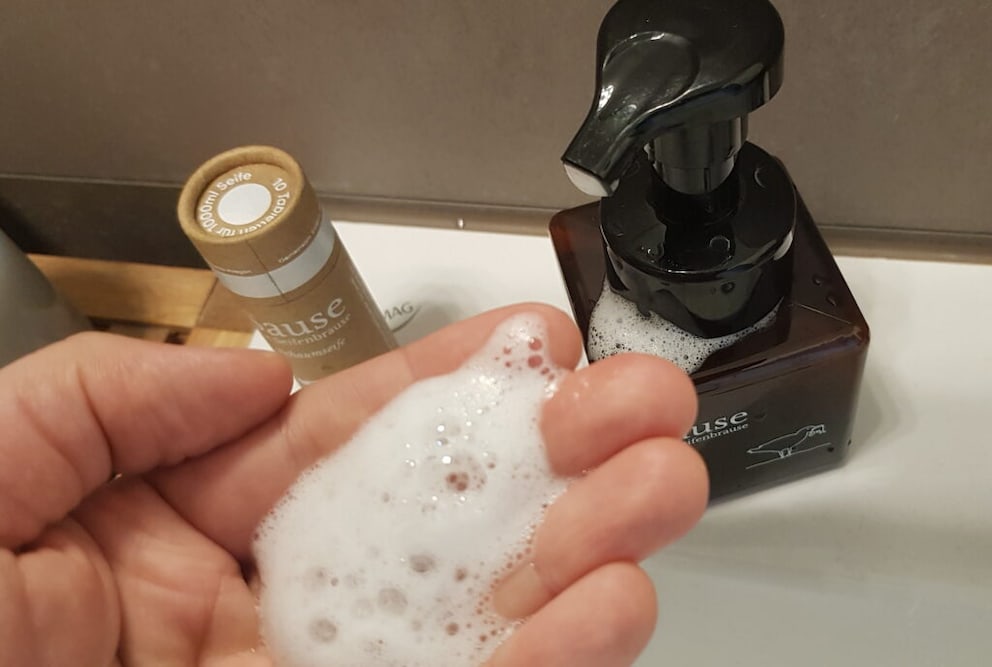
The application of the foam soap is relatively straightforward. One tablet is enough to turn 100 milliliters of water into soap. For 200 milliliters, two tablets are needed. The quantities are conveniently printed on the dispensers. However, you have to wait a bit for the soap to dissolve. This can take half an hour. Also, the first few pumps may not be entirely satisfactory.
Related: “Flüwa” – the level with a joint in the myHOMEBOOK test
“Sause – die Seifenbrause” in the myHOMEBOOK test
The first impression of the product is convincing. The paper packaging quickly shows that the inventors take sustainability seriously. A small description is included, and unnecessary packaging materials are avoided. The dispensers are all high-quality and stable, allowing for long-term use. The product’s design is quite appealing. It quickly becomes apparent that the target audience values sustainable products.
The effervescent tablets are compact and do not crumble between the fingers, but they take some time to dissolve completely. However, this means that plastic soap dispensers and refill packs made of plastic are a thing of the past.
Where can you buy the foam soap?
“Sause – die Seifenbrause” was available for purchase even before the DHDL presentation, in the online shop of the two founders. Several sets are available, starting with the starter set for just under 20 euros (glass soap dispenser and a roll of effervescent tablets) up to the larger set with a dispenser and four packs.

Is the “Multibex” Assembly Stand Worth It for DIY Enthusiasts?

“Dübelix” to solve a typical DIY problem
Did the founders get the Lions’ funding?
For their idea, the two founders sought a grant of 200,000 euros on DHDL–and offered 15 percent of the company shares in return. Several Lions accepted the offer. Both Ralf Dümmel and Judith Williams wanted shares worth 25 percent for the 200,000 euros, while Dagmar Wöhrl offered 250,000 euros for 20 percent. Ultimately, Simsch and Jung chose to collaborate with Williams, as the investor already has extensive expertise in the cosmetics field.
Also interesting: 4 uses for soap in the household
Conclusion
The idea is not entirely new; there are already some comparable products on the market, especially in the U.S. market. However, the inventors of “Sause” have focused on organic ingredients and their own production. Simsch and Jung are currently working on a sustainable deodorant that is supposed to work similarly. The effervescent tablets for the DIY foam soap are well thought out, sustainable, and simple to use. In any case, they help save countless plastic packages that accumulate daily in German households.