


May 23, 2023, 9:13 am | Read time: 5 minutes
According to common stereotypes, Germans are said to be many things: diligent, meticulous, somewhat unsociable–and they sometimes wear white socks with sandals. But are Germans also petty when it comes to their lawns? Or are they environmentally conscious, providing food and shelter for creatures in their gardens? myHOMEBOOK sought to find out in a survey.
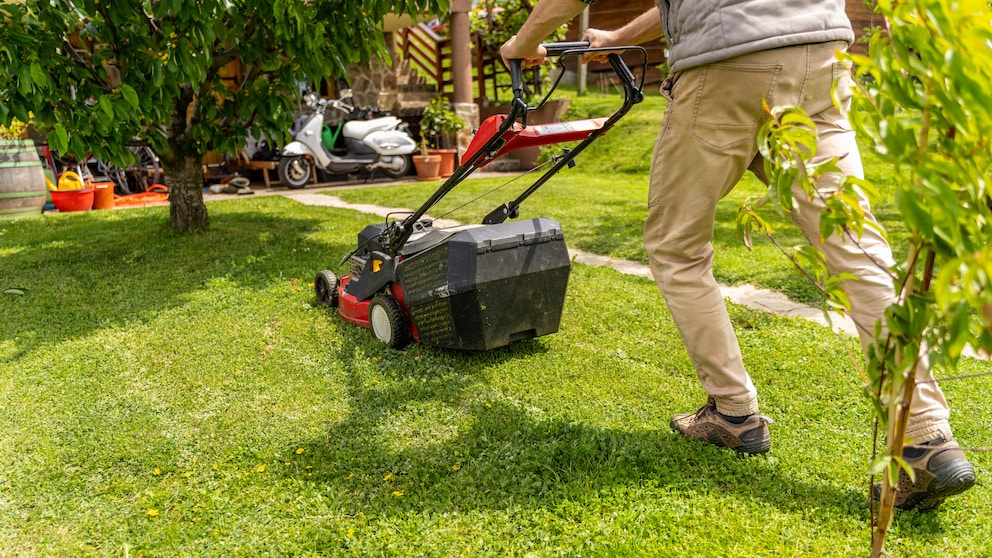
In spring and summer, the sound of lawnmowers can be heard from every corner during nice weather. The lawn is being mowed! It seems as if the lawn is the most valuable possession of Germans. But is that really the case? Do Germans put a lot of energy into maintaining a well-kept lawn, or is it just an illusion? How environmentally friendly are Germans when it comes to their lawns? myHOMEBOOK conducted an exclusive survey and came to interesting conclusions.
A well-kept lawn is important to many
In a representative survey commissioned by myHOMEBOOK, around 1,000 people living in Germany aged 18 to 79 participated. We wanted to know what kind of garden they have and how much effort is invested in it. After all, a well-kept lawn requires time.
| What type of lawn do you have? | Total | 18 – 29 years | 30 – 39 years | 40 – 49 years | 50 – 59 years | 60 – 69 years | 70 – 79 years |
| Number of respondents | 1,024 | 154 | 180 | 183 | 226 | 164 | 117 |
| Classic lawn | 37.8 | 34.4 | 42.2 | 39.3 | 43.4 | 30.5 | 32.5 |
| Wild lawn | 12.9 | 8.4 | 15.6 | 13.7 | 11.5 | 14.6 | 13.7 |
| Flower meadow | 9.9 | 13.0 | 7.8 | 8.7 | 9.7 | 9.8 | 11.1 |
| I have no lawn area | 7.1 | 6.2 | 5.6 | 8.2 | 7.1 | 9.8 | 6.8 |
| I have no garden | 32.3 | 39.0 | 28.9 | 30.1 | 28.3 | 35.4 | 35.9 |
Notably, the values show that primarily the older generation seems to have a preference for a classic lawn. With a value of 43.4 percent, they stand out. However, they are closely followed by the 30- to 39-year-olds with a value of 42.2 percent. The lowest values were found by myHOMEBOOK for flower meadows. Not even ten percent of Germans have a flower meadow in their garden, which would also benefit insects.
Related: Gardening for insects–Expert offers valuable tips
The classic lawn is popular among Germans
A classic lawn, or utility lawn, is a mix of a perfect golf course lawn and a wild lawn, where weeds can occasionally grow between the blades of grass. It requires care, and one must take the time for it. It should be mowed at least once every 14 days, occasionally fertilized, and scarified once a year. That Germans value their lawns was already shown by a survey conducted by the lawnmower manufacturer “Stihl” in 2021:

The results align with those from myHOMEBOOK. Germans value a well-kept lawn so much that around 40 percent mow it regularly, specifically every two weeks. Almost 20 percent mow even weekly. However, by regularly cutting the lawn, garden owners deprive insects and other animals of their habitat. A flower meadow instead of a lawn would be much more environmentally friendly.
The environmentally friendly flower meadow is rather rejected
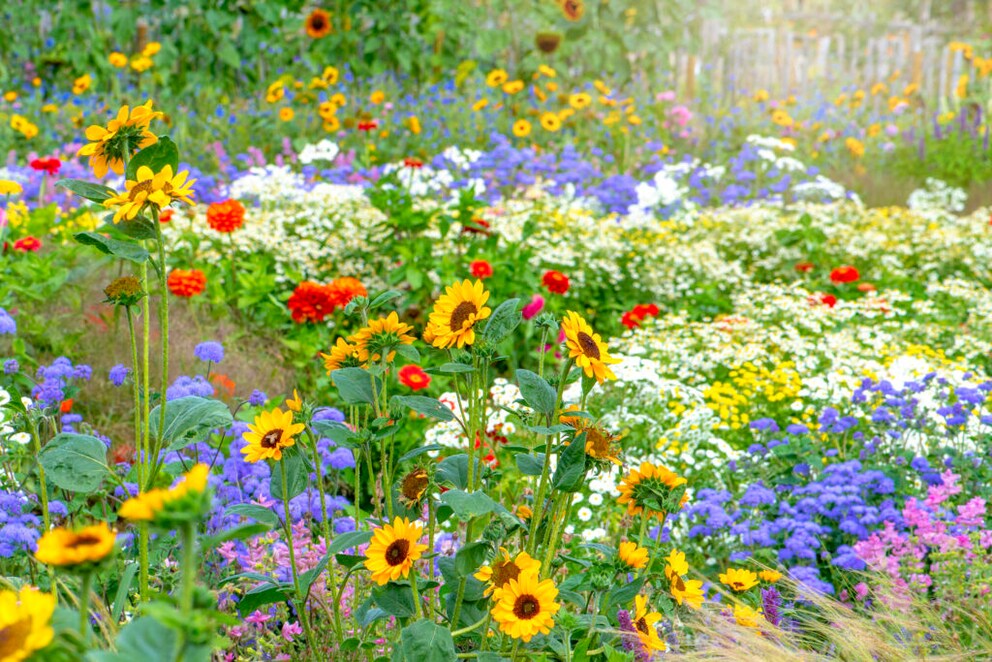
For years, insect decline has been a major issue. Everyone can contribute to stopping it. Transforming a small corner of the garden into a flower meadow would help a lot. The BUND states on its website that private gardens are very important as “oases of biodiversity.” Yet, so far, the minority of garden owners have a flower meadow. Not even ten percent provide insects with food and shelter in the form of a flower meadow. It offers many advantages over a classic lawn. It looks pretty, provides nesting places and food for insects, and requires less work than a classic lawn.
Also interesting: Why the smell of freshly cut grass is actually a warning signal
What Happens When You Don’t Mow the Lawn for a Month

Flower Meadow or Lawn? Eco Experiment Shows Which Is Better
Why don’t Germans have flower meadows?
Environmental protection and insect decline have been major topics for years. There are various reasons why the insect population is declining. According to BUND, however, all causes have one thing in common: They are man-made. And thus, they are reversible. One option is to have flower meadows in one’s garden. They are easy to create and yet very effective. So why do not even ten percent of Germans have a flower meadow?
The Nature and Biodiversity Conservation Union (NABU) can only speculate when asked by myHOMEBOOK: “Presumably, many think it looks tidier. Unfortunately, many people want their garden to be as ‘clean’ and tidy as their living room. From a conservation perspective, that’s not good at all, because nature needs disorder! Only if it can be a little wild–even in the meadow–is there enough habitat and food for insects, birds, frogs, toads, hedgehogs.”
How to create a flower meadow
There are several methods to create flower meadows. It can be complicated, but it doesn’t have to be. However, the effort should be secondary if you have a goal in mind, such as curbing insect decline. Read here how to create a flower meadow. Alternatively, you can also create individual flower strips in the garden.
myHOMEBOOK editor Franka Kruse-Gering says:
“I myself have a wild lawn, with more wild herbs growing than blades of grass. Still, I mow at least once a month. It just looks neater to me, and my son has plenty of space to play. In one corner of my garden, I offer a flower meadow for insects and other small creatures on an area of about three square meters. I think it doesn’t hurt anyone to give up a little spot in the garden for other living beings. I was a bit surprised by the results of the myHOMEBOOK survey. Yes, I also think in stereotypes and thought that Germans are very particular about their lawns. But I also thought there would be more environmentally friendly gardens with blooming corners.”