

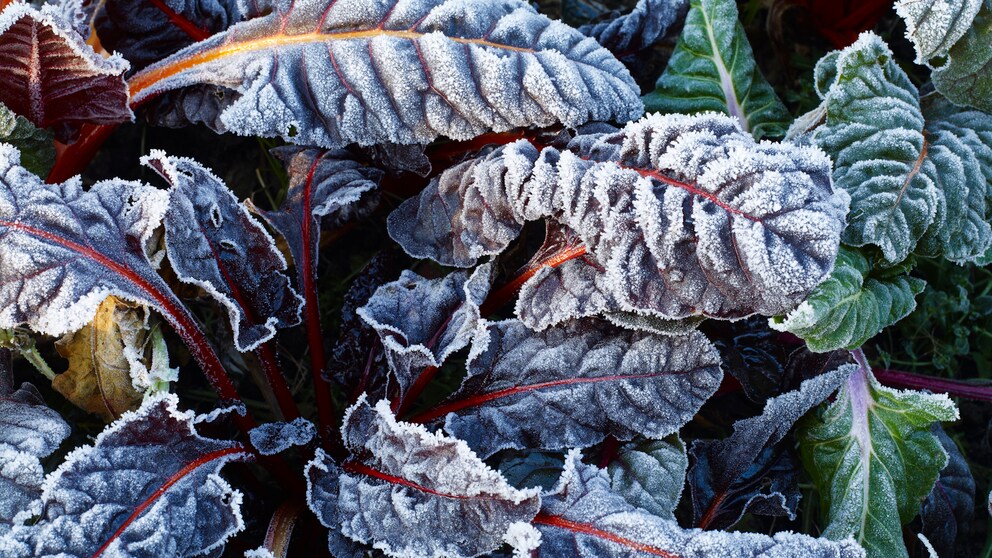


September 19, 2023, 10:24 am | Read time: 6 minutes
Winter is a rather quiet and calm season in the garden. After all, there’s not much to do when the ground is frozen and the plants are resting. However, those who sow the right seeds in the fall can harvest well into the new year.
The forward-thinking gardener knows: If you plant the right types of vegetables in the garden bed or on the balcony now, you can harvest healthy and, above all, fresh vegetables even in winter. myHOMEBOOK explains which winter vegetables can withstand sub-zero temperatures and how to plant them correctly.

Winter Onion Sets
Winter onion sets aren’t classic winter vegetables, but parts of them are. You plant them in the fall to harvest the first crunchy onions in May. The trick with these onions is their green tops. All winter long, they can be cut and used in salads, quark, or soups. They differ only slightly from the well-known spring onions.
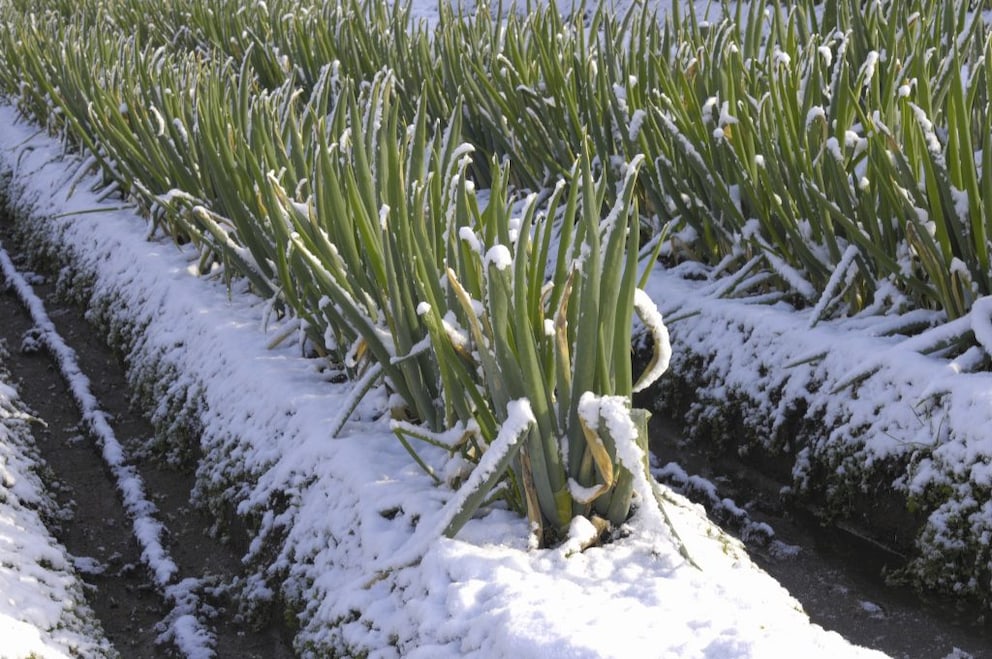
Winter onion sets are planted about three centimeters deep in the soil, with the root base facing down. Depending on the variety, the distance between the sets should ideally be about eight centimeters. Since the onions are very hardy, they only need winter protection when temperatures drop below minus ten degrees. For this, you can mound some soil and cover the onions with pine branches or garden fleece.
Also interesting: How to plant winter purslane in the garden?
Winter Spinach
Winter spinach is a good and classic winter vegetable. After sowing, it takes six to eight weeks before the first leaves can be harvested. Until spring, you always have fresh winter spinach for processing or directly for salads.
Winter spinach needs some space, so it’s advisable to widen the distance between rows to about 25 centimeters. The seeds should be one to two centimeters deep in the soil. Winter spinach can handle cold well, but it doesn’t hurt to lay some pine greenery or brushwood over the winter vegetable.
https://oembed/myhomebook/affiliate/af0faec2e1d5bf8cc86a596b2e9af702987de80ce5cf32b57a56931d4fa69f17/8e6e2b30-0677-421d-83d2-e1e4481878f8/embed
Winter Lettuce
Whether snow, rain, or even frost–hardy lettuces make harvesting and enjoying them at Christmas possible. The old variety “Baquieu” is particularly popular. It grows quickly, is very frost-hardy, crunchy, and mild, and its impressive red-green color brightens up any salad. Of course, other varieties such as lamb’s lettuce or “Wintermarie” are also suitable. When buying seeds, you should only ensure that the lettuce is winter or frost-hardy.
Also interesting: 7 types of vegetables you can grow in winter
In winter, you don’t let the lettuce mature into heads but harvest it as leaf lettuce, so you don’t have to follow spacing rules. The seeds are simply scattered over the bed or box. Since lettuce is a light germinator, it doesn’t need to be buried but remains lightly pressed on the soil. Once the young leaves have reached an appropriate size, the lettuce is cut about four centimeters above the ground. The special thing about it: If you don’t damage the lettuce heart, it will keep sprouting, and you can harvest wonderful lettuce leaves until late spring.
Tip: Once the lettuce is frozen, you should wait to harvest it until it has thawed again. If it thaws after harvesting, it will become mushy.
Swiss Chard
Swiss chard is also an excellent winter vegetable if you pay attention to a few details. There are leaf chard and stem chard. Both are suitable as winter vegetables. Stem chard comes in various colors, from light pink to yellow to pink and dark red. Even in winter, you have a beautiful play of colors in the garden or on the balcony and on the plate.
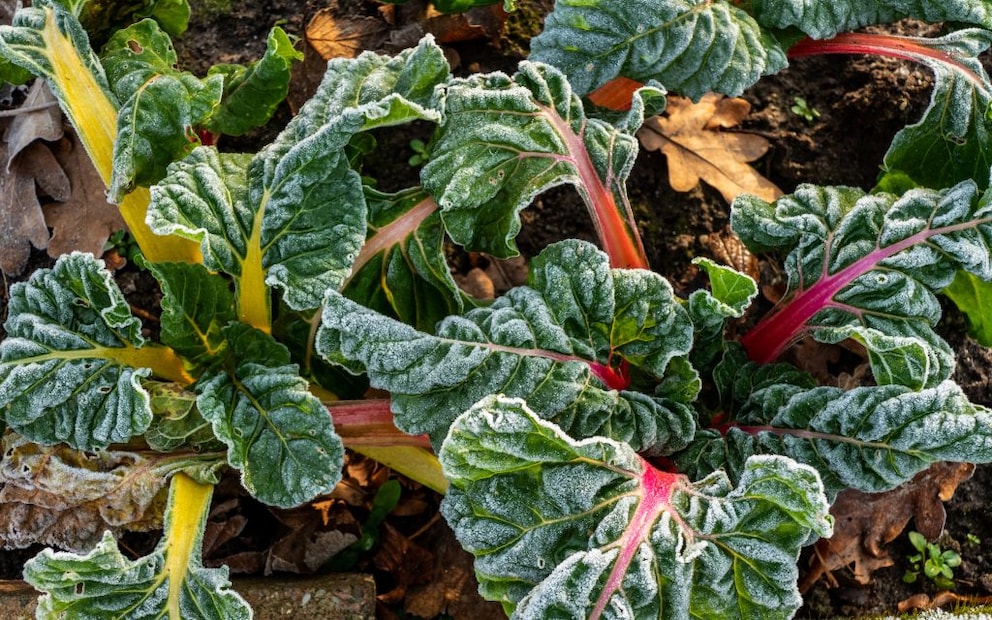
Before sowing, you should check whether the chard is really winter-hardy. Many varieties tolerate cold well, but not bare frost. This means that if there isn’t enough snow, you should give the chard extra protection. A fleece or hay for covering can help.
The row spacing for chard is about 30 to 40 centimeters. When harvesting, make sure to take only the outer, large leaves; the heart must not be damaged. Otherwise, the chard is harvested, and no more leaves will form.
Related: What to consider when growing Asian salad varieties in the garden
When to Start Planting in a Raised Bed
7 Vegetables You Can Grow in Winter
Peas
Peas are something special in winter because you don’t harvest the small peas but the pea shoots. It doesn’t matter which pea variety you choose; they all taste good. You can eat them raw in salads or use them in a stir-fry.
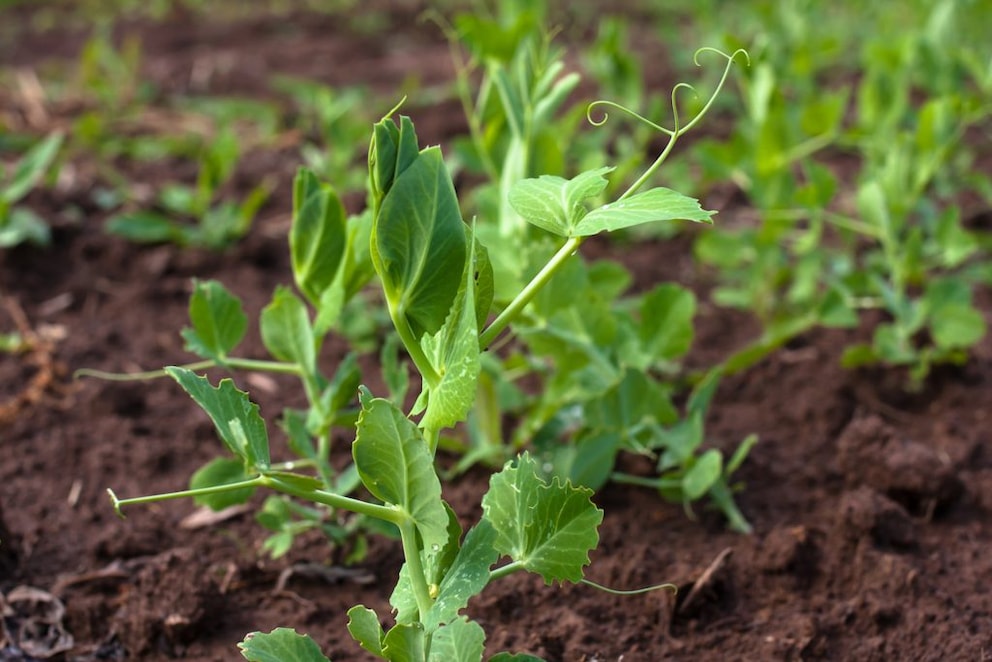
Peas can be sown generously. Since only the shoots are cut, they need less space than peas that grow to full size. When the shoots reach a height of about ten centimeters, they are cut, and they grow again, so you have fresh pea shoots all winter long.
Also interesting: 6 hardy perennials for the garden
Radishes
Typically, the season for radishes is from May to September. Few people know that you can also harvest them in winter. The tuber vegetable withstands temperatures down to minus seven degrees Celsius well. However, it doesn’t hurt to protect the frost-sensitive tubers with garden fleece.
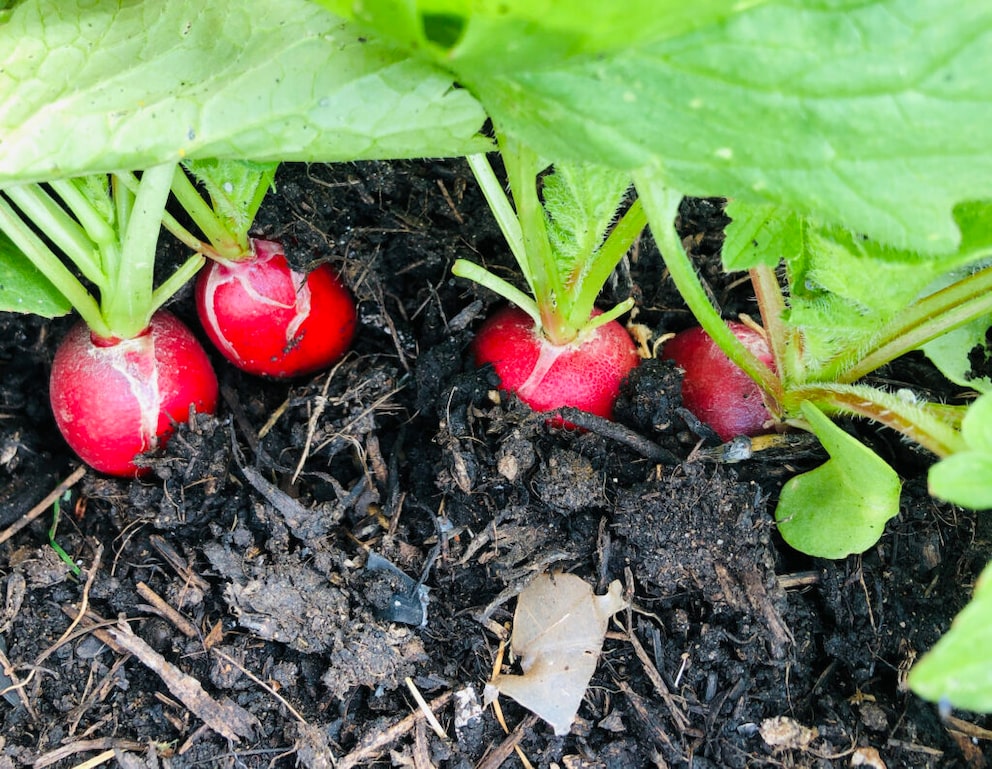
Gardeners can plant radishes from mid-September to mid-October. Both the garden bed and a container on the balcony are suitable for this. To prevent the roots from being damaged in winter, you should wrap plant containers and balcony boxes with a jute sack. A row spacing of about 15 centimeters is ideal for planting. Radishes can then be harvested from November to December.