


November 9, 2025, 11:32 am | Read time: 3 minutes
Scrambled eggs, quark, and pesto can be enhanced with aromatic chives. What many don’t know: This kitchen herb can survive the cold winter months unscathed. myHOMEBOOK reveals the care chives need in winter.
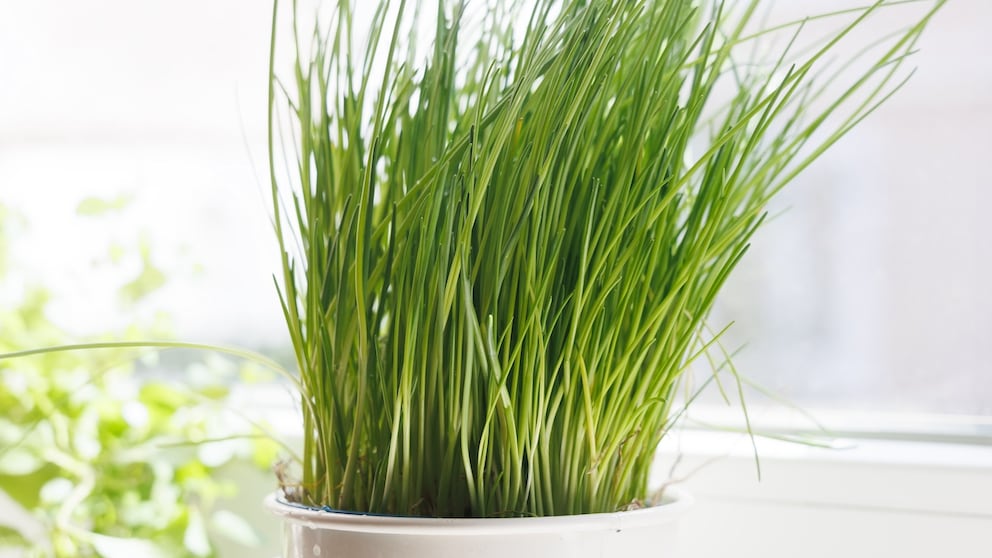
Alongside basil and parsley, chives (Allium schoenoprasum) are among the most common kitchen herbs in Germany. The plant can be cultivated both in the garden bed and in a pot on the windowsill. This remains true in winter: Chives thrive both outdoors and indoors. However, depending on the location, it makes sense to adjust the care.
Overwintering Chives in the Garden Bed
As a hardy plant, chives can generally withstand winter outdoors without any problems. The herb can endure temperatures down to about minus 20 degrees Celsius. To keep the plant healthy and ensure it sprouts again in spring, it should be cared for as follows:
- If the stalks wilt in the fall, they should be cut back. Leave the root ball undisturbed in the ground.
- Although chives are hardy, you can cover the root ball with leaves or pine branches for protection.
- In winter, chives are in a dormant phase. The herb does not need water or nutrients. On the contrary, fertilizers or too much moisture could harm it.

What to Consider When Overwintering Hydrangeas

How to Properly Overwinter Agapanthus
Overwintering Chives in a Pot
If you cultivate chives in a pot, place the plant in a bright, cool spot indoors during the colder months. Here too, the plant is in its dormant phase and requires only a little water. The rule is: Water the plant sparingly to prevent the soil from drying out. To avoid waterlogging, use the finger test to check if the top layers of soil are dry. If they are, water the plant. If the substrate is moist, you can wait a bit longer.
Also interesting: Do Chives Become Toxic When They Bloom?
Harvesting Fresh Chives in Winter
Chives can be dug up in the fall before the ground freezes. It’s best to use a spade for this. Before digging, cut back the wilted stalks as well.
The dug-up clump can then be divided into several smaller pieces with the spade. One or two pieces can be replanted in the bed. They will overwinter there without issue and sprout anew the following year. The remaining root balls are planted in pots with fresh soil.
The potted plants should not be brought indoors immediately, but left outside so the roots can freeze thoroughly. This cold phase is important for the plants to recover. Only then should the pots be brought indoors, placed on a bright windowsill, and lightly watered. This simulates a “spring,” and the chives will soon begin to grow again.