


December 9, 2025, 4:53 pm | Read time: 4 minutes
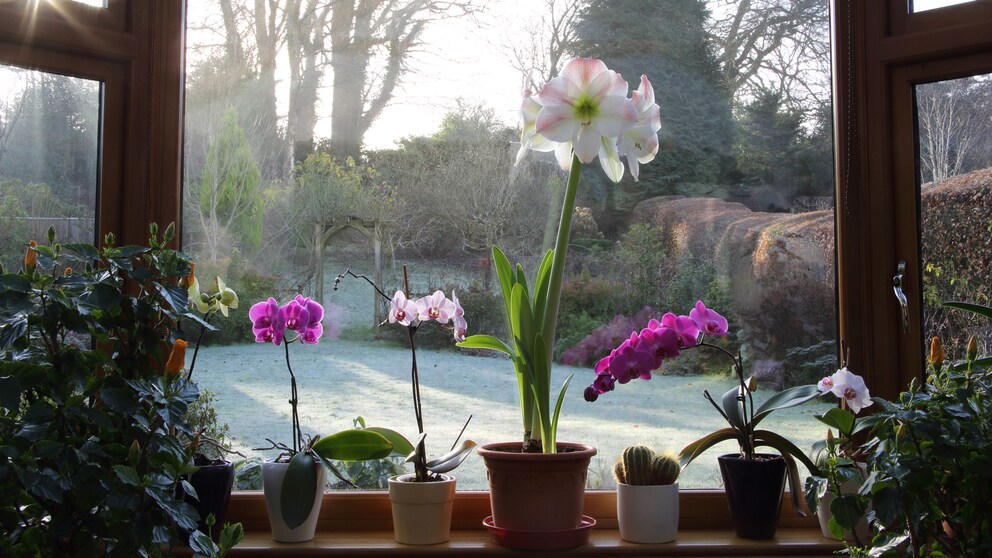
When the days get shorter and everything outside seems gray, winter-blooming houseplants can be true mood lifters. They bloom just when we need it most—in the middle of the dark season. Some species are surprisingly easy to care for, while others impress with vibrant colors or delightful scents. myHOMEBOOK presents seven plants that are guaranteed to add a splash of color in winter.
7 Winter-Blooming Houseplants
Overview
- 7 Winter-Blooming Houseplants
- 1. Christmas Cactus (Schlumbergera) – Classic with Lush Blooms
- 2. Amaryllis (Hippeastrum) – Impressive Winter Blooms
- 3. Cyclamen – Elegant, Winter-Blooming Houseplant
- 4. Orchids (Phalaenopsis) – Reliable Perennial Bloomers
- 5. Indoor Jasmine (Jasminum polyanthum) – Delightfully Fragrant
- 6. Flamingo Flower (Anthurium) – Blooms Especially Strong in Winter
- 7. Azalea (Rhododendron simsii) – Lush, Winter-Blooming Houseplant
- How to Care for Winter-Blooming Plants After Blooming
1. Christmas Cactus (Schlumbergera) – Classic with Lush Blooms
The Christmas Cactus usually shows its full bloom between November and January. The bushy hanging flowers appear in pink, white, yellow, or red. An ideal spot is bright but not in full sun, with moderate watering. Short days favor bud formation, making Schlumbergera the perfect houseplant for winter.
2. Amaryllis (Hippeastrum) – Impressive Winter Blooms
The Amaryllis is one of the most popular winter plants. No wonder, as its magnificent trumpet-shaped flowers often open around Christmas, exuding festive elegance. The Amaryllis, also known as the Knight’s Star, requires little water until the flower stalk appears. Then, water regularly and place it in a bright spot. If desired, the bulb can be made to bloom again each year. After blooming, the bulb plant must undergo a rest period of eight to ten weeks.
3. Cyclamen – Elegant, Winter-Blooming Houseplant
The pretty, delicate flowers seem to float almost weightlessly above the silvery-patterned leaves. Cyclamen bloom particularly reliably in winter when the room temperature is cooler (59–64 °F). This means they also thrive in a drafty hallway or stairwell. Important: Water from below only to prevent root rot.
4. Orchids (Phalaenopsis) – Reliable Perennial Bloomers
Many Phalaenopsis orchids begin a new blooming phase in winter. The elegant spikes last for weeks, sometimes even months. A bright location without direct midday sun and occasional soaking in water is sufficient. They are among the most uncomplicated flowering plants for the dark season.
5. Indoor Jasmine (Jasminum polyanthum) – Delightfully Fragrant
The Indoor Jasmine is a climbing plant that often begins blooming in January or February. The white star-shaped flowers emit an intense, sweet fragrance—the typical jasmine scent. Indoor Jasmine prefers bright and cooler conditions—ideal for a conservatory or a bedroom that doesn’t get too warm.
6. Flamingo Flower (Anthurium) – Blooms Especially Strong in Winter
The colorful spathes in red, pink, or white look like shiny hearts. Anthuriums bloom year-round, but many produce especially many flowers in winter. The houseplant prefers high temperatures and high humidity—perfect for bathrooms or bright living rooms, where they can be occasionally misted with water.
Blooming Alternatives to the Poinsettia

8 Flowering Houseplants to Brighten Your Home
7. Azalea (Rhododendron simsii) – Lush, Winter-Blooming Houseplant
Indoor Azaleas open their colorful blooms—from white to vibrant pink—right in the dark season. A cool location and consistent moisture are important. Waterlogging should be avoided at all costs. With some care, azaleas bloom for weeks and are relatively uncomplicated.
How to Care for Winter-Blooming Plants After Blooming
As the days become longer and brighter, the needs of winter-blooming houseplants change. Many species—such as Christmas Cactus, Orchid, or Flamingo Flower—enter a short rest period after blooming. They should now be watered less and not fertilized.
For bulb plants, such as the Amaryllis, the flower stalk is removed after blooming, and then the foliage sprouts anew. This should be allowed to grow vigorously until summer so that the bulb gathers enough energy for the next season. Cyclamen, Azaleas, or Indoor Jasmine appreciate a brighter location and fresh soil in spring. Once there is no longer a risk of frost, some species can even be temporarily moved outdoors—ideal are semi-shaded spots. This way, they recover, recharge, and are ready for lush blooms again next winter.

The Combination of Winter-Blooming Houseplants Makes the Difference
“My secret favorite for Christmas blooms is the Amaryllis. Few plants display such large and attractive flowers. If you don’t want to wait for the Amaryllis to grow from its bulb, you can also buy it as a cut flower. Here, the bloom opens after just a few days. Combined with a fir branch or some eucalyptus, the Knight’s Star looks even more Christmassy and festive.”