


December 5, 2025, 5:10 am | Read time: 4 minutes
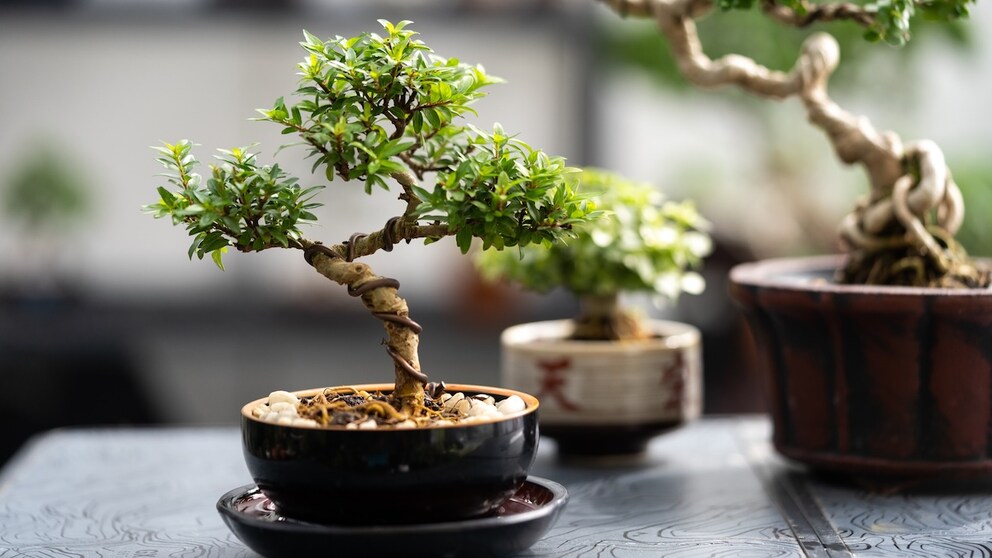
Bonsai trees are considered an expression of Japanese garden aesthetics. It takes a lot of care to keep a small tree alive. A bonsai can live for many hundreds of years, becoming a true treasure. It’s all the more frustrating when the plant suddenly loses its leaves. myHOMEBOOK reveals the possible causes behind this.
Many mistakenly believe that bonsai trees are a special plant species. However, bonsai merely describes the form of cultivation. The art form originally comes from China and was later adopted in Japan before reaching the Western world. The Japanese word “bon-sai” literally translates to “tree in a pot.”
Natural Leaf Shedding
Theoretically, any tree can be grown and cultivated as a bonsai. In addition to conifers, deciduous trees can also be nurtured and “grown” in a pot. Deciduous trees are known for reflecting the seasons in their foliage. In spring, they bear buds and blossoms, in summer a lush green dress, in autumn the leaves turn colorful, and in winter the leaves are ultimately shed. In the cold season, it is quite normal for a bonsai deciduous tree to lose its leaves.
Lack of Light
Light is vital for plants. Bonsai trees are particularly light-hungry. If they are too dark, they tend to shed their leaves. Especially the inner foliage is lost because it consumes more energy for its maintenance than it returns to the plant.
The bonsai should be kept in a bright location year-round. In winter, a plant lamp can be used for support. It is important to protect the plant from direct sunlight at midday.
Relocation Stress
Not every plant can handle frequent changes in location. The same goes for bonsai trees. Considering that they are essentially large-growing trees that stand firmly in one place, this is quite understandable.
When acquiring a new bonsai, it is quite normal for the plant to lose its leaves. Changes in light, temperature, and humidity initially stress the plant. Once it has adapted to its new environment, the leaves should regrow.
Note: Move the bonsai as little as possible. A change in environment stresses the sensitive plant, leading to leaf drop. The location should be well-considered and adapted to the specific tree species.
Watering Mistakes
The root area of bonsai miniature trees is severely limited by the small volume of the planting container. This helps keep the tree compact. At the same time, the reduced root system can store only a small amount of water. Therefore, regular watering is particularly important.
As an alternative to watering from above, the plant can also be watered from below. About once a week, the root ball should be completely submerged in water. Then let it drain well, as too much water can also be harmful. If the roots remain in overly moist soil for too long, there is a risk of root rot.
Both too little and too much water cause bonsai trees to lose their leaves. They either receive too little water or cannot absorb nutrients to support the foliage.

Rubber Plant Losing Leaves? Here’s Why It Might Be Happening

Christmas Cactus Losing Blooms? These Care Mistakes Are to Blame
Old Substrate
Bonsai trees have high demands on their care, including their substrate. Affordable specimens are not only linked by price but also by the poor substrate in which they are sold. Structurally stable, permeable soil is important for healthy growth.
With the right substrate, waterlogging can also be prevented. The soil can better store water and nutrients—this is also reflected in the foliage.
Fertilization Mistakes
Regular fertilization is particularly important for potted plants like bonsai. Nutrients must be manually added to the substrate. Although fertilizer is generally beneficial, it should not be overdone.
The salts contained in mineral liquid fertilizers can damage the roots. As a result, the plant can absorb less water and nutrients to support the leaves. As is often the case in the plant world, to protect itself, the plant sheds everything it can spare. Typically, this includes the flowers and leaves first.
To avoid fertilization mistakes, pay attention to the dosage. It’s better to fertilize too little than too much. Organic liquid fertilizers do not contain enriching substances, making over-fertilization less likely.