


March 14, 2024, 9:56 am | Read time: 4 minutes
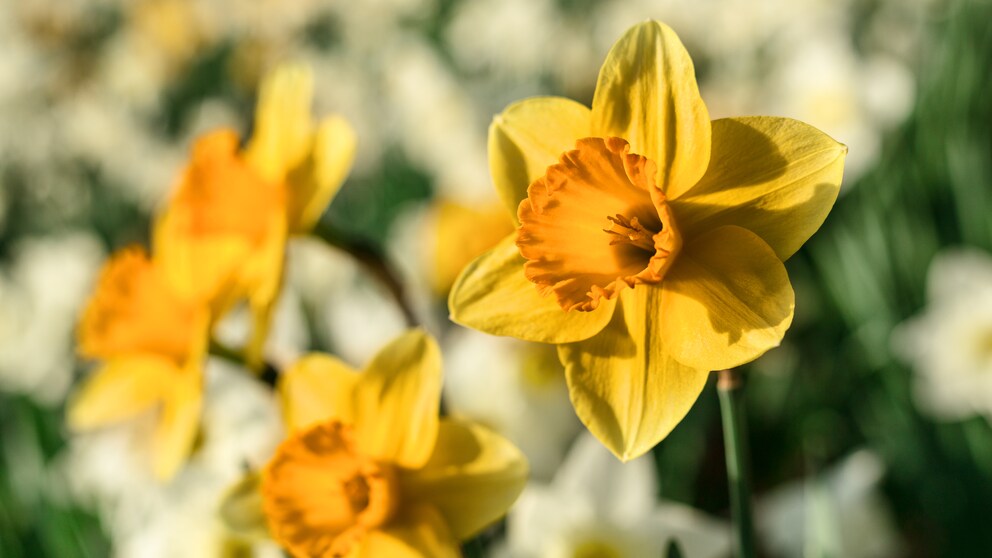
Even before Easter, the first daffodils push their shoots through the soil and soon display their golden yellow, white-orange, or double blooms. Does that automatically make them all Easter lilies? Is there even a difference between Easter lilies and daffodils? myHOMEBOOK investigates the question.
Alongside tulips, crocuses, hyacinths, and tulips, daffodils are among the first and most well-known spring bloomers. These plants all belong to the bulb category, with a wide range of species and varieties. But do the terms daffodil and Easter lily refer to the same plant species, or are they two different types?
Overview
Easter lilies and daffodils–this is the difference
There is a simple formula to botanically classify Easter lilies and daffodils: Easter lilies are also daffodils, but not all daffodils are Easter lilies. Easter lilies are simply a subspecies of the daffodil genus, which includes many other species. Cyclamen daffodils, for example, are their own daffodil species, as are angel’s tears and peacock-eye daffodils.

Why Daffodils Should Stand Alone in the Vase

Which Early Bloomers Are Toxic to Pets
What makes Easter lilies and other daffodil species unique
Now that the difference between Easter lilies and daffodils is clear, let’s take a closer look at the daffodil species known as Easter lily. Here, too, a tangle of different names can cause confusion: Depending on the region, Easter lilies are also called yellow daffodils, trumpet daffodils, or March bells. The name Easter lily comes from the fact that this daffodil species usually blooms around Easter, although this can vary greatly depending on the calendar year and weather conditions.
Easter lilies are the most well-known daffodils, which is why the two terms are often confused. The plant species shows green shoots 15 to 30 centimeters long from March, which during the blooming period bear star-shaped flowers with a predominantly yellow flower cup in the center. The flowers and leaves last until summer, as with many other daffodil species. What remains is the bulb in the ground, which sprouts again the following spring.
The peacock-eye daffodil, on the other hand, has white flowers, and the flower cup is yellow with an attractive red edge at the open end. It is considered a special variety among daffodils. Angel’s tears daffodils, on the other hand, are completely white and are considered particularly elegant.
Daffodils in the garden and in the vase
All daffodil species share the trait of surviving summer, fall, and winter in the ground as bulbs, sprouting again in spring. If the bulbs are not eaten by rodents or insects, they can grow anew each year, adding wonderful accents alongside other spring bloomers like crocuses and tulips.
However, in a vase, the company of the mentioned bulb flowers should be avoided. Once cut, daffodils secrete a slightly toxic slime. If accidentally ingested by humans or animals, it can cause diarrhea and stomach pain. Other cut flowers in the same vase quickly droop if arranged with daffodils and sharing the same vase water.
As cut flowers, daffodils should generally be kept to themselves. This is why Easter lilies and similar flowers are usually sold in bunches without other cut flowers. To keep daffodils in a vase fresh and attractive for as long as possible, the following tips help:
- Change vase water daily
- Recut daffodils every two days, wearing gloves
- A cool location keeps daffodils fresh longer

Reviving potted daffodils each year
“In spring, daffodils are offered not only as bunches for vases but also in pots. Once they have bloomed, the bulbs do not have to end up in the trash. With a little skill, new blooms can sprout from the daffodils the following year. After blooming, flowers and leaves should not be cut off but allowed to dry slowly. This way, the bulb can still draw energy from the plant remnants and store it for the coming year. Dried leaves can then be easily removed. The bulbs should be stored in a dry, dark, and cool place. In the fall, daffodil bulbs can be planted in the ground like other bulbs, so they sprout again with new vigor in the spring.”