

March 20, 2024, 10:03 am | Read time: 3 minutes
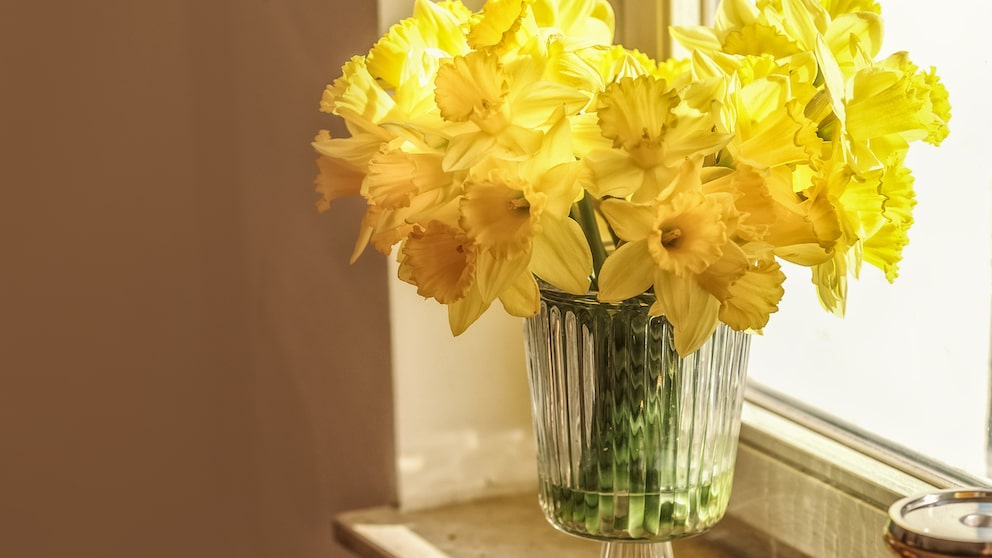
In spring, you might see some early bloomers along the roadside. Among them are daffodils. With their long stems, these flowers are also suitable for vases. However, be cautious: Even though they visually harmonize with other flowers, you should avoid placing daffodils with other plants in a vase.
In garden beds, some plants make particularly good neighbors. They support each other or at least don’t interfere with one another. However, there are also plants for which the opposite is true. If cultivated side by side, they hinder each other’s growth. This doesn’t just apply to garden beds. Even in a vase in a warm room, not all plants should be combined. For example, daffodils should always be placed alone in a vase.
When the Slime Gets into the Water
If you want to display daffodils in your home, you should place them alone in a vase. The reason is simple: They cause other flowers to wither. Tulips, carnations, and roses wilt sooner, and freesias and anemones don’t bloom at all when placed with daffodils in a vase. The culprit is the slime from the daffodil stems that gets into the water. This also applies to hyacinths.
When hyacinths and daffodils are freshly cut, they release a secretion into the water that can clog the stems of other flowers, causing them to spoil faster. Therefore, the Chamber of Agriculture of North Rhine-Westphalia advises placing these popular cut flowers alone in a vase at first–perhaps overnight. Once the stems have bled out, the cut flowers can be combined well with other plants in the vase.
Related: Do You Know the Difference Between Daffodils and Narcissus?
Do you know the difference between daffodils and narcissus?
Which Early Bloomers Are Toxic to Pets
Tips to Keep Daffodils Fresh Longer in the Vase
As the name of the plants suggests, daffodils usually bloom around Easter. To ensure the flowers adorn the Easter table for as long as possible, it can help to cut the stems at an angle with a knife after purchase. An angled cut increases the area through which the stems can absorb water.
Daffodils don’t like warm places, so it’s worth using cold water in the vase and regulating the room temperature. The air shouldn’t be too dry. Another tip: It’s best to change the water every other day. You can also trim the stems a bit during this process.
Arranging Early Bloomers in the Vase
Another problem some spring flowers present: They simply bend over in the vase. The Tulip Promotion Netherlands, an association of tulip growers and producers from the Netherlands, knows what to do: Combine spring-blooming shrubs like forsythia, snowball, or pussy willow with tulips. As tulips continue to grow in the vase, the shrubs provide support and a firm framework.
With material from dpa