


September 17, 2026, 1:26 pm | Read time: 3 minutes
Brown roots, limp leaves, or fallen blooms can quickly make an orchid look lost. Yet these popular houseplants are surprisingly resilient and can recover even from severe care mistakes. But how can you tell if an orchid is truly beyond saving or if it still has a chance? myHOMEBOOK asked the president of the German Orchid Society.
When an Orchid Can Still Be Saved
An orchid with limp leaves, dried flowers, or bare stems often ends up in the trash. But often prematurely, as orchid expert Bernd Treder explains. “An orchid is only lost when the heart of the plant is completely rotten and no healthy roots or dormant eyes exist anymore.” In fact, orchids are extremely resilient and can regenerate even from a few remaining plant parts.
Related: What’s Behind the Sticky Droplets on Orchids
Healthy Roots Are the Most Important Sign of Life
Whether an orchid can still be saved is mainly shown by a look at the roots. According to Treder, they are the plant’s actual survival organ. Healthy roots feel firm and crisp. When dry, they appear silvery-gray, but after watering, they turn lush green. Dead roots, on the other hand, are brown, mushy, hollow, or straw-dry.
Nevertheless, even severely damaged roots do not necessarily mean the end. “As long as there is a single healthy, green, or silvery root, the plant can survive,” says Treder.
Even Bare or Limp Orchids Often Still Have Chances
Many plant enthusiasts consider their orchid lost when it no longer has leaves. But even then, according to Treder, the plant can still form new shoots, provided the roots are healthy.
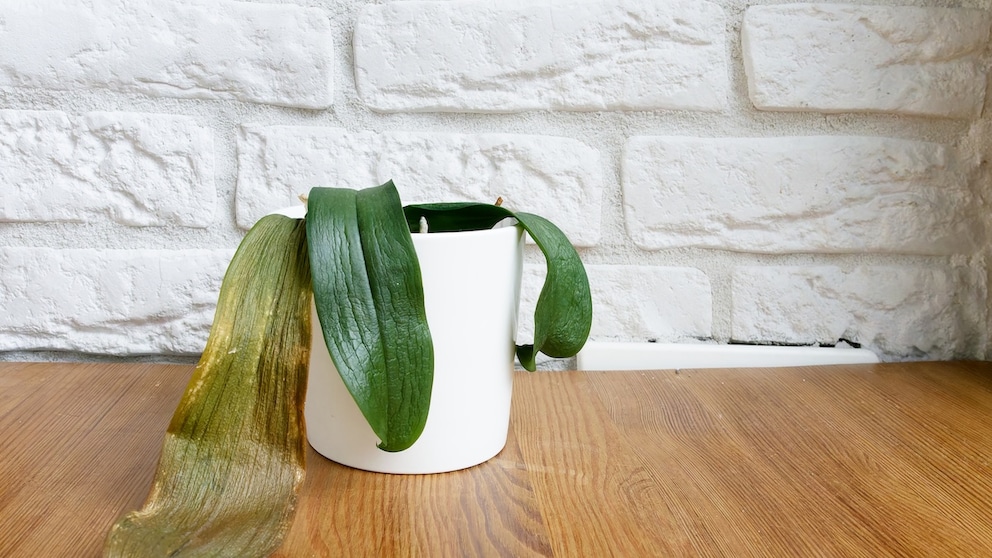
The same goes for orchids with limp or wrinkled leaves. Such plants often suffer merely from a lack of water. With a targeted soak and increased humidity, they can often recover.
Also interesting: What’s Behind Yellow Leaves on Orchids

What Causes Yellow Leaves in Orchids

Orchid Faded? Here’s What to Do Now
These Signs Are Often Misinterpreted
Not every unsightly appearance indicates a dead orchid. Particularly often, dried flower stems cause uncertainty. “Many beginners think the orchid is dead when the flowers fall off and the stem turns brown,” Treder explains. In fact, this is usually just a resting phase. The old flower stem can be cut off, but the plant continues to live.
Silvery-gray roots are also often misunderstood. Although they appear dry and lifeless, they are often just thirsty and turn green again after watering, the expert explains.
When a Rescue Is No Longer Possible
Despite their resilience, there is a point with orchids when a rescue becomes hopeless. According to Treder, this is the case when all roots are completely rotten and the plant base, or the heart of the orchid, is black, soft, and already decayed. If the plant falls apart with a light touch, a rescue attempt is also no longer worthwhile.