


April 10, 2026, 4:23 am | Read time: 3 minutes
Anyone out and about in the spring is likely to encounter it almost everywhere: in meadows, along roadsides, under shrubs, or in their own garden. Ground ivy (Glechoma hederacea), also known as creeping Charlie or alehoof, is one of those plants that quietly spreads—and is often overlooked. Yet, this inconspicuous early bloomer has much more to offer than many might suspect.
Ground ivy is an important plant for insects, a traditional medicinal herb, and even an aromatic ingredient for the kitchen. myHOMEBOOK gardening expert Franka Kruse-Gering explains why ground ivy is so valuable and how to identify it.
Why the Plant is So Common in Spring
Ground ivy is one of the plants that gets a head start in spring. It is evergreen and can start growing as soon as temperatures rise.
The first flowers appear as early as March, and by April, the plant is particularly visible. At this time, the usually creeping stems partially stand upright, making ground ivy easily recognizable in meadows, gardens, and at forest edges.
How to Identify Ground Ivy
Ground ivy grows low and forms dense carpets with its stems. The stems are square, and the leaves are round to kidney-shaped with serrated edges. They grow in opposite pairs.
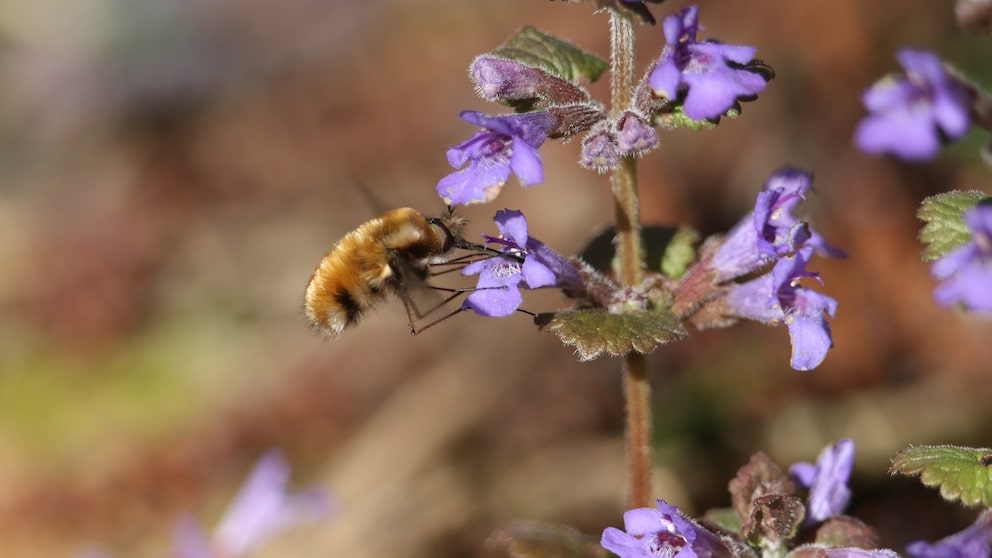
The scent is also characteristic: when the leaves are crushed, they release an aromatic, slightly spicy aroma. The small blue-violet flowers sit in the leaf axils and usually appear in clusters.
Where the Ground Ivy Thrives
Ground ivy is widespread in Europe and thrives in many locations. It typically prefers nutrient-rich, somewhat moist soils. It is often found in meadows, at the edges of shrubs, in floodplain forests, along banks, and in gardens. It thrives particularly well in partial shade but can also adapt to other light conditions.
Important Role for Insects
Ecologically, ground ivy is particularly valuable. Its flowers provide nectar early in the year for numerous insects, including wild bees and various butterfly species.
Especially in spring, when food is still scarce, the plant is an important energy source. Therefore, it can be beneficial to leave it in suitable places.
How to Use Ground Ivy in the Kitchen
The leaves and flowers of ground ivy are edible. The plant has a strong, slightly bitter, and spicy flavor, so it should be used sparingly. It pairs well with wild herb salads, herb butter, quark, or savory dishes. The flowers can also be used as a decorative ingredient.
Important: Small amounts are harmless, but larger quantities should be avoided. The plant is toxic to horses and other hoofed animals.
Ground Ivy – the Green Wonder Herb in Forests and Gardens

5 Fast-Growing Ground Covers for Your Garden
Traditional Medicinal Herb with a Long History
Ground ivy has been used as a medicinal plant since ancient times. It was used by the Germanic peoples and in the Middle Ages for wounds, inflammations, and respiratory ailments, among other things. The essential oils, tannins, and bitter substances it contains are associated with anti-inflammatory and expectorant properties.
Risk of Confusion in the Green–What You Should Know
Although ground ivy has a distinctive appearance, it can be mistaken at first glance for other low-growing plants. This is most likely to happen with bugleweed, which also blooms blue-violet and prefers similar locations. However, this mix-up is not dangerous.
An important distinguishing feature is the leaves. Ground ivy’s leaves are distinctly rounder, kidney-shaped, and serrated at the edges. They also emit an intense, spicy scent when crushed. Bugleweed’s leaves tend to be smoother and less distinctly shaped.
Ground ivy is generally not confused with truly poisonous plants. However, if you are unsure, you should look closely and only use wild plants if they are clearly identified.