

December 20, 2022, 12:15 pm | Read time: 2 minutes
Not only in summer but also during the cold season, spider mites are active. Dry heating air revives the tiny crawlers. Therefore, they are often found on houseplants in winter–as well as on potted plants from the garden in their winter quarters.
Spider mites seemingly attack our houseplants suddenly in the middle of winter. The conditions are perfect for the pests when the rooms are nicely heated. And they multiply rapidly. Spider mites thrive particularly well in environments with dry heating air. That’s why plants on the windowsill above the radiator are often infested by them.
Spider Mites on Houseplants–How to Get Rid of Them?
Increasing humidity with a mist spray can help, explain the experts from the Garden Academy of Rhineland-Palatinate. Alternatively, you can place a shallow dish of water under the plant’s pot. However, you should not leave excess watering directly in the pot, as this standing water can cause the roots to rot. The goal of the water dish should only be to increase the humidity in the microclimate around the houseplant.
In case of a more severe infestation, it’s best to also remove the damaged leaves or affected shoots. If all else fails, plant protection products can be the solution. Or the natural enemies of the spider mite: the predatory mite. These can be purchased from specialist retailers, usually in the form of small leaf pieces or cards with the creatures that you release.

Rubber Plant Losing Leaves? Here’s Why It Might Be Happening

Winter Tarragon: Growing and Harvesting the Aztec Herb Yourself
How Do Spider Mites Enter the Home?
Spider mites also migrate with plants from the balcony, terrace, and garden into the house’s winter quarters and survive the cold days in the warmth. Therefore, these plants should be regularly checked for pests.
Also interesting: 7 Home Remedies to Effectively Combat Aphids
How to Recognize an Infestation?
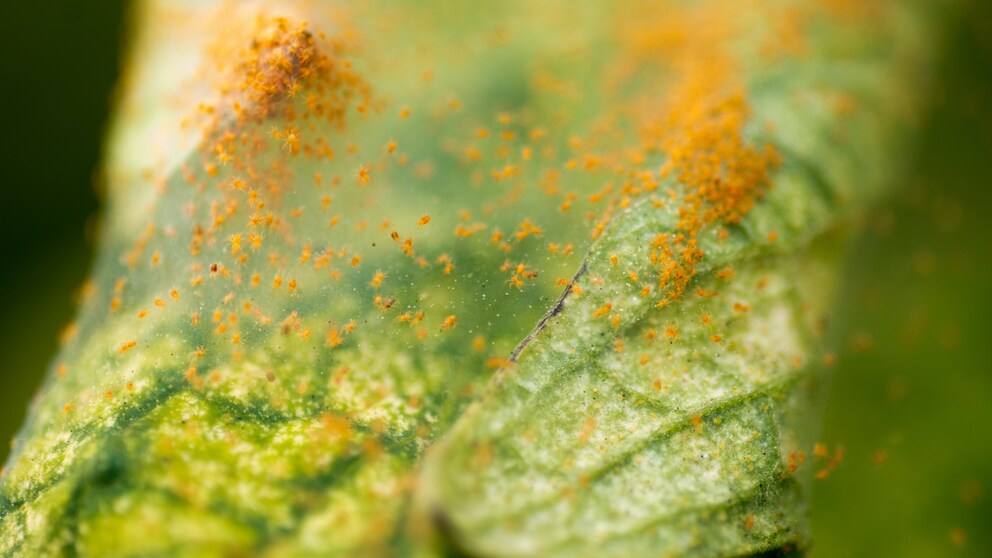
Hobby gardeners can recognize an infestation by small, yellowish-white speckles on the leaves. These later become pale, then yellowish, and dry out. Sometimes leaves and entire shoots are covered with fine webs.
The pests are very small, about 0.5 millimeters. They are yellowish-green, red, or brown-black and are mainly found on the underside of the leaves.