


July 12, 2023, 4:09 pm | Read time: 4 minutes
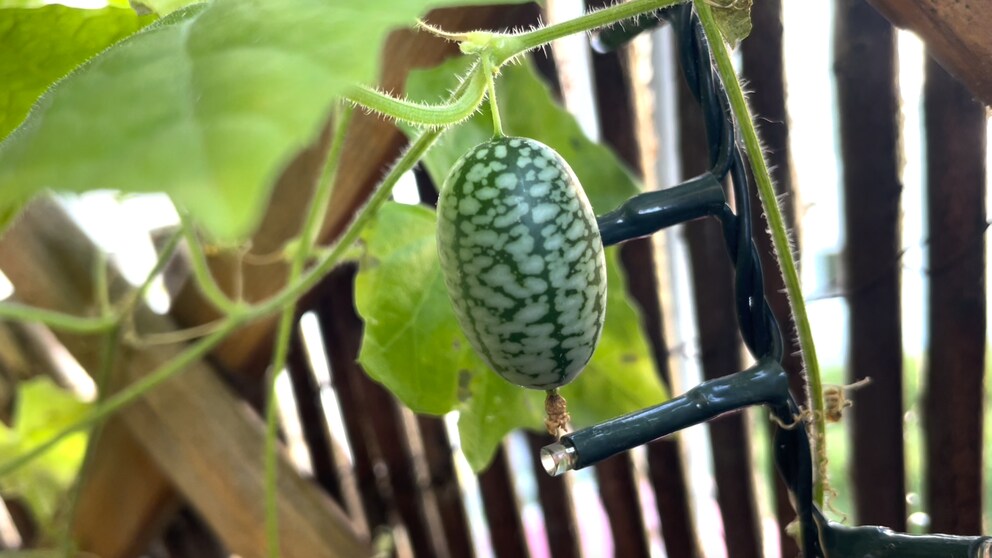
The fruits of the Mexican sour gherkin look as if watermelons were first shrunk and then pressed into a slightly elongated shape. Growing these exotic and attractive little cucumbers is almost child’s play. We’ll show you how it’s done.
Still relatively unknown but clearly on the rise is the Mexican sour gherkin (Melothria scabra), also called cucamelon. It belongs to the gourd family and comes from Mexico, as the name suggests. Visually, it makes quite an impression, as the fruits look like striped watermelons but are much smaller. They reach about the size of large gooseberries or olives and are similarly elongated. In terms of taste, they are close to regular cucumbers. Some people are also reminded a bit of melon. The small cucumbers are available in some supermarkets and organic stores. If you want to not only eat the fruits but also watch them grow, you can cultivate the Mexican sour gherkin yourself. Young plants are available online, in garden centers, and some hardware stores, and seeds are also offered.

Overview
Planting Mexican Sour Gherkin
Although the climbing plant makes a very exotic and special impression, it is easy to cultivate. Indoor pre-cultivation can begin in March. The heat-loving plants are only planted out after the Ice Saints, when no more frosts are expected. If you prefer to sow directly outdoors, you can plant the seeds between mid-May and mid-June.
Appearance and Growth
This gourd plant is a climbing vine that can reach a height of up to 2.5 meters. To thrive optimally, the sour gherkin needs a trellis, such as lattices, nets, or fences. The small yellow flowers, which open from June, develop into the fruits.
Location and Soil
The Mexican sour gherkin requires a sunny to partially shaded location that is as warm and sheltered from the wind as possible. In addition to outdoor cultivation, growing in a greenhouse is also possible. The plant loves a humus-rich, nutrient-rich, loose, and not too wet soil. Suitable neighbors in the bed include beans, dill, peas, lettuce, and fennel.
Balcony and terrace gardeners can also grow their own sour gherkins, as the plants thrive in containers–provided the container is large enough. It should have a capacity of at least 20 liters.
Caring for Mexican Sour Gherkin
The sour gherkin is robust and easy to care for, making it very suitable for garden beginners and children. With the following tips, the harvest will be even better.
Watering
The Mexican sour gherkin is relatively drought-tolerant. However, occasional, not too heavy watering with lukewarm water is beneficial. This positively affects the yields.
Fertilization
If the nutrient-hungry plant is occasionally supplied with a simple vegetable fertilizer, it has everything it needs.
Also interesting: The 3 most common mistakes when watering cucumbers
Pruning
If the Mexican sour gherkin is cultivated as an annual, pruning is not necessary.
Propagation
Propagation is done by sowing. Seeds can be obtained by collecting seeds from ripe fruits, cleaning them, and then storing them dry, dark, and cool.
Winter Hardiness
In this country, the Mexican sour gherkin is not winter-hardy outdoors. However, it can be overwintered frost-free. To do this, the foliage is removed at the end of the season, the storage root is dug up, and stored in slightly moist sand, cool but definitely frost-free.
Alternative
An equally attractive and special cucumber is the Inca cucumber, also known as the horned gourd. It also grows as a climbing vine and produces interesting fruits. These are often spiky and significantly larger than those of the Mexican sour gherkin.
Bee Friendliness
Pollination is done by bees and bumblebees. So if you are growing the plants in a greenhouse, make sure the insects have access.
Diseases and Pests
This gourd plant is not very susceptible to diseases and pests. To protect the plant’s health, do not overdo it with watering.

How to Properly Plant and Care for Decorative Pumpkins

Growing Cucumbers on the Balcony – How to Harvest Successfully
Harvest
The harvest of the small cucumbers begins in July and continues until the first frost. The fruits are ready to harvest when they reach a size of two to a maximum of four centimeters.
Use in the Kitchen
Children love the small fruits for their unusual appearance. They are great as a snack for lunchboxes or as a treat in between. You can also pick them directly from the plant. As an eye-catching ingredient for salads, Mexican sour gherkins are a good choice. If you want to emphasize the sweet and sour taste, you can pickle the small cucumbers.