


November 12, 2025, 2:03 pm | Read time: 4 minutes
Ornamental gourds are the colorful stars of autumn. With their extraordinary shapes and vibrant colors, they create a fall atmosphere in the garden, on the balcony, or as table decorations. myHOMEBOOK introduces ornamental gourds—and explains how to plant, care for, and preserve them successfully.
Overview
Planting
Ornamental gourds belong to the large family of cucurbits. They are cultivated not for their taste but for their attractive appearance. The plants can be grown from seeds or purchased as young plants at garden centers.
Those who wish to sow them themselves should start pre-cultivation on the windowsill or in a mini greenhouse from April. The seeds are placed about two centimeters deep in seed soil and kept warm (68 to 75 degrees Fahrenheit). They germinate after about a week. From mid-May—when there is no longer a risk of frost—the young plants can be moved outdoors to beds or large pots.
A planting distance of about one meter is ideal, as ornamental gourds are vigorous climbers. Those with limited space can train the vines to grow upward on trellises or fences.
Appearance and Growth
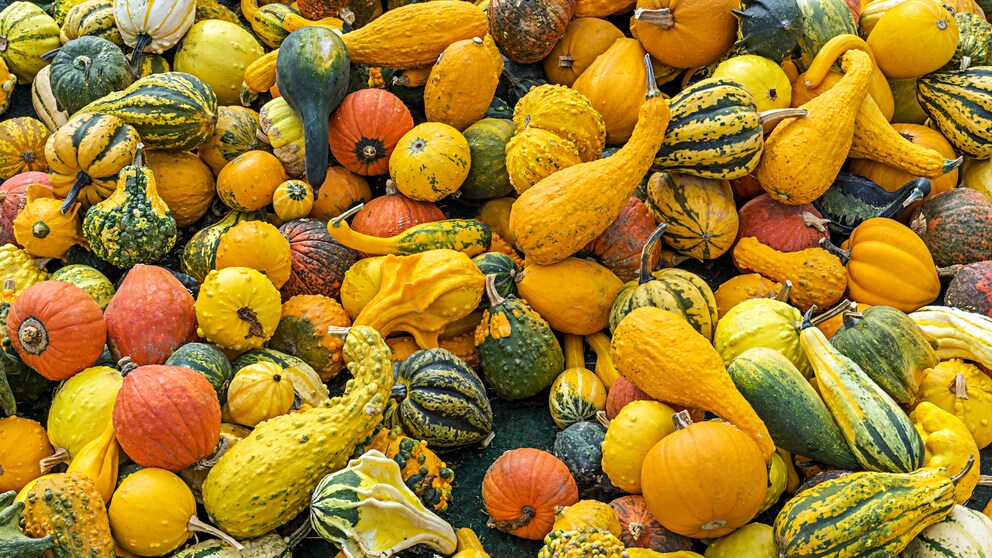
The fruits of ornamental gourds captivate with an incredible variety of shapes: spherical, bottle-shaped, pear-like, or with jagged edges. Colors range from yellow to orange to green, white, or even striped. Many varieties have quirky surfaces with warts or ribs, making them particularly decorative.
The plants themselves are annual climbers with long, hairy vines and large, heart-shaped leaves. Their yellow flowers appear from June and attract numerous insects. By late summer, the typical small ornamental gourds develop and fully ripen by fall.
Location and Soil
Ornamental gourds love sun and warmth. The ideal location is a sunny, sheltered spot in the garden or on the balcony. The soil should be nutrient-rich, loose, and humus-rich. The roots do not tolerate waterlogging—therefore, good drainage is important.
For container plants, a mix of garden soil, compost, and some sand is recommended. In hot summers, a mulch layer of straw helps retain moisture in the soil longer.
Varieties
Ornamental gourds come in countless shapes and colors. Particularly popular are:
- Crown of Thorns: with jagged edges and yellow-green coloring
- Bicolor Spoon: spoon-shaped and bicolored, ideal for bowls
- Mini Red Turban: reminiscent of a small turban, orange-red
- Baby Boo: small, white gourd, perfect for modern decor
- Autumn Wings: winged shape, often multicolored
Note: All varieties are inedible as they contain bitter substances that can cause nausea, vomiting, and diarrhea.
Care
Watering
During the growth phase, ornamental gourds need a lot of water, especially on hot days. It’s best to water in the morning or evening—directly at the roots to keep the leaves dry. This prevents fungal diseases.
Fertilization
Ornamental gourds are heavy feeders. Before planting, the soil should be enriched with compost or organic fertilizer. During the season, apply a liquid fertilizer every two weeks.
Also interesting: 4 Ideas to Decorate Your Home for Fall
Pruning
Pruning is not necessary. If you want to direct growth in a certain direction, you can shorten overly long vines. This encourages the formation of new side shoots and fruits.
Winter Hardiness
Ornamental gourds are not winter-hardy—they are annuals and die after the harvest in the fall. However, the fruits themselves can be stored for a long time: kept in a dry, cool place at around 59 degrees Fahrenheit, they last several months.
Toxicity
Ornamental gourds contain cucurbitacins—toxic, bitter substances that can cause gastrointestinal issues. Therefore, they should not be consumed. They are also toxic to pets.
Propagation
Propagation is done through seeds obtained from ripe fruits. After drying, they can be sown the following spring. Crossbreeding with edible gourds should be avoided—this can also result in toxic hybrids. Ideally, only ornamental gourds or only edible gourds should be grown in a garden.
Alternatives
Those who prefer edible gourds can opt for Hokkaido, butternut, or muscat squash—they are also decorative but edible. For small gardens or balconies, ornamental cucumbers or ornamental corn are equally colorful fall accents.
Bee Friendliness
The large, yellow flowers of ornamental gourds are popular food sources for bees and bumblebees. Planting several supports pollinators in the garden.

Planting and Care Tips for the Exotic Pepino Fruit in Your Garden or Balcony

The Cathedral Bells Vine: A Prolific Climbing Plant for Privacy Screening
Usage
Ornamental gourds are true all-rounders for fall decorations:
- In bowls with moss, chestnuts, and leaves on the garden table
- As table decor with tealights and branches
- In combination with heather, ornamental grasses, or Chinese lanterns at the entrance
- Also painted or sprayed with gold spray, they become stylish, modern eye-catchers.
Diseases and Pests
Ornamental gourds are robust but can be affected by powdery mildew. A whitish coating on the leaves indicates this. Affected leaves should be removed. Snails can also severely damage young plants—slug protection helps.
Waterlogging easily leads to root rot, so the irrigation water should always drain well.