


November 12, 2026, 10:29 am | Read time: 4 minutes
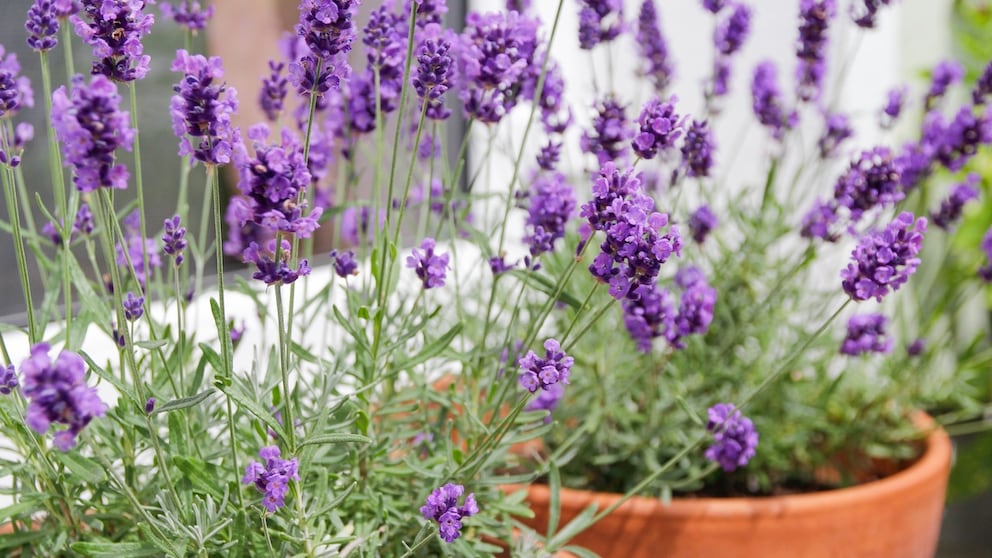
Lavender is one of the most popular plants for balconies and terraces. In summer, it loves sun and warmth, but with the first cold nights, the question arises of what happens to the plant in the pot. Does it need to be brought indoors, or can it stay outside for the winter? myHOMEBOOK explains what is important.
This mainly depends on the type of lavender. Even varieties that tolerate low temperatures well require a bit more attention in a pot than in a garden bed. This is because their roots are much more exposed to the cold in a container.
Follow myHOMEBOOK on WhatsApp now
Can Lavender in a Pot Survive the Winter Outside?
Whether lavender can spend the winter outdoors depends primarily on the type. English lavender (Lavandula angustifolia) is considered particularly hardy and can generally stay outside. It’s different, for example, with French lavender (Lavandula stoechas). It is much more sensitive to frost and should be overwintered in a bright, cool, and frost-free place.
Why Lavender in a Pot Needs More Protection
Just because a type of lavender is considered hardy doesn’t mean it should be left completely unprotected in a pot. In the garden, the root system is in the ground and is therefore relatively well protected against strong temperature fluctuations.
This protection is missing in a pot. Especially small containers can cool down significantly during prolonged frost, and the root ball can freeze completely. Therefore, the roots should be protected from extreme cold.
Also interesting: How to dry and process lavender
How to Make the Lavender Pot Winterproof
The pot can be wrapped with burlap, fleece, or another insulating material. It’s important to keep any drainage holes clear. The surface also plays a role. In winter, the pot should not stand directly on cold stone slabs. A base made of wood or another insulating material creates distance from the cold ground.
Additionally, a sheltered location is recommended. A house wall or a spot under an eave can be beneficial. There, the plant is less exposed to wind and precipitation.
Watch Out for Too Much Moisture in Winter
Not only low temperatures can cause problems for lavender in winter. Persistent moisture is also not good for the plant. Lavender prefers a rather dry and well-drained soil. If the substrate remains very wet for a long time, the roots can be damaged. Excess water must always be able to drain from the pot. If there is a saucer under the container, rain or irrigation water should not collect in it.
Especially during longer rainy periods, it is worth checking the pot’s location. A sheltered spot can prevent the soil from being constantly soaked.
Also interesting: Should lavender and roses not be planted next to each other?
Do You Need to Water Lavender in Winter?
Even in winter, lavender occasionally needs water. This is especially true if the pot is in a sheltered spot and receives little rain. Therefore, the soil should be checked from time to time. If the root ball is very dry, the plant can be watered sparingly on a frost-free day. The rule is: better to water sparingly than to keep the pot constantly moist. If the soil is still sufficiently moist, the plant does not need additional water.

8 Popular Herbs to Overwinter Properly–How They Survive the Cold Season

What’s Important for Overwintering Balcony Plants
Should You Prune Lavender Before Overwintering?
A heavy pruning just before winter is not a good idea. Fresh shoots may not have enough time to mature before severe frosts.
A more substantial maintenance cut can wait until spring. Lavender should generally not be cut back too deeply into old, already woody parts of the plant, as it is more difficult for it to sprout again from these.
Better to Overwinter Frost-Sensitive Lavender in a Protected Place
For frost-sensitive types of lavender, it is not enough to just wrap the pot. They should be moved to a suitable winter quarters. An ideal place is bright, cool, and frost-free.
A warm living room is not suitable for overwintering. A better option is a bright, cool, and frost-free location at about five to ten degrees Celsius. Suitable places include an unheated stairwell, a bright basement room, a conservatory, or a frost-free garage with a window.