


June 25, 2023, 10:55 am | Read time: 5 minutes
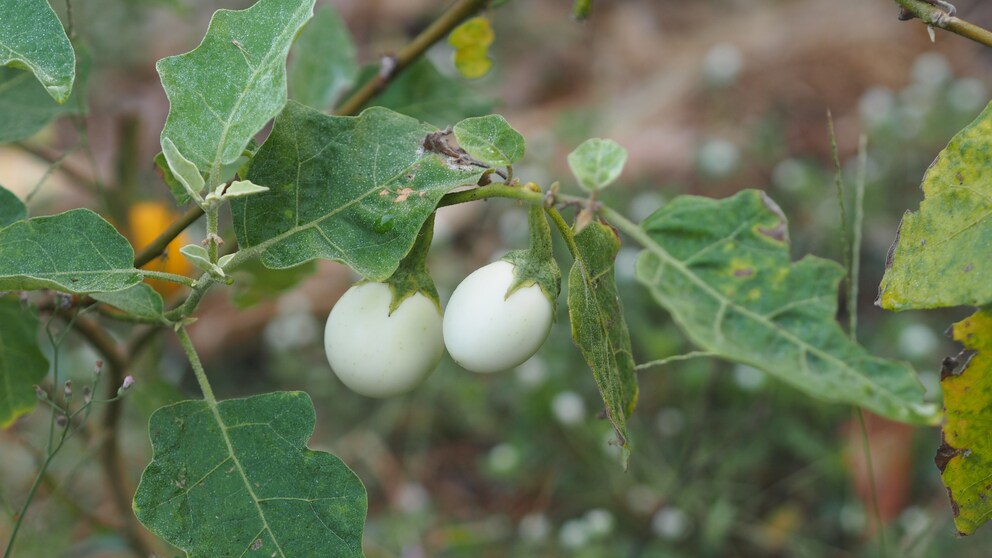
Like white eggs, the fruits of this plant hang from the green branches. The eggplant tree belongs to the eggplant family and can be used similarly in the kitchen. myHOMEBOOK offers tips on planting, care, and harvesting in your own garden or on the balcony.
From a distance, the eggplant tree indeed looks as if it bears slightly rounded white chicken eggs. However, the light fruits are simply eggplants, shaped like eggs and colored white. This variety is said to originate from Japan and is also called “Oeuf Blanc” (French for White Egg). So far, it is mainly used in Asian and Mediterranean cuisine but is gradually gaining more enthusiastic followers here as well. Due to their unique shape and color, the fruits of the eggplant tree are a real eye-catcher on the plate. With proper care, they thrive not only in southern regions but also in our vegetable gardens.

Overview
Planting the Eggplant Tree
Since the eggplant tree originates from warm to hot regions, similar conditions should be provided here. This means that sowing is best done in a greenhouse or on a sunny windowsill at 68 to 77 degrees Fahrenheit; otherwise, the eggplant tree won’t germinate. The seeds can be planted in the soil as early as February. They should be placed about half a centimeter deep in seedling soil and covered with soil. Depending on conditions, the seeds may germinate after about ten days. Once two pairs of leaves have formed, the seedlings can be transplanted in the greenhouse or moved outdoors from June. Those with a sunny balcony can also grow the eggplant tree in a pot.
Appearance and Growth
Aside from the white, egg-shaped fruits, the eggplant tree resembles other eggplant varieties. It is a typical nightshade plant and thus looks somewhat similar to potato and tomato plants. However, it can grow up to 80 centimeters tall. Attractive violet-blue flowers form and, after pollination, become the eponymous egg-shaped mini eggplants.
Location and Soil
In line with its origin, the eggplant tree needs a very sunny and warm location. This can be, for example, a greenhouse or at the base of a house or shed wall that receives a lot of sun and thus heats up. The additional warmth promotes stronger growth and a richer harvest. The soil should be loose, always slightly moist, but free from waterlogging.
Caring for the Eggplant Tree
The eggplant tree requires similar care to tomatoes. It needs plenty of warmth, sun, nutrients, and water. Beginners should therefore initially try their hand at just one or two plants.
Watering
Eggplants generally have a rather high water requirement, especially since water evaporates quickly at their ideally sunny location. It’s best to water thoroughly every morning, and on very hot days, also in the evening.
Fertilization
Like all nightshade plants, eggplants and thus the eggplant tree are heavy feeders. Adding compost directly when planting the young plants is advisable, and additionally, compost should be applied to the root area and watered in every four weeks.
Pruning
The nightshade plant from Japan can produce plenty of fruit without pruning. Those who prefer a taller and less bushy growth can pinch out, similar to tomatoes. This involves removing additional shoots from the leaf axils to strengthen the main shoots.
Winter Hardiness
The eggplant tree is usually cultivated as an annual in our regions, as it wouldn’t survive our fall and winter. It is not winter-hardy. However, those with a conservatory or a bright but cool stairwell that offers more than 59 degrees Fahrenheit even in winter can prune their eggplant tree back significantly and keep it alive with infrequent watering. In spring, the plant can then sprout anew.
Diseases and Pests
Aphids and spider mites often make themselves comfortable on the nightshade plant. If the eggplant tree is too moist, brown and late blight can develop.
Harvest
Eggplants are usually ripe in September. Neither the skin nor the interior should show green spots, and the flesh should feel spongy-soft when pressed. The fruits are cut off with a sharp knife, including the stem, and stored cool and dark. Ideally, they can last a few weeks.

Planting and Care Tips for the Exotic Pepino Fruit in Your Garden or Balcony

How to Easily Grow Your Own Peppers
Usage
Just like eggplants, the fruits of the eggplant tree are versatile. This is due in part to their neutral taste, which carries many flavors added through cooking. The eggplant tree fruit can be grilled, baked, or fried. Thin slices of the white fruit also make a good pizza topping. Those who want to preserve their harvest have three options:
- Preserving in oil: The eggplant variety is made durable by frying it with plenty of oil in a jar.
- Freezing: Cut into pieces and portioned, the eggplant tree fruit can be preserved in the freezer for many weeks and months.
- Drying: Those with a dehydrator can dry the white eggplant slices to preserve them. This can also be done in the oven at about 122 degrees Fahrenheit with the door slightly open.
Toxicity
Eggplants contain larger amounts of the alkaloid solanine, similar to potatoes. This can lead to severe poisoning symptoms in humans. Therefore, the fruit should only be consumed cooked, fried, or baked.