


July 26, 2023, 3:43 pm | Read time: 6 minutes
Summers are getting hotter even in our regions. That’s why it’s worth creating small, natural shaded areas in the garden. Here’s how to do it best.
In summer, we love being outside in the garden. However, few people want to lie or sit in the blazing sun. Small shaded spots in your own garden are particularly pleasant and almost refreshing. Instead of an umbrella, you can opt for suitable plants that naturally create shade in the garden. You don’t have to miss out on colorful blooms either. Here, you’ll find out which plants are suitable and what you should pay attention to.
Assessing the Garden Layout
If you want to create more shade in the garden, you should first get an overview of the current situation. What does the garden look like now, where is there space, and where should shade be created? Once these questions are answered, it’s time to choose possible plants and trees. Make sure they are suitable for the respective location. Consider the soil conditions and the need for sun or shade.
Greening an Old or Dead Tree With Climbing Plants

4 Common Mistakes in Wisteria Care
Climbing Plants for More Shade in the Garden
Most plants don’t grow tall enough to provide sufficient shade in the garden. But with a few small aids, that’s not a problem. Trellises or pergolas are particularly suitable. Climbing plants can grow wonderfully on these structures. The advantage: You can easily influence the direction in which the plants should grow. The following plants are particularly suitable for a pergola or trellis:
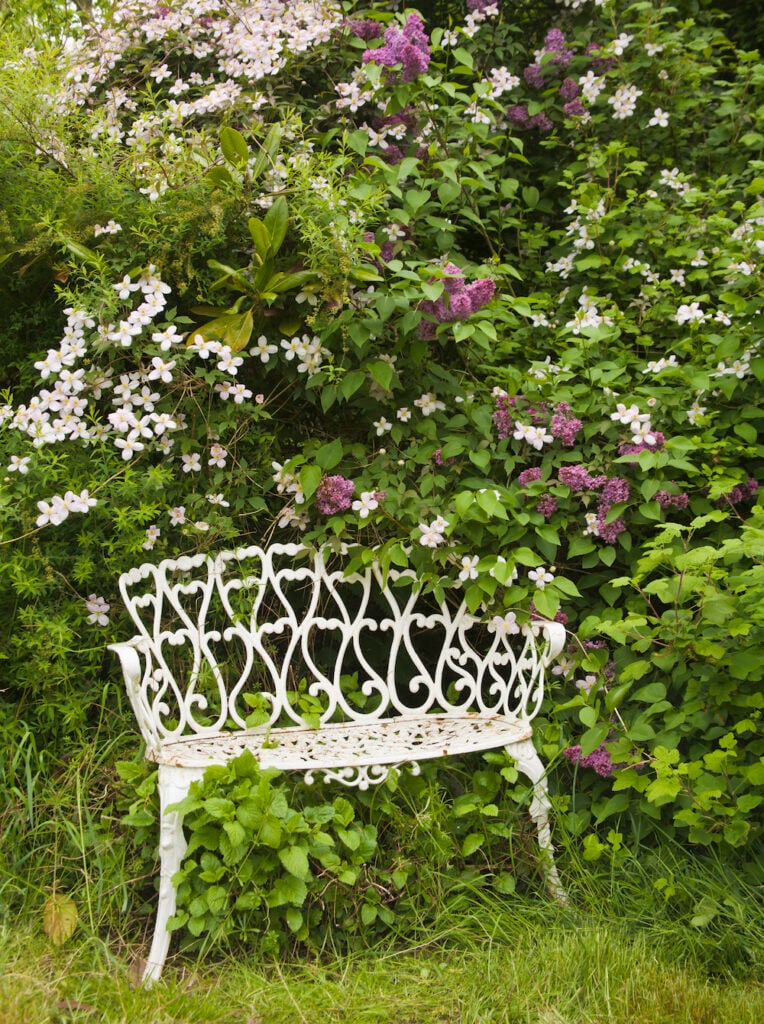
Clematis
The clematis is especially striking with its beautiful blooms. It is usually planted in late summer, between August and October–but if watered regularly, it can be planted throughout the gardening season. The clematis does well in sunny locations as long as the base of the plant is in the shade. Typically, the plant reaches a height of two to six meters, with vigorous varieties reaching up to twelve meters.
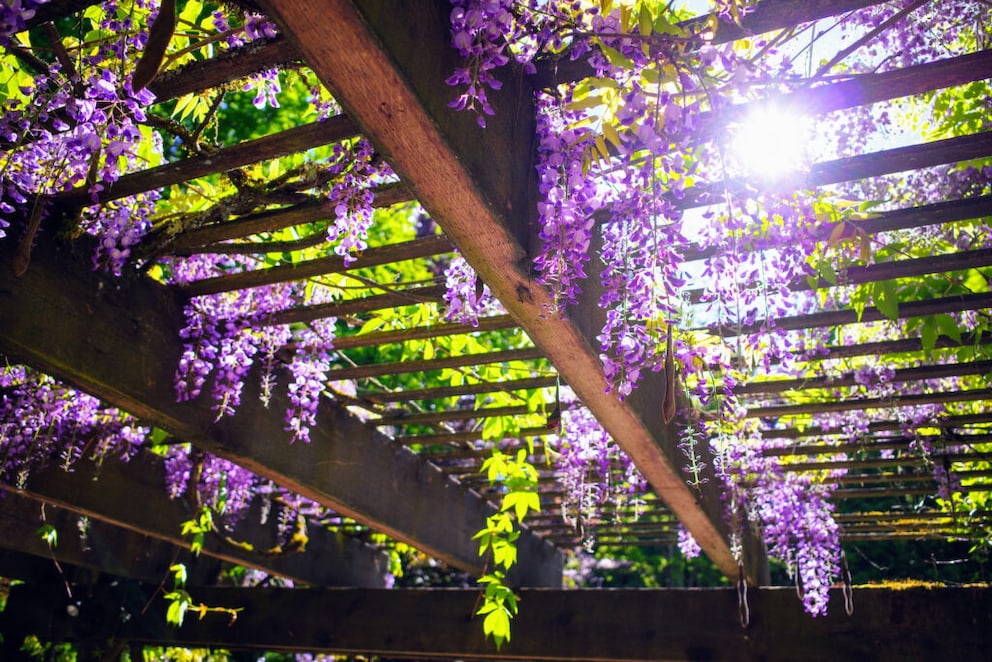
Wisteria
With its beautiful, hanging blooms, wisteria creates an almost enchanted atmosphere in the garden–and provides shade at the same time. The plant prefers sunny or bright locations and can grow up to twelve meters high. Due to its hanging blooms, it becomes a natural canopy, offering a shady spot in the greenery during summer.
Ivy
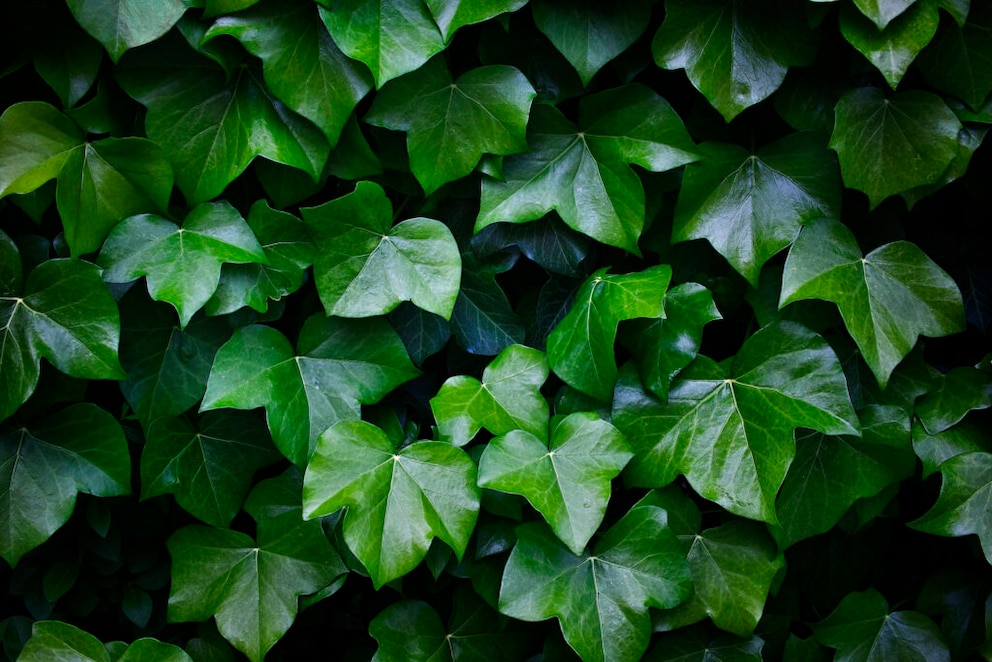
Ivy is also wonderful for planting pergolas or trellises to create some shady corners in the garden. A major advantage: Ivy is an evergreen plant that is relatively robust. It thrives in both shady and sunnier locations. Ivy continues to climb and can reach a height of up to 20 meters.
Grapevine or Virginia Creeper
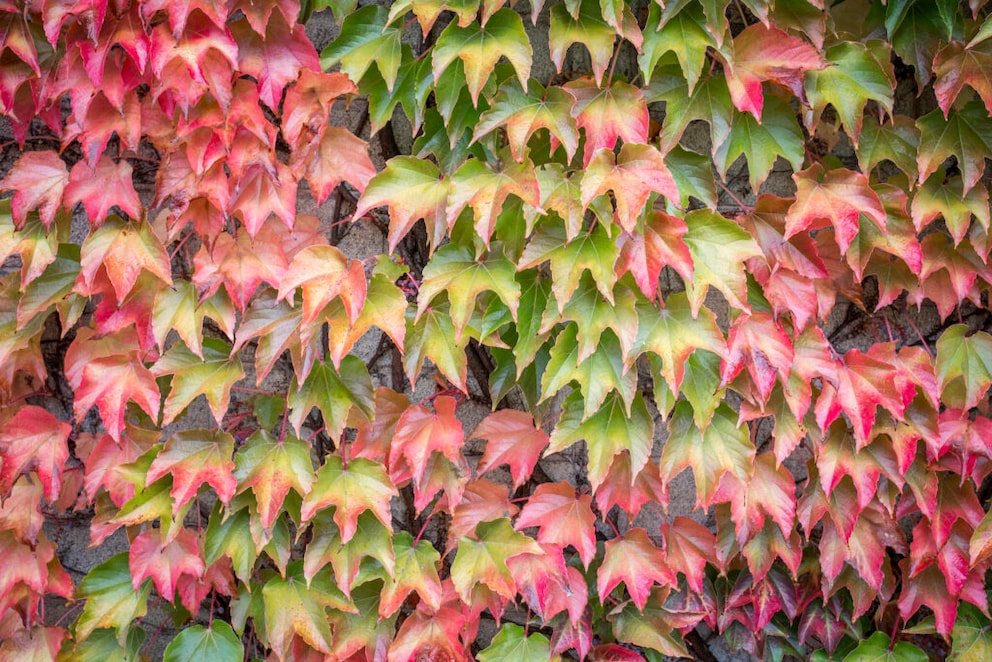
Grapevine not only has the advantage of producing delicious fruit, but its foliage also takes on a beautiful color in the fall. The vines prefer sunny locations. The difference from Virginia creeper: While you can eat the grapes from grapevines, those from Virginia creeper are not edible. Both plants are perfect for creating shade in the garden.
Climbing Hydrangea
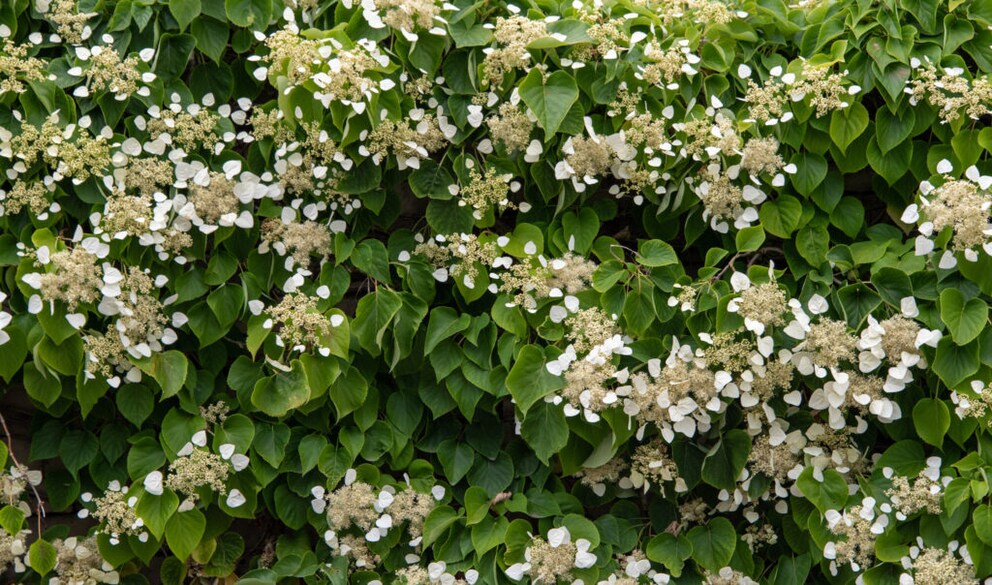
The climbing hydrangea lives up to its name–it can reach an impressive height of up to 15 meters. However, this is only possible if it has enough space. Ideally, this should be a semi-shaded to shaded area. The plant does not tolerate direct sunlight. It requires a lot of water–the soil should always be moist, so the substrate should be checked at least daily.
Dutchman’s Pipe
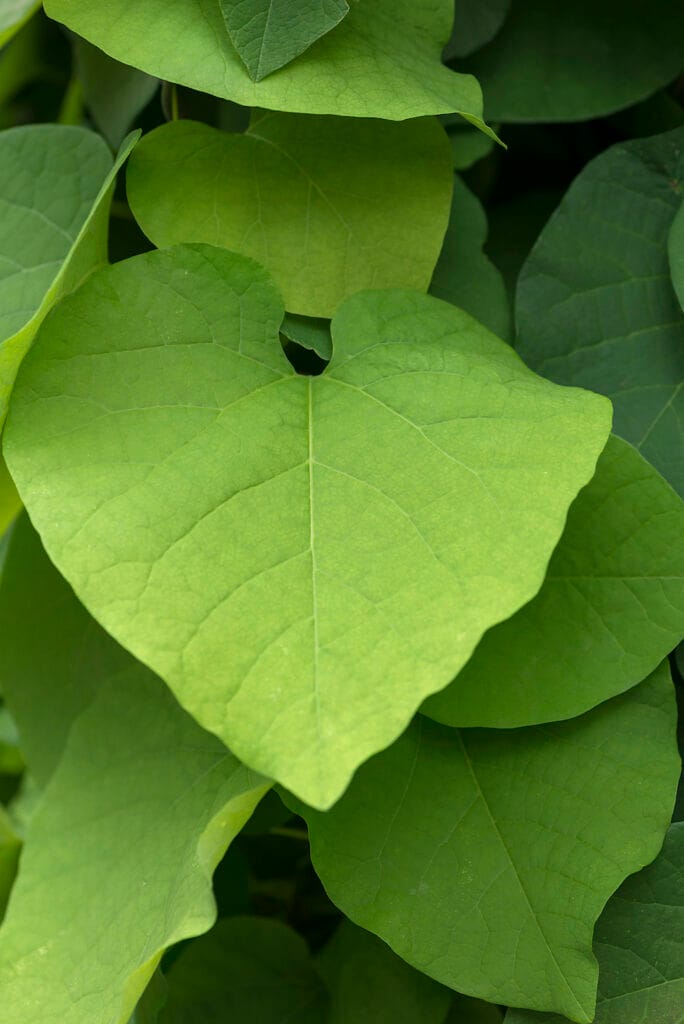
The Dutchman’s pipe is a robust plant that provides lovely shade in the garden. Like vines, the plant’s tendrils climb up to ten meters high. Once planted, it requires little care. On hot days, however, the Dutchman’s pipe should be watered several times to ensure it gets enough moisture. Waterlogging should be avoided. The Dutchman’s pipe thrives best in a sunny to partially shaded spot.
Rambler Rose
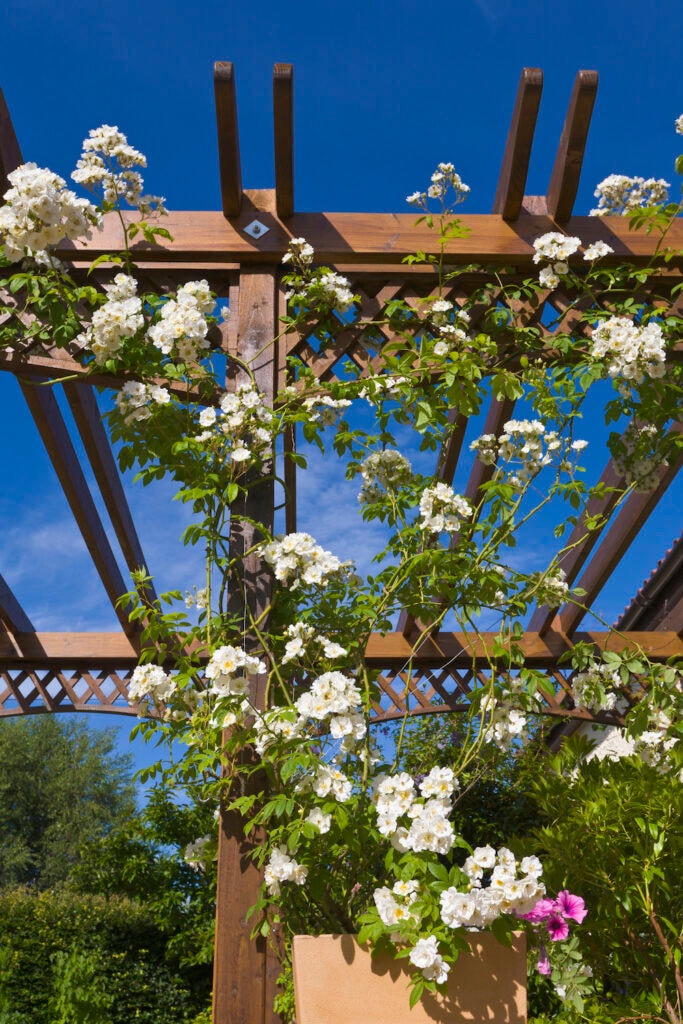
The rambler rose is particularly beautiful with its lush, small clusters of blooms. The meter-long, soft shoots are perfect for greening pergolas–and thus creating a bit of shade in the garden. For the rambler rose to show its best side, it needs a semi-shaded location.
Ornamental Kiwi
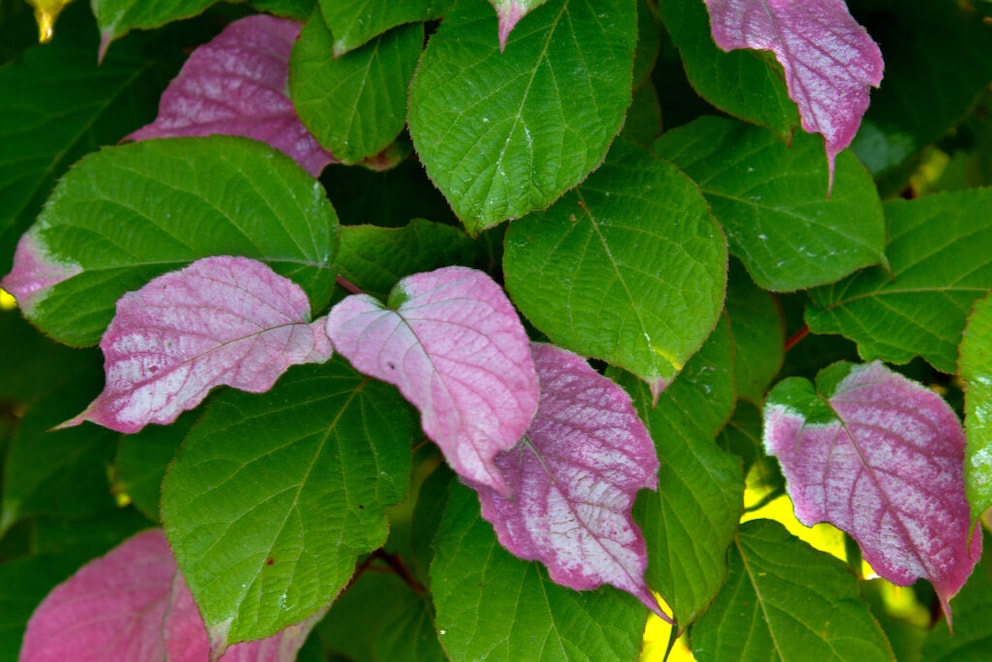
The ornamental kiwi is a climbing shrub with a unique leaf coloration. The leaves turn green, yellow, and pink in the right location. A semi-shaded spot is ideal–too much sun could burn the leaves, while too much shade prevents the pretty colors from developing. The ornamental kiwi typically climbs to a height of three to six meters.
Mile-a-Minute Vine
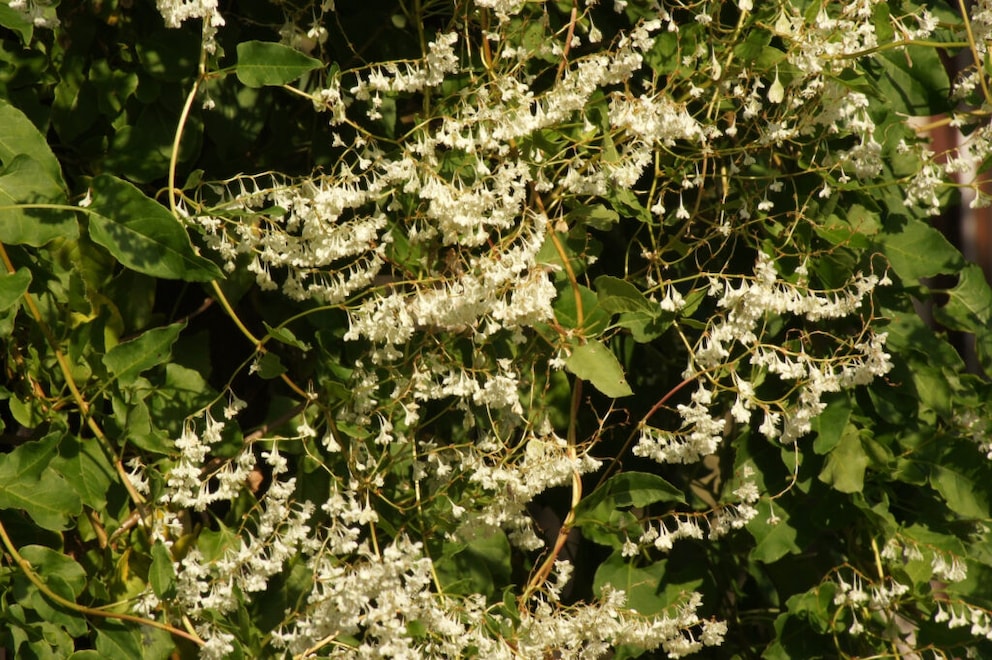
The mile-a-minute vine can also provide shade in the garden–but it should be approached with caution. The plant can quickly grow out of control, literally. Under perfect conditions, the mile-a-minute vine can grow several meters a year. A sunny to semi-shaded location is ideal–but it also thrives in shaded areas.
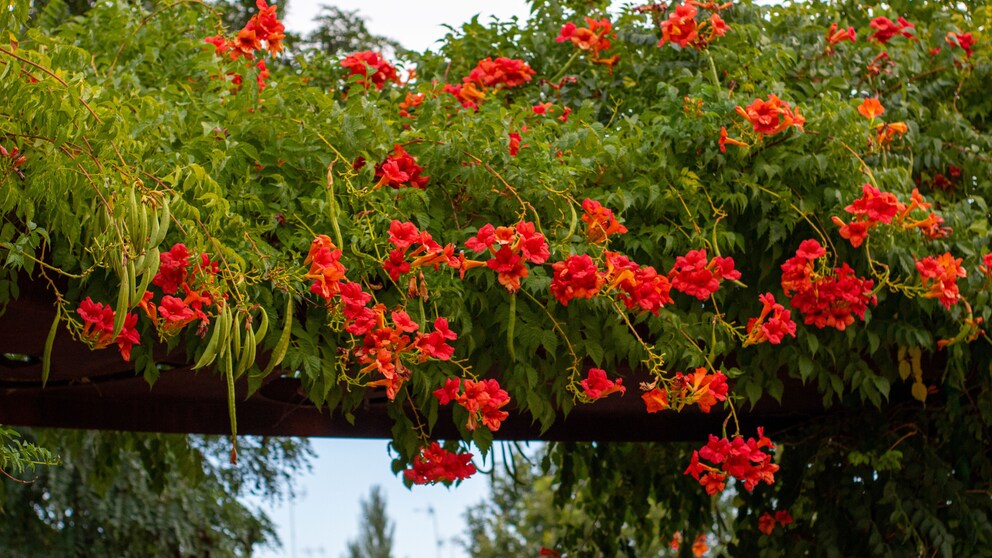
Trumpet Vine
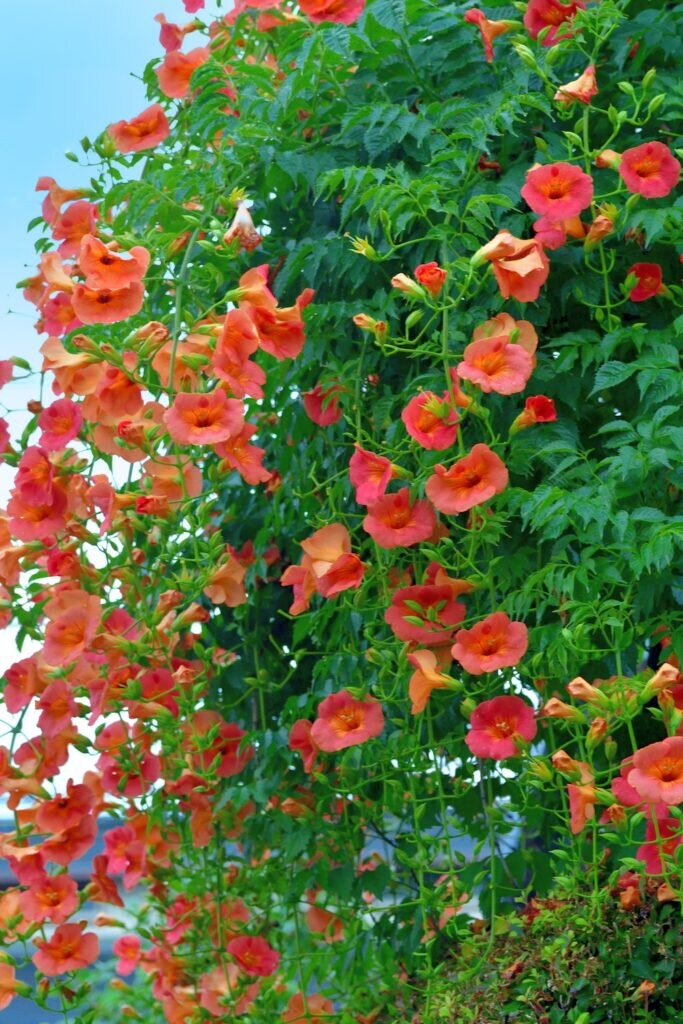
Choosing a trumpet vine brings a vacation vibe to the garden. The plant is striking with its red, yellow, and orange blooms that, as the name suggests, grow trumpet-shaped. The trumpet vine should be in a wind-protected, bright, and warm location. Under optimal conditions, it can grow up to five meters high.
Trees for More Shade in the Garden
In addition to climbing plants, trees are also suitable for creating shade in the garden. Before planting, consider how large the tree can grow and whether there is enough space in the garden.
Apple, cherry, pear, or plum trees are ideal shade providers in the garden and also offer sweet fruits to snack on. However, the fruits also attract various insects. If you want to avoid that, you should not opt for a fruit tree. Find out which other trees provide shade in the garden here.