

July 19, 2023, 3:39 am | Read time: 3 minutes
Beets are healthy and delicious–and not at all complicated to grow. Depending on whether you process the bulbs into salad or pickle them, you should choose the right time to harvest.
Harvest time is an exciting moment for every hobby gardener–including for beets. With their bright red bulbs and green leaves, they are not only a feast for the eyes but also a healthy and versatile vegetable. However, when harvesting beets, you should pay attention to the right period.
When to Harvest Beets
The harvest time for beets is roughly between July and October. The timing of the harvest depends on when you sowed them and how you want to eat the bulb. “The mature bulbs in fall taste earthy, sweet, and have the typical beet flavor,” says Claudia Weigel from the Association for the Preservation of Crop Diversity (VEN). But if you’re looking for crunchy bulbs for a salad, you can also harvest the smaller bulbs of summer.
For cooking or pickling, the larger bulbs are better, Weigel adds. “Only the fully ripe ones are suitable for storage.” These should be removed from the bed by October at the latest before the first frosts, advises VEN.
Related (via FITBOOK): The Effects of Beets on Fitness and Health
How to Proceed with Harvesting
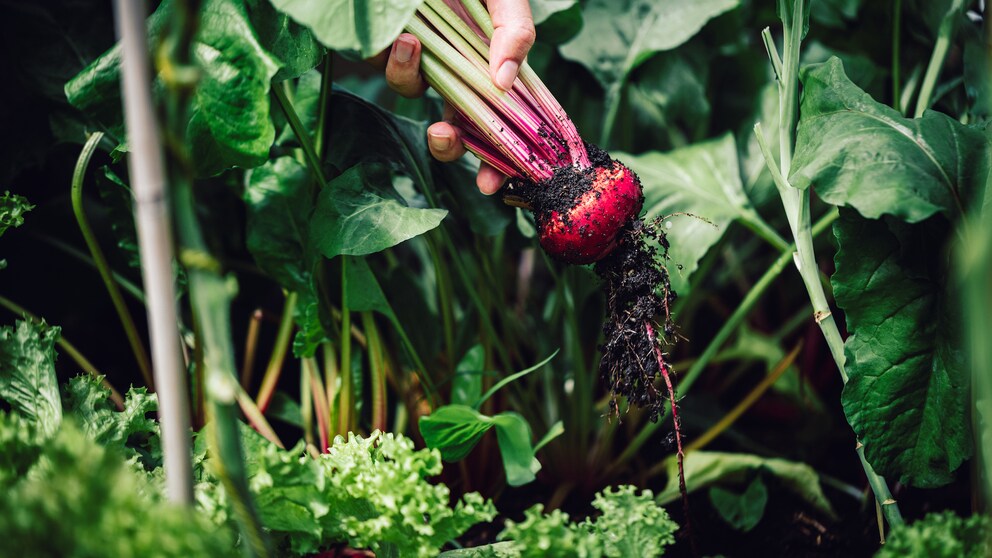
During harvest, the vegetable is best lifted with a digging fork in the morning so that the fine roots tear. In the afternoon or the next day, the bulb is then fully dug out.
The reason: Beets can store nitrate, which can be converted to nitrite and become harmful to health. Because the substance is absorbed by the plants at night, it is still fully stored early in the morning. If you lift the bulbs out of the ground and let them lie, the nitrate breaks down, according to VEN.
More on this: Planting Beets in the Vegetable Garden

Garden Produce You Should Use First
How Juniper Berries Unleash Their Full Flavor in Cooking
How to Store Beets
For storage, the bulbs are placed in a box with sand or soil, which prevents drying out. According to the Chamber of Agriculture North Rhine-Westphalia, the vegetable can be kept in the cellar or garden shed at temperatures above four degrees well into the winter.
Outstanding Vegetable
The beet was chosen by the Association for the Preservation of Crop Diversity as the vegetable of the years 23/24–to promote not only consuming the bulb pickled but also growing it at home.
With the beet, you can prepare soups and juices, among other things. Even the young leaves taste good, such as in salads. In addition to the classic beet, there are red-white striped, white, or yellow-orange varieties. The vegetable contains many vitamins and minerals, and it has a high iron and folic acid content.
with material from dpa