


November 27, 2025, 10:01 am | Read time: 4 minutes
When the gardening season ends and the cellar, pantry, or freezer slowly fills with harvest supplies, a fundamental question arises: What should be used first—and what can easily last until next year? Knowing the right order prevents food waste and allows you to make the most of your supplies. myHOMEBOOK shows which garden supplies are particularly sensitive and which remain durable for a long time.
Overview
Which Garden Supplies Should Be Used First?
Sensitive Supplies: Use These First
Certain fruits and vegetables are storable but do not last long. They should be eaten or processed within the first few weeks after harvest.
Soft Fruits
Plums, pears, table grapes, and autumn berries such as blackberries or raspberries are only limitedly storable—even in the refrigerator, they last only a few days. When frozen, they last longer but lose flavor more quickly. Ideally, process them immediately into compote, crumble, syrup, or fruit puree.
Early Potatoes
They have thinner skins and sprout or shrivel faster than storage potatoes. Early potatoes should be used within a few weeks.
Zucchini & Cucumbers
While they can be stored, they quickly lose moisture and become soft. It’s best to use them promptly—or preserve them as chutney, pickled sweet and sour, or as zucchini bread.
Tomatoes
Tomatoes risk bursting or molding after a short time—they are among the supplies that should be used first. Ideally, process them into sauce, tomato butter, or oven-roasted tomatoes.
Vegetables with Medium Shelf Life: Monitor These Garden Supplies Closely
These fruits and vegetables are storable but sensitive to bruising, temperature changes, or moisture. They last several months but should be checked regularly.
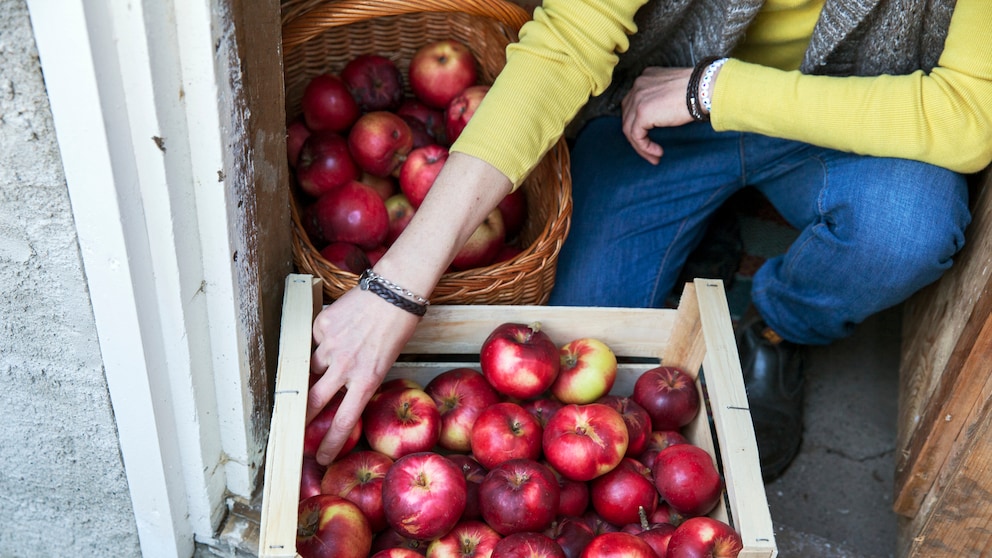
Apples
Late varieties last long, but occasionally an apple rots prematurely. Check regularly—rotten fruits can affect others.
Carrots & Root Vegetables
Carrots, parsnips, beets, or salsify stay fresh for several months when stored in a cool, moist box filled with sand. However, use those with small injuries, cracks, or bruises first.
Pumpkins
Hokkaido, muscat squash & butternut last 2–6 months, depending on ripeness and storage conditions. However, use those with soft skins or minor blemishes first, as they spoil faster.
White Cabbage, Red Cabbage & Savoy Cabbage
Properly stored, they last several months. However, use cut heads promptly, as they dry out.
Long-Term Supplies: This Harvest Lasts Particularly Long
Some garden supplies are true long-term keepers. If stored cool, dark, and dry, they can often be used until spring or even until the next harvest.
Onions & Garlic
Once fully dried, they last many months. Important: regularly check for sprouts or soft spots.
Storage Potatoes
Thick skin, cool room (39–46 °F), and dark storage—this way, potatoes remain durable for up to six months.
Winter Apples
Robust varieties like “Boskoop,” “Jonagold,” or “Holsteiner Cox” last until spring if stored individually and without pressure.
Preserved Supplies
Dried herbs, canned vegetables, chutney, syrup, or fruit jelly usually have a shelf life of one to two years before they lose flavor or color—they are among the most stable supplies.
Caution! Always Taste-Test Garden-Grown Pumpkins First
What to Watch Out for When Harvesting Pumpkins
Freezer Supplies: What Needs to Go First
Even frozen supplies shouldn’t be stored indefinitely—flavor and texture suffer over time.
Use First:
- Zucchini
- Bell Peppers
- Herbs
- Tomato Pieces
These lose quality significantly after 6–8 months in the freezer.
Longer Lasting:
- Berries (8–12 months)
- Beans (up to 1 year)
- Peas (up to 1 year)
- Pumpkin Cubes (up to 1 year)
Tip: Always label with dates and rotate supplies “from left to right” in the freezer.
Which Garden Supplies Should Be Monitored Closely
Some supplies spoil unnoticed—regular checks are worthwhile:
- Apples: Remove bruised or rotten fruits immediately
- Onions: Check for sprouts, soft spots
- Potatoes: Green spots, sprouts, moisture
- Pumpkins: Soft spots
- Root Vegetables: Avoid mold in the sandbox

Swap Preserves Before They Spoil
“In my neighborhood, one neighbor might have an apple glut in the fall, another too many quinces, and a third is still processing zucchinis for weeks. Jam, syrup, and pickled vegetables often change hands with us. Because almost no one can eat countless jars of one type of fruit or vegetable before all the flavor is lost. This brings variety to the table, even if the harvest in one’s own garden wasn’t quite as diverse.”