


April 1, 2026, 3:23 pm | Read time: 4 minutes
Anyone walking through the garden in April will now see it everywhere: small green plants in beds, pots, and cracks in the pavement. What was easy to overlook a few weeks ago has now spread significantly.
Hairy bittercress (Cardamine hirsuta) has usually been with us since February, starts blooming in March, and reaches its peak in April. Many people pull it out carelessly. However, it’s worth taking a closer look. myHOMEBOOK gardening expert Franka Kruse-Gering explains how to identify and use it in the kitchen.
Why Bittercress Is Ahead of Other Plants
The secret to this plant’s success lies in its timing. The hairy bittercress usually germinates in the fall and overwinters as a flat rosette of leaves directly on the ground. This makes it well adapted to cold and low-light conditions.
While many garden plants are just starting to grow slowly in spring, the bittercress is already prepared. As soon as temperatures rise, it grows quickly, produces flowers, and begins seed production early. This strategy is particularly evident in April: The plant is now fully developed and present throughout the garden.
How to Identify Hairy Bittercress
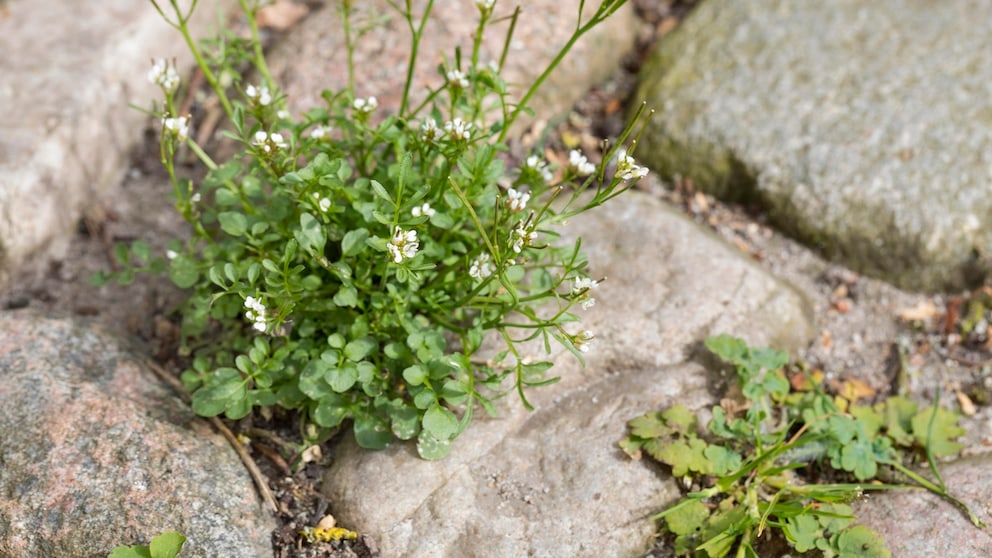
Even though it may seem inconspicuous, bittercress is easy to identify. It initially grows as a flat rosette with feathery, rounded leaves. From this, slender stems with small white flowers develop, typical of the mustard family. Upon closer inspection, you can see fine hairs on the stems and leaves.
Its reproduction is also characteristic: The narrow seed pods are under tension and burst open suddenly when touched. The seeds are scattered several meters away—one reason why the plant often appears suddenly everywhere.
Why Bittercress Is More Than a “Weed”
Especially in spring, when fresh greens are still scarce, bittercress shows what it’s made of. It provides valuable nutrients such as vitamin C, vitamin K, folic acid, and minerals like calcium and magnesium. The mustard oils it contains stimulate metabolism and digestion while providing the typical flavor.
Culinarily, the plant has much to offer: The young leaves taste mildly spicy, somewhat like cress, and add freshness to spring dishes. They are particularly good in salads, on bread, or in herb quark. It’s important to harvest them before or at the beginning of flowering—later, they become significantly more bitter.

This Unassuming Plant Grows in the Spring and is Packed With Benefits

Planting and caring for the tasty culinary herb borage in the garden
The Benefits–and the Limits of the Plant
The hairy bittercress is one of those plants that, upon closer inspection, can do much more than its reputation suggests. It provides fresh greens early in the year, is readily available without effort, and also offers ecological benefits: Its flowers provide early food for insects, and its presence often indicates that the soil is well-nourished.
But as is often the case, nature is generous but not always restrained. Bittercress spreads extremely efficiently. Its ripe seed pods react to the slightest touch and fling the seeds far across the garden. It can quickly spread and sometimes become competition for other plants in beds.
Even in its use, a little moderation is advised. While the mustard oils provide the typical, pleasant spiciness, they can be irritating in larger quantities. That’s why bittercress fits best in the role it already perfectly fulfills: as a fine, spicy addition—not as a main ingredient.
Once in the Home Pharmacy, Now in the Salad
In the past, hairy bittercress was a staple in the home pharmacy. As one of the first fresh herbs after winter, it was valued for revitalizing the body. It was used to make teas for colds, gently stimulate digestion, or applied externally for minor skin irritations. It wasn’t a spectacular medicinal herb—but a reliable one that grew right outside the door.
Today, this knowledge has largely been forgotten. Instead, bittercress, if it ends up anywhere, is more likely to be in the kitchen by chance—or removed altogether. Yet, it deserves its moment in the culinary spotlight.
The best way to use it is fresh and raw. Finely chopped, it brings a pleasantly peppery, cress-like spiciness to salads, on buttered bread, or in herb quark. Just a small handful is enough to enliven dishes with flavor. The young, still green pods can also be used and provide a surprisingly spicy note.