


July 31, 2025, 9:39 am | Read time: 3 minutes
Despite careful care and correctly executed steps such as sowing, pricking out, and pinching off, some tomato plants bear no or only very small fruits. Although they develop flowers, these often fall off without tomatoes forming. myHOMEBOOK gardening expert Franka Kruse-Gering explains possible causes for this problem and offers helpful tips on how to improve fruit formation.
Why No Tomatoes Grow on the Plant
There can be various reasons why no fruits grow on the tomato plant. Unfortunately, I also had this problem and had to get to the bottom of it and rethink my care methods.
1. Flowers Are Not Pollinated
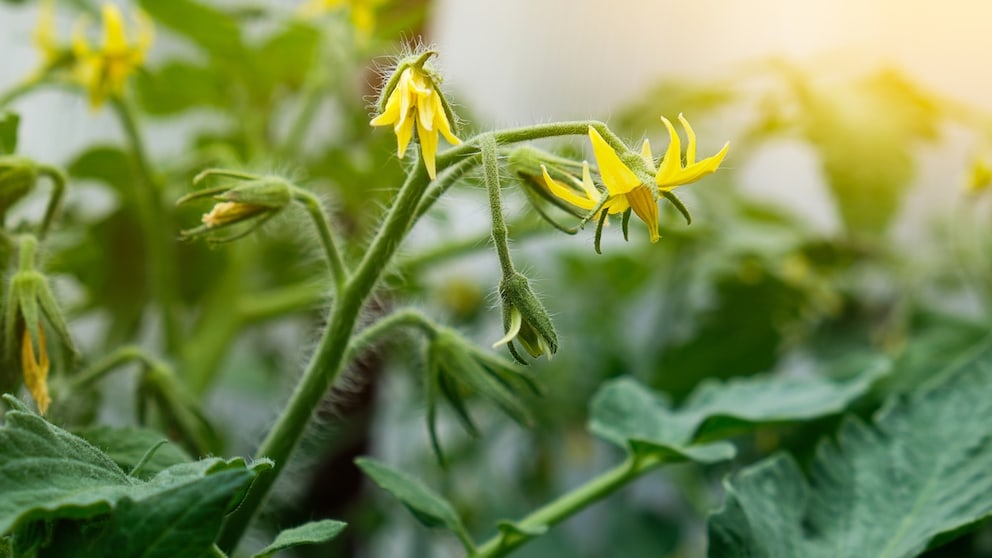
The be-all and end-all of fruit formation in tomato plants is that the flowers are pollinated. If this does not happen, the tomato will not produce fruits. Normally, insects or the wind take care of pollination. However, if the tomato plants are in a closed greenhouse, insects rarely find their way there. Wind is also scarce in greenhouses. You can manually support the pollination of the tomato by gently shaking the plant or using a soft brush to transfer pollen from one flower to another.
Note: Tomatoes are self-pollinators. This means that the pollination of the flowers can occur by the same plant. It is not necessary to have two plants.
2. The Weather Is to Blame When Tomatoes Don’t Form Fruits
Tomatoes can be quite sensitive. They don’t like too much direct sun, nor do they like rain, and if temperatures fluctuate, this can also lead to them not forming fruits. Temperatures below 59 degrees Fahrenheit are not optimal either, as they can delay ripening.
With too much sunlight, it can happen that the pollen “burns,” thus limiting cross-pollination. If it rains incessantly, the pollen may simply be washed away. If it’s too cold or temperatures fluctuate, the tomato cannot carry out its natural processes properly. With some luck, a few fruits may form, but they can be smaller than usual.

4 Reasons Why Cucumber Blossoms Fall Off

What to Consider When Pricking Out Tomatoes
3. No Fruits Due to Care Mistakes on the Tomato
Nature is not always to blame for a low yield or a complete crop failure. Sometimes, the problem is self-inflicted. With homegrown tomatoes, mistakes may have already occurred during cultivation, such as pricking out at the wrong time. Even pinching off tomatoes has its pitfalls and can lead to a lower yield.
Related: What to Consider When Pricking Out Tomatoes
4. Impatience
Impatience can also become a problem. Each tomato variety is different and requires different times for development. In case of doubt, you may not have done anything wrong; the tomato just needs a little more time.
Impatience can also interfere with pre-growing. If you start growing tomatoes too early, the plants stay indoors too long because it’s still too cold outside. At a certain growth stage, they need specific light and air conditions to grow properly. This impatience can also lead to tomatoes forming no or very few fruits.