



June 8, 2023, 10:27 am | Read time: 5 minutes
Small tomato seedlings need to be pricked out in the spring–theoretically. Late pricking is also possible. Whether in small pots or spaced out in a seed tray, the small tomatoes don’t mind.
First-time tomato growers might be intimidated by the flood of rules to follow. But it’s not that complicated. A few guidelines should be observed, including pricking out the tomatoes. This process involves separating the seedlings so they have enough space and nutrients to fully develop. myHOMEBOOK explains how it works.
Overview
Why do you need to prick out tomatoes or other plants?
The root system is delicate and young; if pricked out incorrectly, it can be easily damaged. Then the seedlings grow poorly. If they don’t die off first, the mature tomato plants will ultimately produce only a few fruits.
Another reason for pricking out: The nutrient content in the soil is not always sufficient for all plants when seedlings grow too close together. Additionally, young sprouts can block each other from the much-needed sunlight. To help a seedling grow quickly, sufficient light is crucial. In a too-dark location, the sprout barely emerges from the soil and dies.
What follows is nature’s big cleanup crew: Fungi settle in the soil and decompose the dead seedling. Once they’re there, there’s no stopping them. The risk is that surrounding seedlings will also be affected by the fungi.
When should you prick out tomatoes?
The right timing is crucial. Pricking out tomatoes too early stresses them too much, increasing the likelihood that they will die or later produce few fruits. However, if you prick them out too late, valuable time has passed, and they have absorbed too few nutrients. In this case, the harvest may also be low. The best time is when the small tomatoes have developed four leaves. The first two are the so-called seed leaves, and the next two are the true leaves.
What do you need for pricking out?
The basis for pricking out, or separating the young plants, is good substrate, seedling, or potting soil. The sowing soil should be peat-free and only lightly fertilized. Many tools can be used for the actual pricking out. The pros among hobby gardeners use a pricking stick, available at garden centers. In a pinch, a pencil, spoon, small stick, spatula, or even a chopstick for very small seedlings will do.
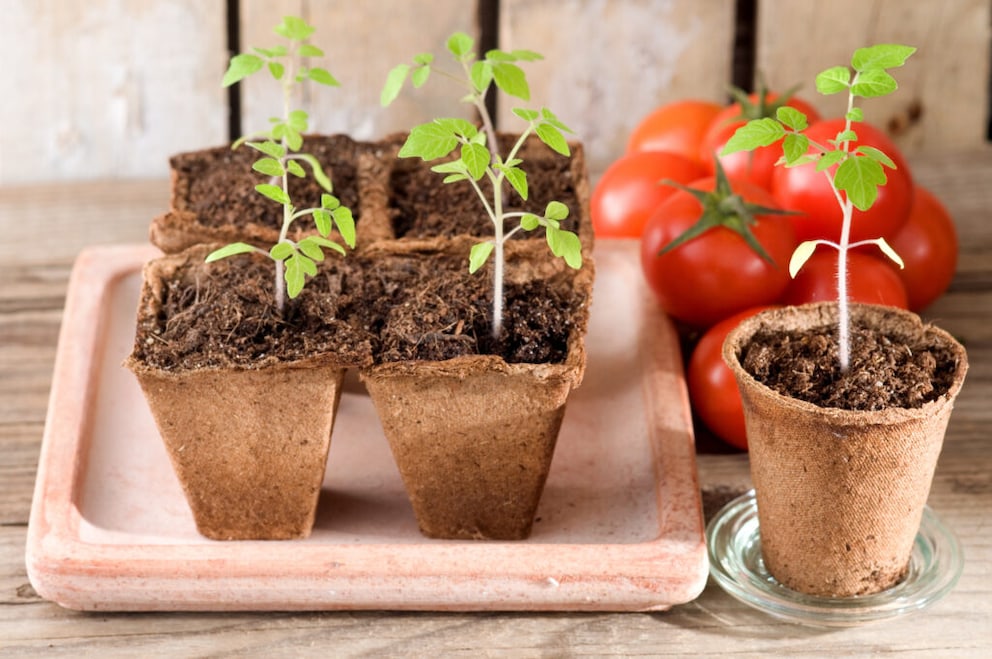
For containers for the separated plants, individual flower pots, such as those made of wood fiber, are suitable. A seed tray can also be used, but it should have large individual compartments for the new occupants. You also need a watering can with a fine spray nozzle and transparent film.
Related: When to pinch out tomato plants and how to do it right
How does pricking out tomatoes work?
Fill the flower pots with seedling soil and gently press down with the back of your hand or a piece of wood. To avoid stressing the later transplanted tomato seedlings too much by watering, you can now water the pressed soil with the fine spray of the watering can. Then use the pricking stick to press a small hole into the soil.
Use the same pricking stick to carefully remove the small tomato seedlings from the seed tray soil. Sort out plants that are too weak or damaged.
Carefully place a single seedling into the pre-drilled hole. Use the pricking stick to lightly press the soil. The soil should reach just below the seed leaves. For sufficient light, place the plant pots on the windowsill or another sunny spot.
Tip: To stimulate root ball growth, you can trim the lower third of the fine roots. This can be done with small scissors or simply with your fingernails.
Also interesting: 3 common mistakes when pricking out plants

Pricking Out Plants: What Does It Involve?

5 DIY and Upcycling Ideas for Growing Plants
What do tomatoes need for good growth?
For young tomato plants to thrive, they need plenty of light, high humidity, and sufficient warmth. This can be achieved with a transparent film placed over the containers and sealed with a rubber band. Hobby gardeners who don’t want to use plastic film can alternatively spray the young plants with water regularly. Occasionally, especially on sunny days, the makeshift greenhouse should be ventilated.
More on this: 6 common mistakes when pre-growing tomatoes
What should you avoid?
Direct sunlight can quickly cause temperatures in the mini-greenhouse to rise to 30 degrees or more, damaging the delicate plants. On sunny days, the containers should be temporarily placed in a shadier spot. You can also create shade yourself, for example, by placing a piece of cardboard, a book, or a small board between the window and the pot. Or briefly draw the curtain.
Warning: The young plants can become “leggy.” This means the shoots are pale and grow weakly. This happens when the temperature is too high while the sky is overcast and the plants receive less light. On overcast but very warm days, the plant pots should be placed in a cooler location. But not in the cold storage! Below 16 degrees Celsius, the young plants quickly die.
Once there is no longer a threat of late frosts–usually in mid-May–and daytime temperatures rise to at least 20 degrees, the tomato plants can finally be transplanted outdoors into the garden or balcony box.