

July 16, 2026, 4:58 am | Read time: 4 minutes
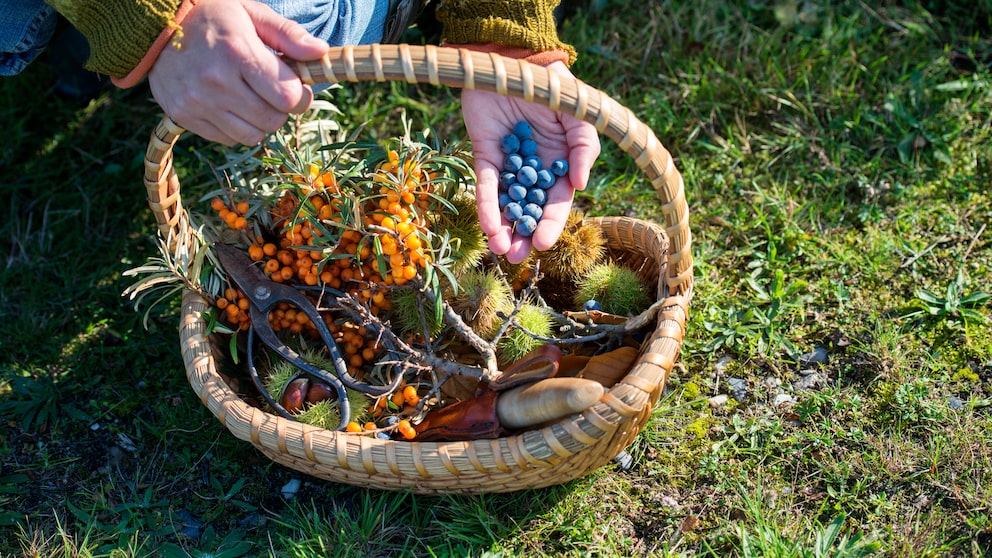
A walk through meadows and forests can be more than just relaxation. With a basket and some knowledge, it becomes a quest for discovering edible plants, herbs, and mushrooms for many. This trend, known as foraging, is captivating more and more people.
The term foraging describes the gathering of edible plants that grow in the wild. Although the trend is gaining popularity, it is by no means new. Until about 12,000 years ago, our ancestors still lived as hunters and gatherers. However, the increasing agricultural and industrial production of food made the gathering of wild plants increasingly unnecessary. Nevertheless, foraging remains an attractive way to spend more time in nature today. However, hobby gardeners should keep a few points in mind before they set out to search for wild-growing plants in Germany. MyHOMEBOOK spoke with the Federal Agency for Nature Conservation.
What Makes Foraging So Popular?
Foraging combines several advantages. Searching for food is a great leisure activity, especially now in summer, that combines physical activity with a nature experience. Responsible gathering is also sustainable, as wild plants grow in the immediate vicinity and do not require transport routes or artificial fertilizers. The Federal Agency for Nature Conservation even sees this trend as an opportunity for people to engage more with nature and biodiversity conservation.
The hobby has long since reached larger cities. Under the name “Urban Foraging,” platforms offer guided group courses where participants search for edible plants in urban areas together.
Is Foraging Even Allowed?
In principle, gathering wild plants is allowed. However, the Federal Nature Conservation Act requires consideration when foraging. Nature and landscapes must not be impaired or destroyed. Flowers, grasses, mushrooms, or fruits may only be collected “in small quantities for personal use,” according to the Federal Agency for Nature Conservation. Regarding the exact amount, it is best to follow the hand bouquet rule. This legal rule states that only as much may be taken as fits in one hand, to avoid endangering the plant population and the food supply of native animals.
Can You Collect Wild Plants Everywhere?
A key prerequisite for successful foraging is choosing a suitable location. Forests, orchards, and small riverbanks offer numerous spots where flowers, herbs, mushrooms, and berries grow. In larger cities, green spaces can also hold some natural treasures and be used for foraging.
However, there are also some places to avoid. These include busy roads and industrial areas, which leave harmful emissions and pollutants in the environment. Public parks where many dogs play should also be avoided. One thing is certain: collecting in nature reserves, on private property, and on agricultural land is prohibited unless permission is granted, as informed by the Federal Agency for Nature Conservation. Especially in protected nature parks, collectors often encounter posted access restrictions that must be strictly observed.
Fruits and Mushrooms You Shouldn’t Gather in the Fall
Collecting Wild Garlic Could Lead to Fines
Important: Know the Plants
Many wild-growing plants and herbs contain a variety of minerals and vitamins that can positively affect our health. However, one should first ask which plants are suitable for consumption and which should be avoided.
Nature often complicates this question with poisonous look-alikes that closely resemble some edible plants. A well-known example is the aromatic wild garlic, which blooms from May to June each year. It can easily be confused with the leaves of lily of the valley and autumn crocus. Even trickier is distinguishing between cow parsley, a spicy-tasting plant, and the poisonous spotted hemlock. Guides and apps can help with this. However, the German Mycological Society warns against apps that identify plants solely by scanning, as they are prone to errors. If you are not absolutely sure whether a plant is poisonous or non-poisonous, it is better not to collect and consume it.
Some plants and mushrooms, whether poisonous or non-poisonous, may be under special species protection and must not be taken. Examples include crocuses, gentians, porcini mushrooms, and all types of chanterelles. To more easily determine species protection, online research and information systems, such as those from the Federal Ministry for the Environment, can be used.
Proper Harvesting Is Crucial
Harvesting as gently as possible is at least as crucial in foraging as choosing the right location. The Federal Agency for Nature Conservation explains that the removal of plants should be done “carefully” to avoid “negative impacts on the plant and the environment.” Therefore, one should ensure to harvest only the fruits or leaves of a plant. Whole bulbs, tubers, and roots must not be dug up to protect the stocks in the long term. After harvesting, it is advisable to wash the plants thoroughly and consume them only afterward.