


May 3, 2024, 4:15 am | Read time: 5 minutes
Make two into one: Grafting involves joining two different plants so that they become a single plant. This process promises healthier plants and better yields. Here’s what these techniques are all about.
When it comes to grafting, most gardeners probably think of fruit trees or roses. Grafting is common in these areas. However, it’s much less known that vegetables can also be grafted. Grafting involves merging two different plants into one. The process connects the rootstock, the lower stem part and root system of one plant, with the upper part of another plant, also known as the scion or cultivar.
The Benefits of Grafted Plants
The rootstocks of grafted plants often come from wild forms or varieties specifically bred as rootstocks for grafting. They are more vigorous and resistant, especially against soil-borne diseases. The scion, on the other hand, determines the quality of the fruit. “Grafting combines the advantages of two different plants, making the grafted plants overall more vigorous and robust, and they yield more and better crops even in unfavorable weather,” says Sandra von Rekowski from the Federal Association of Allotment Gardeners in Germany.
Which Vegetable Varieties Are Grafted?
Not every vegetable is suitable for grafting. However, fruit vegetables such as tomatoes, peppers, eggplants, cucumbers, melons, pumpkins, and zucchinis can be grafted well. A random combination of plants does not work. For grafting to succeed, the plants must belong to the same plant family. For example, tomatoes, which belong to the nightshade family, can serve as rootstock for other nightshades like peppers, chili peppers, or eggplants. However, tomatoes cannot be combined with cucumbers, melons, pumpkins, and zucchinis because they all belong to the gourd family.
Grafted vegetable varieties are used both in commercial cultivation and in home gardening and can be purchased at garden centers, hardware stores, and online plant retailers.
Who Should Consider Grafted Vegetable Plants?
Grafted vegetables can be an interesting option, especially for beginner gardeners and those who want quick results but have limited time and space. However, these plants are significantly more expensive than non-grafted vegetable plants. Sandra von Rekowski is not particularly enthusiastic about buying such plants: “You can buy them, but you don’t have to. The downside is that you probably won’t get the variety you want. I prefer growing my own. If you like, you can try grafting with a variety of your choice. It’s not that difficult.”
How Garden Owners Should Respond to Climate Change
Plants You Shouldn’t Grow Next to Cucumbers
Grafting Techniques
There are several techniques for grafting vegetables, including top grafting and tongue approach grafting.
Top Grafting
Top grafting is used for tomatoes, eggplants, peppers, and chili peppers. First, the stem of the plant intended as the rootstock is cut below the cotyledons. The stem of the scion is cut above the cotyledons. Then, the scion is placed on the rootstock using a grafting clip so that the cut surfaces of both plants align precisely and can grow together in full contact.
Tongue Approach Grafting
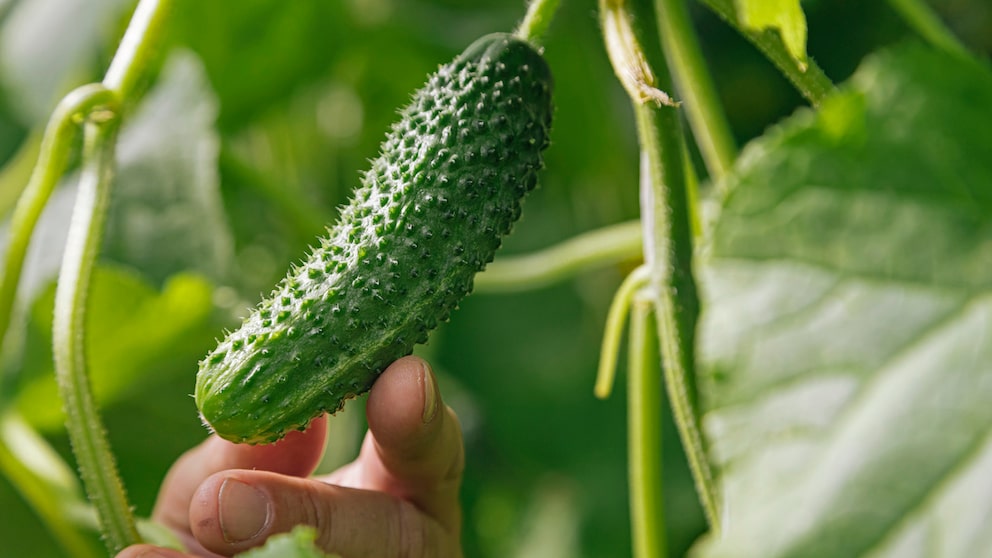
Tongue approach grafting is often used for cucumbers. The desired cucumber variety is grafted onto a pumpkin, often the fig-leaf gourd. The stem of the rootstock is cut diagonally from top to bottom. The stem of the cucumber variety is cut in the opposite direction at the same height. The cut surfaces are then precisely fitted together and fixed with a grafting clip, allowing the plants, which are then planted closely together in a pot, to grow together. Once the plants have grown together, the upper part of the pumpkin plant and the lower part of the cucumber plants are removed.
The TomTato
A special form of grafting, which might sound like an April Fool’s joke due to its name, is the TomTato. This hybrid plant consists of a tomato variety grafted onto a potato rootstock. It produces potatoes underground and tomatoes above ground. Sandra von Rekowski plans to try this combination herself this season.
Requirements for Successful Grafting
Regardless of the grafting technique, there are a few things to consider both during the grafting process and in the care of freshly grafted plants. “For the plants to grow well together, it’s very important that the plant stems of the two plants to be joined are of equal thickness,” explains gardening expert von Rekowski, adding: “Also, only clean and very sharp knives or razor blades should be used for cutting to prevent the stems from being crushed or infected with diseases.”
After grafting, the plants need a high-humidity environment to grow well together. A small greenhouse or a clear plastic bag can provide the necessary moisture. Direct sunlight should be avoided. After about five days, you can start airing the plant briefly and gradually hardening it. After about ten days, the plants have grown together, and the fixation can be removed. It’s very important when planting that the grafting site is above the soil surface.